A groundbreaking study from Johns Hopkins Medicine reveals a previously unknown network of microscopic tubes connecting brain cells. This network acts as a cellular disposal system, but it may also be a superhighway for the toxic proteins that drive neurodegenerative disorders.
Our brains are the most complex structures known in the universe, a dense forest of some 86 billion neurons, each forming thousands of connections. For decades, neuroscientists have mapped the primary pathways of this network, the synapses where chemical and electrical signals leap between cells. Now, researchers have uncovered an entirely new layer of communication, a hidden system of physical bridges that could fundamentally change our understanding of brain health and disease.
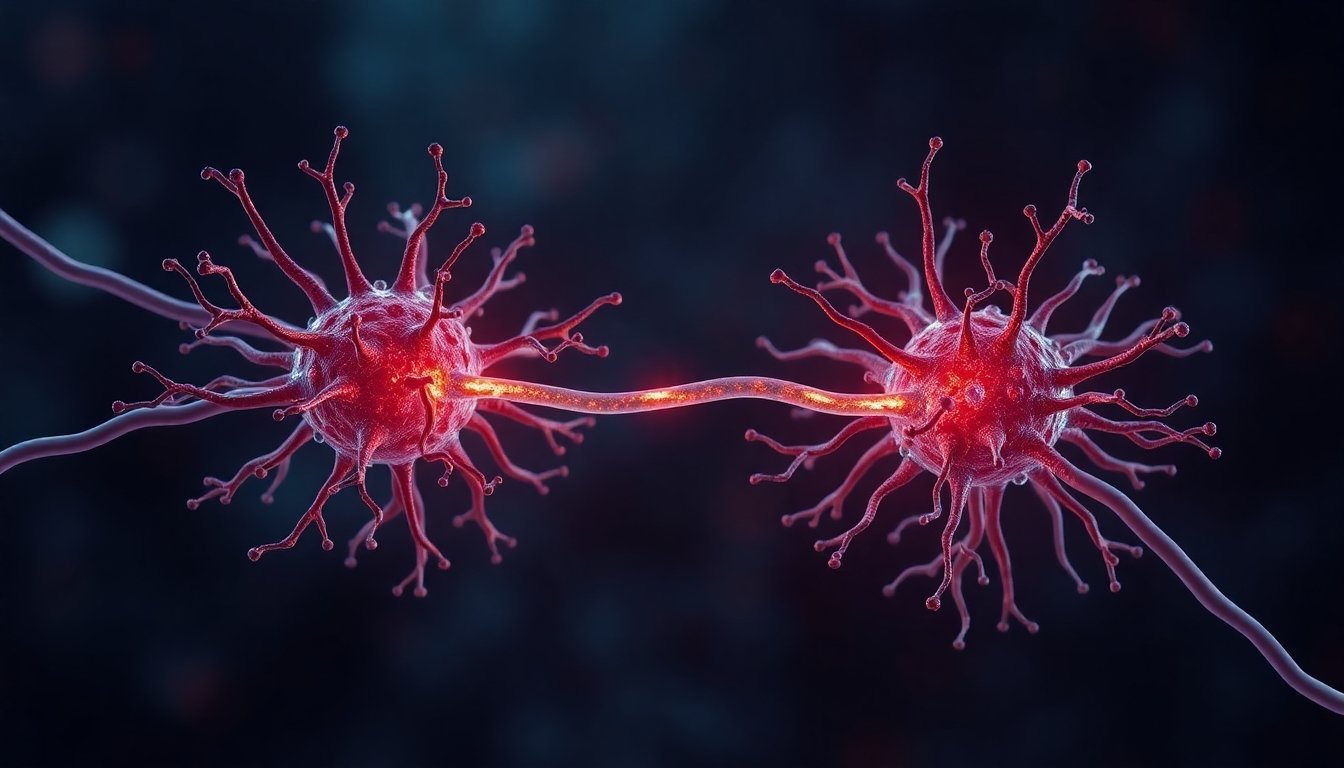
A team at Johns Hopkins Medicine, using advanced imaging tools, has identified what they call "dendritic nanotubes." These are incredibly thin, long, tube-like structures that form directly between the dendrites—the branching arms—of neurons. Their discovery, published in the journal Science, suggests these nanotubes serve a dual, and potentially contradictory, purpose. On one hand, they appear to be a crucial mechanism for neurons to offload toxic waste. On the other, they may be the very conduits that allow diseases like Alzheimer’s to spread through the brain.

A Cellular Pneumatic Tube System
Dr. Hyungbae Kwon, the corresponding author of the study and an associate professor of neuroscience, likens the function of these nanotubes to the pneumatic tube systems used in buildings to shuttle items from one place to another. "Cells have to get rid of toxic molecules," Kwon explains. "By producing a nanotube, they can then transmit this toxic molecule to a neighbor cell." These structures are perfectly designed for rapid, long-distance transport, capable of moving not just waste but also essential signaling molecules like calcium and other ions.
To visualize these elusive connections, the research team used powerful, high-resolution microscopes for live-cell imaging. They watched in real-time as neurons in brain tissue from healthy mice extended these slender bridges to connect with one another. The nanotubes’ long, column-like shape makes them ideal for sending information and materials to cells that are far away, adding a new dimension to the brain’s already intricate communication web. Computer simulations of this process confirmed the existence of what the researchers describe as a "nanotubular connectivity layer," a network operating in parallel with the brain’s synaptic circuitry.
The Double-Edged Sword of Alzheimer’s
The discovery’s most profound implications relate to Alzheimer’s disease. A defining feature of Alzheimer’s is the accumulation of a protein called amyloid-beta, which clumps together to form sticky plaques that disrupt neuronal function and lead to cell death. The study revealed that a primary function of these nanotubes is to expel toxic molecules like amyloid-beta from the neuron.
This sounds like a beneficial cleanup mechanism, and it may well be. However, the process has a dark side. "Unfortunately, this also results in spreading harmful proteins to other areas of the brain," says Kwon. In essence, one neuron’s attempt to save itself by ejecting amyloid-beta could inadvertently seed the disease in a healthy neighboring cell. This mechanism could help explain the progressive nature of Alzheimer’s, where the pathology slowly but relentlessly advances across different brain regions.
To test this hypothesis, the scientists compared brain tissue from healthy mice with tissue from mice genetically engineered to develop Alzheimer’s-like amyloid buildup. The results were striking. At three months of age, when the Alzheimer’s-model mice were still young and symptom-free, their brains contained a significantly higher number of nanotubes compared to healthy mice of the same age. This suggests that in the early stages of the disease, the brain may ramp up nanotube production in a desperate attempt to clear the initial wave of toxic proteins.
However, by six months of age, as the disease presumably progressed, the number of nanotubes in both the healthy and diseased mice began to equalize. This could indicate that the system becomes overwhelmed or that the continued spread of toxins negates the initial benefits of the disposal system. Further validating their findings, the team examined human neuron samples from a public database and identified nanotubes with the same structure, forming in the same way as those observed in the mice.
New Pathways for Treatment
This discovery doesn’t just deepen our understanding of how neurodegenerative diseases develop; it opens up entirely new avenues for potential treatments. Dr. Kwon notes that these insights could help scientists refine therapeutic approaches by targeting the nanotubes themselves.
"When designing a potential treatment based on this work, we can target how nanotubes are produced—by either increasing or decreasing their formation—according to the stage of the disease," Kwon suggests. For instance, in the very early, pre-symptomatic stages, a therapy could aim to boost nanotube formation to help the brain clear amyloid-beta before it can form destructive plaques. Conversely, in later stages, a treatment might focus on decreasing nanotube production to halt the spread of toxic proteins to healthy brain regions.
The research is far from over. Dr. Kwon’s team plans to investigate whether these nanotube networks exist in other types of brain cells, such as glia, which play a supportive role to neurons. They also intend to design experiments to actively create a nanotube to observe its direct effects on cell health. With this knowledge, the possibility of one day being able to precisely "dial up or down" nanotube production to protect the brain could move from the realm of science fiction to clinical reality, offering a new ray of hope in the fight against Alzheimer’s and other devastating neurodegenerative disorders.
Reference
Chang, M., Krüssel, S., Kim, J., Lee, D., Merodio, A., Kwon, J., Parajuli, L. K., Okabe, S., & Kwon, H. (2025). Title of study not provided in source material. Science. Science.