New Research Reveals a Potential Biological Link Between Oxidative Imbalance and Stereotypies
From the repetitive mannerisms in children with autism spectrum disorder to the echoing cycles of ritual in obsessive-compulsive disorder (OCD), abnormal repetitive behaviors have long fascinated neuroscientists. Despite decades of research, their hidden origin has remained elusive. Now, a newly published study in PLOS ONE provides compelling evidence that oxidative stress—a chemical imbalance between harmful molecules and the body’s antioxidants—may play a significant role in these behaviors, at least in animal models.
Oxidative Stress: What Is It, and Why Does It Matter?
Oxidative stress, sometimes called REDOX imbalance, occurs when the body’s capacity to neutralize potentially damaging molecules—particularly free radicals—is outpaced by their production. This imbalance isn’t just a theoretical concern. Prolonged oxidative stress has already been linked to diverse health problems, including brain disorders, cardiovascular disease, and aging.
But could it also help explain why some individuals develop intense, repetitive behaviors? This new study takes a closer look at the biological underpinnings of such behaviors in mice and finds tantalizing biological indicators connecting oxidative stress with behavioral changes reminiscent of those in autism and schizophrenia.
Biomarkers and Behaviors: The Key Findings
Researchers led by Kendall Coden and Dr. Joseph Garner at Stanford University set out to answer whether oxidative imbalance can be reliably linked to the repetitive, seemingly purposeless behaviors known as stereotypies. These behaviors are observed not only in humans with neuropsychiatric conditions but also in a wide array of animals—from laboratory mice to zoo and farm species—especially in captivity.
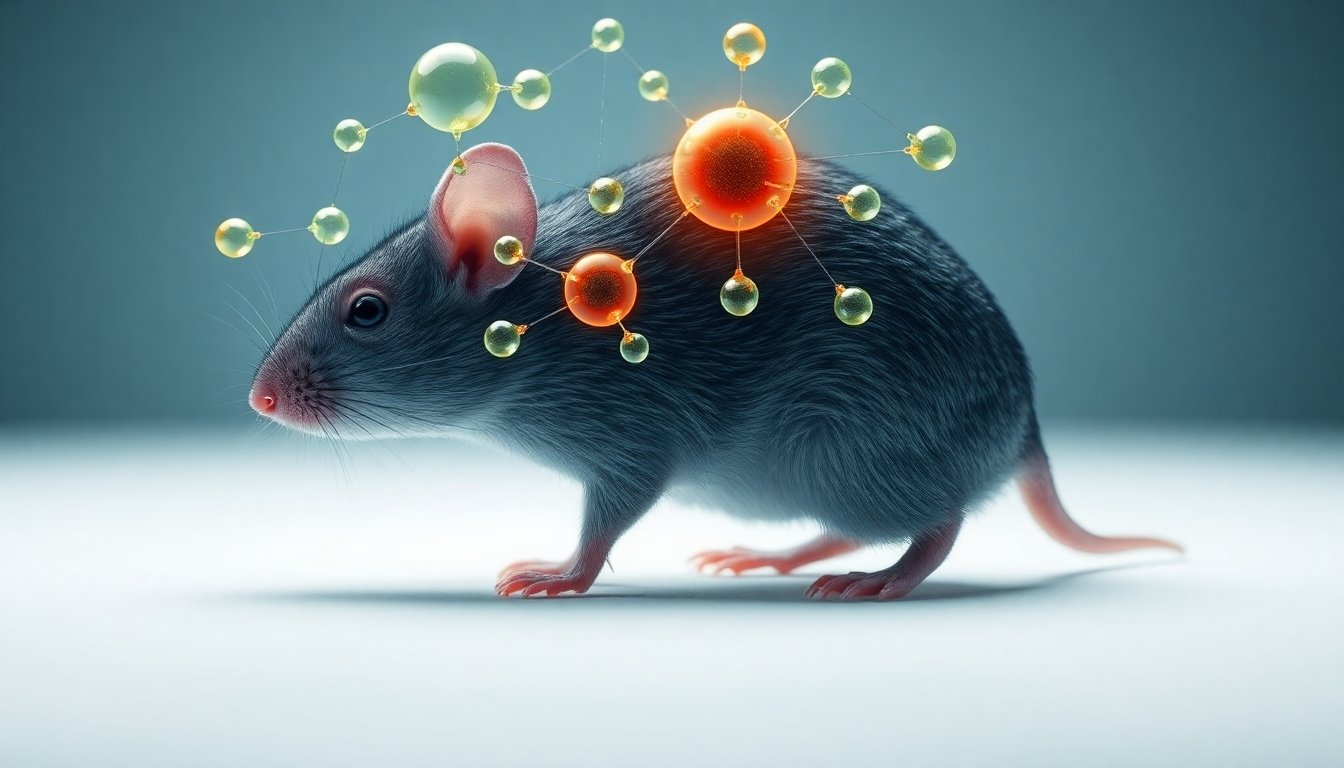
In their investigation, the team measured blood levels of glutathione, a major antioxidant, serving as a gold-standard marker for oxidative stress. The results were illuminating: young mice with higher biomarkers of oxidative stress, especially elevated glutathione, tended to display more pronounced stereotypies. What’s more, this relationship was particularly strong in young animals, suggesting a period of developmental vulnerability.
But they didn’t stop at glutathione. Using state-of-the-art proteomics—a technology for analyzing protein profiles—the researchers identified a series of proteins in blood that also tracked with both oxidative imbalance and the severity of repetitive behaviors. These patterns held true across different strains and in repeated experiments, bolstering confidence that this wasn’t a fluke finding.
Age and Protein Profiles: Clues to Early Detection and Treatment
Interestingly, while oxidative stress and repetitive behaviors went hand-in-hand in young mice, the connection faded with age. Some protein markers, however, remained tied to stereotypy regardless of age, hinting at additional, age-independent mechanisms at work. This distinction raises the possibility that early intervention during developmental windows could be crucial for conditions marked by repetitive behaviors.
Perhaps most excitingly, several of the proteins associated with repetitive behaviors are evolutionarily conserved—meaning they’re found across many animal species, including humans. This hints that the same biomarkers identified in mice might someday help predict risk or reveal therapeutic targets for human conditions such as autism and OCD.
Are We Close to a Cure?
It’s important to note that this study is correlational: while biomarkers of oxidative stress align with the severity of repetitive behaviors, the research does not prove that one causes the other. As Dr. Garner notes, “The great mystery with repetitive behaviors is that individuals differ so much in both risk and severity, even when they grow up in the same environment and share the same genetics. This mystery also gives us hope that repetitive behaviors might be preventable or curable.”
Consequently, while this research provides promising biological targets, it stops short of suggesting that antioxidant therapy would necessarily prevent or reverse repetitive behaviors. Further work, especially studies investigating causality and translating these findings into humans, is essential before any therapeutic recommendations can be made.
Why These Findings Matter
By identifying protein biomarkers linked to both REDOX imbalance and stereotypies, this work opens new avenues for understanding how repetitive behaviors arise—and possibly for catching them early, before they become entrenched. Since many identified proteins are implicated in both oxidative metabolism and brain signaling processes (such as dopamine physiology), researchers can now pursue a more refined exploration of the biological pathways involved.
For families and clinicians coping with autism, OCD, or schizophrenia, even incremental progress toward explaining and eventually treating repetitive behaviors is welcome news. As the authors state, “Many of the proteins identified in our study are also associated with neurodevelopmental and psychiatric conditions, suggesting that this set of proteins could help to guide development of novel diagnostic methods and treatments for disorders involving repetitive behaviors.”

Next Steps: More Questions, More Possibilities
The work by Coden, Garner, and colleagues is a significant stepping-stone, surfacing strong biological correlations and validating a new technological approach for future research. Yet, as they and others in the field caution, more research is needed to unravel the exact cause-and-effect relationships, to test interventions, and to ultimately translate these mouse findings into actionable knowledge for people.
In the meantime, the study shines a light on the potential for biomarkers, like glutathione and specific proteins, to serve as risk indicators for abnormal repetitive behaviors. Understanding these early signals could help pinpoint those most at risk and spark new efforts in personalized medicine.
Reference
Coden, K., & Garner, J. P. (2025). Stereotypy is strongly linked to multiple biomarkers of oxidative stress—A potential common etiology for Abnormal Repetitive Behaviors. PLOS ONE. https://doi.org/10.1371/journal.pone.0299020