A new study in mice reveals that paternal SARS-CoV-2 infection before conception can alter sperm, leading to sex-dependent anxiety-like behaviors in the next generation.
The COVID-19 pandemic has left an indelible mark on global health, with ongoing research continuing to uncover its long-term consequences. While much attention has focused on the direct effects of the virus, a fascinating and critical area of science explores how a parent’s experiences—including illness—can influence the health of their children. This concept, known as epigenetic inheritance, suggests that environmental factors can leave a molecular signature that is passed down, without altering the fundamental DNA code.
For decades, research has highlighted the importance of maternal health during pregnancy. However, the father’s pre-conception health is increasingly recognized as a crucial factor in offspring development. This raises a pressing question for the hundreds of millions of men who have been infected with SARS-CoV-2: could the virus have consequences that extend to the next generation? A recent study published in Nature Communications sought to answer this, using a mouse model to investigate the intergenerational impact of paternal SARS-CoV-2 infection.
The Experiment: Simulating Paternal Infection
To explore this question, scientists used a mouse model that mimics a moderate-to-severe human SARS-CoV-2 infection. Adult male mice were infected with the virus, leading to significant weight loss and inflammation, hallmarks of the disease in humans. A control group of male mice remained uninfected.
Crucially, the infected males were allowed to fully recover and clear the virus over four weeks before they were mated with healthy, naïve female mice. This design ensured that any effects observed in the offspring were not due to direct viral transmission to the mother or embryo, but rather stemmed from changes within the father that occurred as a result of the infection.
A Legacy of Anxiety in the First Generation
The researchers conducted a comprehensive battery of behavioral tests on the first generation (F1) of offspring. The most striking finding was a significant increase in anxiety-like behaviors in the children of the infected fathers, affecting both males and females.
In tests like the "light-dark box" and the "open-field test," these offspring were less willing to explore bright, open, and unfamiliar areas. This avoidance is a classic indicator of heightened anxiety in animal models. Interestingly, there were sex-specific nuances. For instance, male offspring of infected fathers showed a greater hesitation to enter the illuminated part of the light-dark box, suggesting a heightened initial risk aversion.
While anxiety was the most prominent change, the study also noted altered body weight trajectories in the F1 offspring. However, other domains like memory, sociability, and depression-like behaviors were largely unaffected, indicating a specific impact on anxiety pathways.

The Messenger: How is the Information Transferred?
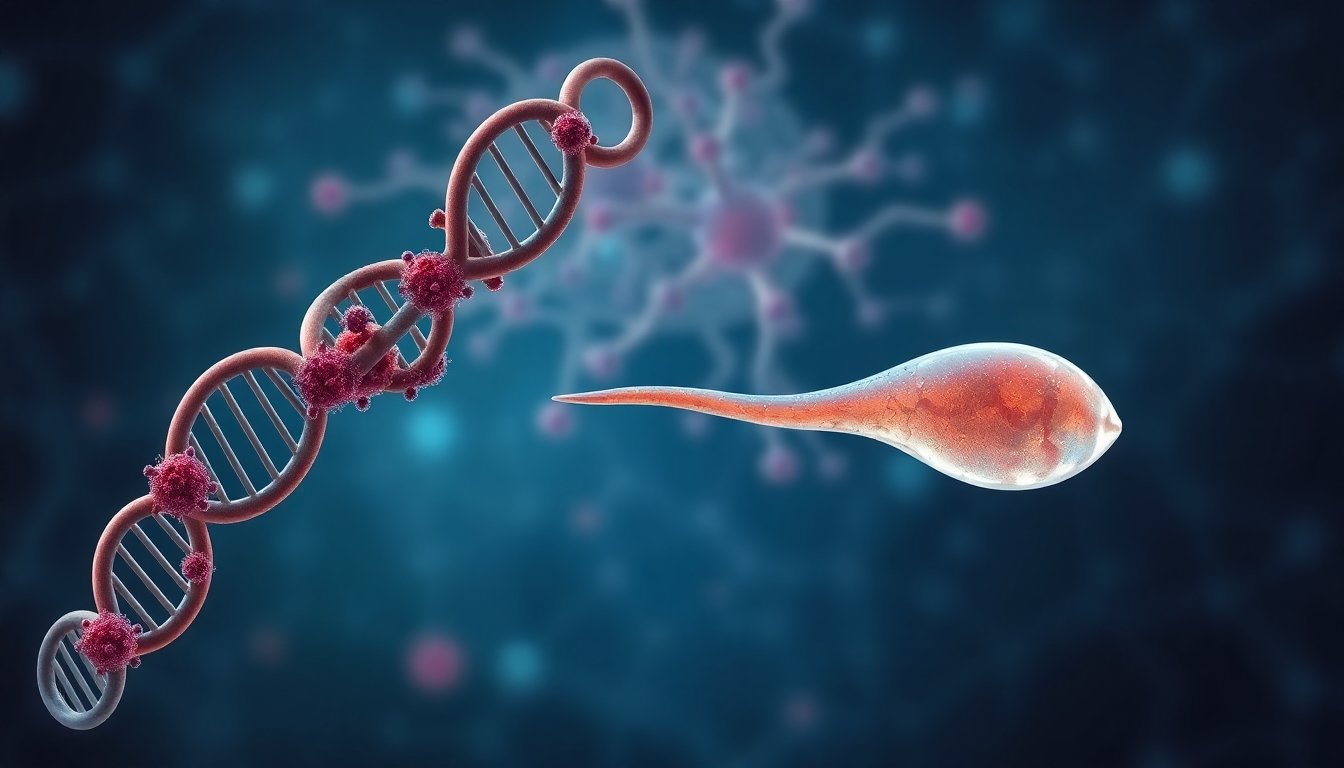
If the virus itself isn’t being passed on, how can the father’s experience of infection influence his offspring? The researchers hypothesized that the answer might lie in the father’s sperm. Sperm carries more than just DNA; it also transports a payload of small noncoding RNAs (sncRNAs). These molecules act as messengers, capable of carrying information about the father’s environment and health to the egg at fertilization, where they can influence early embryonic development.
Analysis of the sperm from the SARS-CoV-2 infected mice revealed a significantly altered profile of these sncRNAs compared to the control group. Specifically, the researchers identified changes in several types of RNA, including piRNAs and two specific sncRNAs, miR-3471 and pro-TGG-3-1.
To prove these RNA changes were not just a correlation but a potential cause, the team performed a remarkable experiment. They isolated only the small RNAs from the sperm of infected fathers and microinjected them into fertilized eggs from healthy, uninfected parents. The resulting offspring, conceived without any direct contact with the infected father, partially mirrored the anxiety-like phenotype. Notably, the male mice from this experiment also showed the same increased hesitation to enter the light zone of the light-dark box, providing strong evidence that sperm RNAs are a key mechanism for transmitting these paternal effects.
Echoes in the Brain and Fading Effects
The behavioral changes were also reflected in the brain. The hippocampus, a region critical for regulating stress and anxiety, showed significant alterations in gene expression in the female offspring of infected fathers. Nineteen genes were downregulated, many of which, like Prl (prolactin) and Aqp1 (aquaporin 1), have previously been linked to stress and anxiety in other rodent studies. The changes in the male offspring’s hippocampus were more subtle, suggesting that the anxiety phenotype in males might be driven by changes in other brain regions.
The study also looked one generation further to the grandchildren (F2 generation) to see if the effects were transgenerational. While there were some minor effects on litter size and early-life body weight, the pronounced anxiety-like behaviors did not carry over. This suggests that the impact of paternal SARS-CoV-2 infection is primarily intergenerational—affecting the direct offspring—but may not persist across multiple generations.
Implications for the Future
This study provides compelling evidence from a mouse model that a father’s pre-conceptual bout with a severe respiratory virus like SARS-CoV-2 can have lasting consequences for his offspring’s mental health, particularly concerning anxiety. The findings highlight a plausible biological mechanism: the infection alters the molecular cargo of sperm, specifically small noncoding RNAs, which then reprogram developmental pathways in the offspring.
While these results are from an animal model and cannot be directly extrapolated to humans, they open a critical new avenue for research. Given the millions of men who have had COVID-19 and will go on to have children, understanding the potential intergenerational health impacts is of major public health importance. This research underscores the growing understanding that a father’s health is not just his own concern but can cast a long, unseen shadow on the well-being of the next generation.
Reference
Kleeman, L. D., Z-A, I., Nguyen, T. H. O., Lee, S. R., Hopkins, S. L., Saffery, R., Short, K. R., & Hannan, A. J. (2024). Paternal SARS-CoV-2 infection impacts sperm small noncoding RNAs and increases anxiety in offspring in a sex-dependent manner. Nature Communications, 15, 4973. https://doi.org/10.1038/s41467-024-49293-w