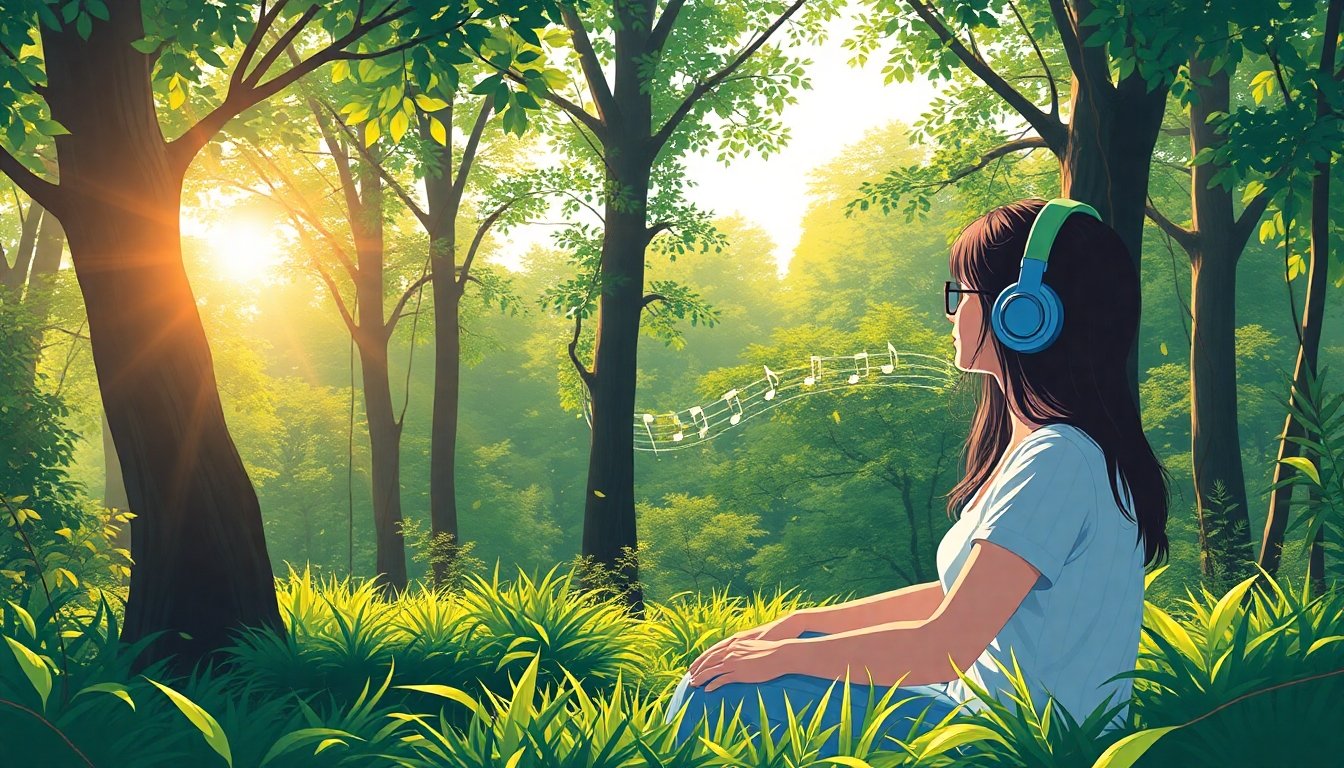
New research reveals that the viral advice to ‘touch grass’ is more than just a joke. When paired with music, nature becomes a potent, accessible therapy for stress, anxiety, and depression.
In the lexicon of the extremely online, the phrase “touch grass” has become a go-to jab, a concise way to tell someone they’ve lost touch with reality and need to log off. While it’s often deployed with humorous intent, a growing body of scientific evidence suggests this meme holds a profound truth. Reconnecting with the physical world is not just a good idea; it’s a vital component of our well-being. Now, a new review from researchers at George Mason University takes this concept a step further, revealing that when we combine the restorative power of nature with the emotional resonance of music, the benefits are amplified, creating a powerful, synergistic therapy for the mind and body.
This isn’t about simply putting on headphones during a hike, though that certainly helps. The research, led by licensed clinical social worker and holistic-therapy researcher Michelle Hand, explores the intentional, combined use of music and nature in therapeutic settings. The findings point toward a flexible, low-cost, and deeply effective way to improve mood, reduce stress, and ease the symptoms of anxiety and depression.

Beyond Talk: The Power of Multi-Sensory Healing
Traditional therapies often rely heavily on verbal communication. While incredibly valuable, this approach doesn’t work for everyone, and it primarily engages one part of our cognitive experience. Music- and nature-based therapies, however, operate on a different level. They are fundamentally multi-sensory, creating a rich tapestry of experience that can ground us in the present moment.
Imagine tending to a garden. You feel the texture of the soil on your hands (touch), see the vibrant colors of the flowers (sight), and smell the earthy fragrance of the plants (smell). Now, add a soundtrack—perhaps the gentle strumming of a guitar or the uplifting swell of a classical orchestra. The music (sound) doesn’t just fill the silence; it interacts with the environment, shaping your emotional response to the activity. This holistic engagement pulls your focus away from ruminating thoughts and anchors you firmly in the here and now. It’s a form of mindfulness in action.
As Assistant Professor Michelle Hand explains, “The combined therapeutic use of music and nature facilitates self-expression, which can improve mood and emotional well-being, with potential to simultaneously decrease anxiety, stress, and symptoms of depression.” This approach offers a pathway to healing that is less about analyzing problems and more about experiencing moments of peace and creativity.
Digging into the Data: A Review of the Evidence
While previous studies have independently confirmed the benefits of both nature exposure and music therapy, the research on their combined use has been sparse. To address this gap, Hand and her team—including gerontology specialist Emily Ihara and social work alumni Morgan Moore and Madison Shaw—conducted a scoping review. This involved a comprehensive search across six major academic databases to find all existing primary research on the topic.
Their initial search yielded a staggering 884 scholarly articles. The team then applied strict criteria: the studies had to be peer-reviewed, report on primary research, and involve interventions that explicitly combined both music and nature-based activities. After a thorough screening process, eight key studies remained. These articles showcased a fascinating variety of therapeutic activities, such as caring for animals outdoors, collective singing and dancing in natural settings, and horticultural therapy accompanied by music.
By analyzing these eight studies, the researchers identified four overarching themes that highlight the promise of this integrated approach:
- Holistic Benefits: The combination of music and nature positively impacts multiple dimensions of well-being, from emotional and mental health to social connection and even spiritual wellness.
- Adaptability and Accessibility: These interventions are not one-size-fits-all. They can be easily adapted for diverse populations, including veterans, older adults living with dementia, individuals with disabilities, and trauma survivors. Their low cost makes them a highly accessible option for communities and individuals alike.
- The Need for More Research: The review confirmed that this is a promising but still emerging field. The authors call for more rigorous studies to better understand the specific mechanisms at play and to develop standardized therapeutic protocols.
- Prioritizing Choice and Expression: A key strength of this approach is its ability to empower individuals. Participants in the reviewed studies were often given choices—what to plant, which songs to sing, how to interact with the environment. This element of personal agency and self-expression is a powerful therapeutic tool in itself.
A Prescription for Everyone
The implications of this research are profound. In a world where mental health challenges are on the rise and access to care can be a significant barrier, music-and-nature therapy offers a complementary or alternative path to wellness that is available to nearly everyone. It doesn’t require expensive equipment or a specialized facility; it can be as simple as listening to a favorite album while sitting in a local park or humming a tune while watering your houseplants.
For specific populations, the benefits are even more pronounced. For an older adult with dementia, listening to familiar music in a garden can unlock memories and reduce agitation. For a veteran recovering from trauma, the non-verbal, sensory-rich experience can provide a safe outlet for emotional expression without the pressure of direct verbal disclosure.
So, the next time you hear someone say “touch grass,” you can smile knowing they’re dispensing some scientifically sound advice. And for an extra boost, consider bringing a soundtrack. By intentionally combining the healing frequencies of music with the restorative embrace of the natural world, you can compose your own symphony of serenity and conduct a powerful intervention for your own mental health.
Reference
Hand, M., Ihara, E., Moore, M., & Shaw, M. (2024). Integrating music and nature: a scoping review of research on interventions involving both music- and nature-based strategies for mental health and wellbeing. Frontiers in Human Neuroscience. Retrieved from https://www.frontiersin.org/journals/human-neuroscience/articles/10.3389/fnhum.2024.1382684/full