Dive into the world of eerie innovations where horror movie concepts are becoming reality, revolutionizing medicine, and promoting sustainability.
Brains in jars, creepy crawly spiders, werewolves, and disembodied eyes. These are the classic ingredients for a spine-chilling tale. But what if these unsettling concepts were not just props for a horror film, but the very foundation of groundbreaking scientific research? In laboratories around the world, scientists are venturing into territory that sounds strange, even a little creepy, to tackle some of humanity’s biggest challenges. From cultivating functional "mini-brains" to developing spider-inspired wound care and uncovering the hidden plastics within our own bodies, these eerie-sounding experiments are paving the way for a healthier and more sustainable future. Let’s pull back the curtain on four recent breakthroughs that prove sometimes the most unsettling ideas lead to the most profound discoveries.

The Dawn of the Mini-Brain
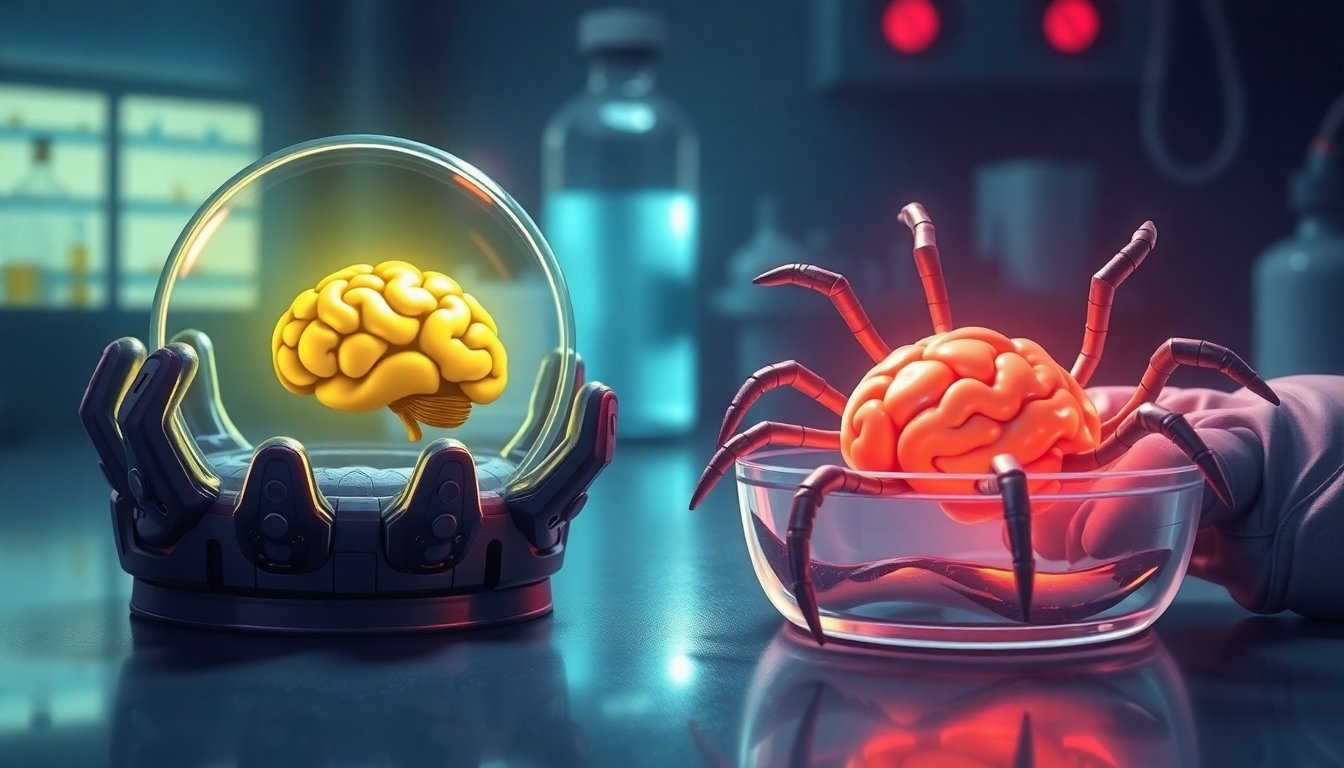
The idea of a disembodied brain, alive and thinking in a laboratory dish, has been a staple of science fiction for decades. While we’re not quite at the level of sentient brains in jars, researchers have taken a monumental step in that direction. In a landmark study published in ACS Sensors, scientists have successfully grown a three-dimensional "mini-brain" from human nerve cells.
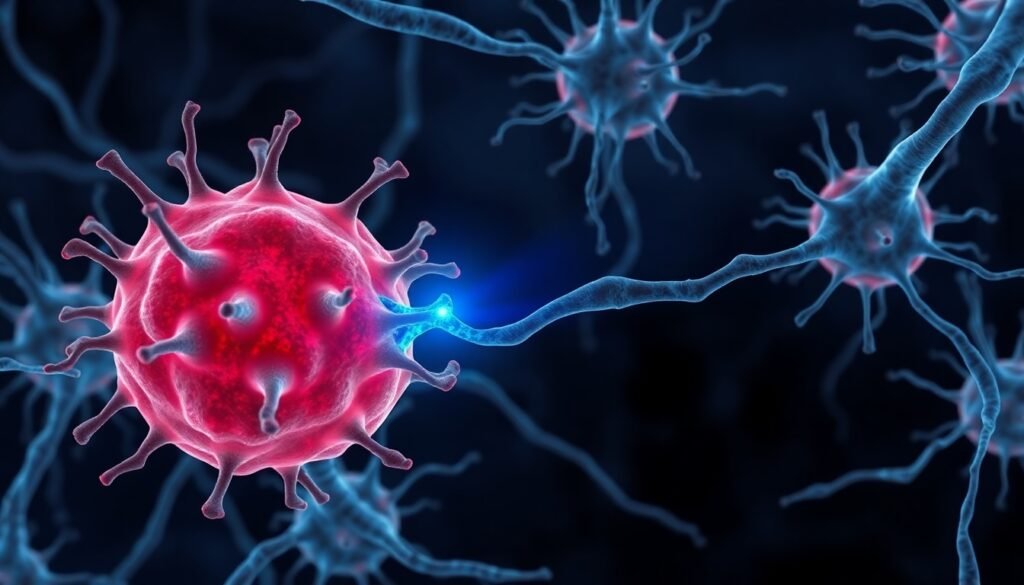
Over an astonishing two-year period, these cultured cells didn’t just survive; they thrived. They multiplied, organized themselves, and formed a complex, functioning organoid capable of generating its own electrical activity—the very hallmark of brain function. This isn’t just a cluster of cells; it’s a miniature, simplified model of a human brain, complete with interacting neurons.
The implications are staggering. For decades, neuroscience has relied heavily on animal models to study the brain’s complexities. While invaluable, these models have limitations. A mouse brain is not a human brain. These lab-grown organoids offer an unprecedented opportunity to study human brain development, cell communication, and the progression of neurological diseases like Alzheimer’s, Parkinson’s, or Zika-induced microcephaly in a purely human context. It allows for drug testing and research into neural disorders without a single animal subject. While the researchers humorously noted these organoids could be a "lab-grown lunch option for zombies," the real-world application is far more profound: a powerful new tool to unlock the deepest secrets of the human mind and conquer its most devastating diseases.
Weaving a Web of Healing
Spiders are a source of fear for many, but for a team of scientists, they were a source of inspiration. Taking a cue from the arachnid’s incredible ability to spin silk, researchers have developed a device that could change emergency medicine forever. As detailed in ACS Applied Materials & Interfaces, they created a glove equipped with spinneret-like nozzles that can "spin" a wound dressing directly onto an injury.
Imagine a paramedic arriving at an accident. Instead of fumbling with gauze pads and rolls of tape, they simply slip on a glove, aim it at the wound, and a web of ultra-thin, sterile polymer fibers covers the injury in seconds. This process, known as electrospinning, creates a nanofiber mat that conforms perfectly to the wound’s shape, providing a protective barrier against infection while allowing the tissue to breathe.
This technology, born from the field of biomimicry, offers on-demand wound care that is faster, more efficient, and potentially more effective than traditional methods. It’s particularly promising for dynamic environments like battlefields, sports arenas, or remote locations where immediate and sterile wound management is critical. It ensures a perfect fit, reduces the risk of contamination from handling materials, and can be applied in seconds. And for the arachnophobes out there, rest assured: the experiments did not involve any radioactive spider bites, just clever engineering inspired by nature’s master weavers.
The Wolf Apple’s Preserving Power
The legend of the werewolf often involves a full moon and a terrifying transformation. But a real-life fruit associated with a wolf—the maned wolf of Brazil—is at the center of a different kind of transformation: turning perishable produce into long-lasting groceries. The "wolf apple," or lobeira fruit, is a favorite food of the maned wolf, and researchers reporting in ACS Food Science & Technology have discovered its hidden potential.
They extracted starch from this unique fruit and converted it into a completely natural and edible coating. When they applied this thin, invisible film to baby carrots, the results were remarkable. The coated carrots remained bright, crisp, and fresh for up to 15 days, even when stored at room temperature. In contrast, uncoated carrots quickly deteriorated.
In a world grappling with massive food waste—where up to a third of all food produced is lost or wasted—this innovation is more than just a neat trick. It offers a safe, cost-effective, and sustainable alternative to plastic packaging and chemical preservatives. Such edible coatings could dramatically extend the shelf life of fruits and vegetables, reducing waste at every stage of the supply chain, from the farm to the consumer’s kitchen. It’s a powerful reminder that solutions to modern problems can often be found in nature, even in a fruit named for a wolf.
An Unwanted Gaze: Microplastics in Our Eyes
Perhaps the most unsettling discovery comes from a study that looked deep within the human eye. We know microplastics—tiny fragments of plastic from degraded bottles, textiles, and packaging—have infiltrated every corner of our planet, from the deepest oceans to the highest mountains. Now, a study in ACS Environmental Science & Technology Letters confirms they have also invaded one of the most delicate and protected parts of our bodies: the retina.
Scientists examined the retinas from 12 post-mortem donors and made a chilling discovery: every single sample contained microplastic particles. The types and concentrations of plastics varied, but their presence was universal. This finding is profoundly concerning. The retina is a complex, fragile tissue responsible for converting light into the neural signals that allow us to see. It is part of the central nervous system and is shielded by the blood-retina barrier, which is supposed to protect it from foreign substances.
The fact that microplastics have breached this barrier raises urgent questions. How do they get there? What is their long-term impact on our vision and overall eye health? Could they contribute to inflammation, cellular damage, or an increased risk of eye diseases? This research is the first crucial step, laying the groundwork for future investigations into these critical questions. It serves as a stark, unavoidable reminder of how deeply intertwined our health has become with the plastic pollution we’ve created. The "eye of newt" from a witch’s cauldron is fiction, but the plastic in our own eyes is a frightening reality.
Conclusion
From brains that buzz with electricity in a dish to bandages spun from a glove, from wolf-fruit coatings that fight food waste to the plastic particles clouding our vision, modern science is not afraid to embrace the strange and the unsettling. These breakthroughs, which sound like they were lifted from the pages of a sci-fi novel, demonstrate a relentless drive for innovation. By looking at the world through a different, sometimes eerie, lens, researchers are developing tangible solutions that can save lives, reduce waste, and help us understand the profound impact we have on our environment and our own bodies. The future of science may sound a little creepy, but it’s also incredibly bright.
Reference
ScienceDaily. (2025, October 30). It sounds creepy, but these scientific breakthroughs could save lives. ScienceDaily. https://www.sciencedaily.com/releases/2025/10/251030075112.htm