A new global study reveals the science behind our powerful connection to the music of our youth, uncovering surprising differences between genders and generations.
Have you ever been driving, flipping through the radio, when a song from your high school days comes on? Instantly, you’re not just hearing a melody; you’re transported. You can almost feel the worn-out fabric of your car seats, smell the cheap air freshener, and see the faces of the friends you shared that song with. This powerful, involuntary trip back in time isn’t just nostalgia—it’s a well-documented neurological phenomenon. Scientists call it the “reminiscence bump,” and a new global study led by the University of Jyväskylä in Finland has delved deeper than ever into why the music of our teenage years becomes so deeply embedded in our identity.
The research, which surveyed nearly 2,000 people from 84 countries, confirms that our most emotionally resonant music tends to come from our adolescence, with the connection peaking around age 17. But it also uncovers fascinating new layers, revealing that this bump isn’t the same for everyone. It shifts based on gender, evolves across our lifespan, and can even echo across generations.
The Adolescent Brain: A Musical Sponge
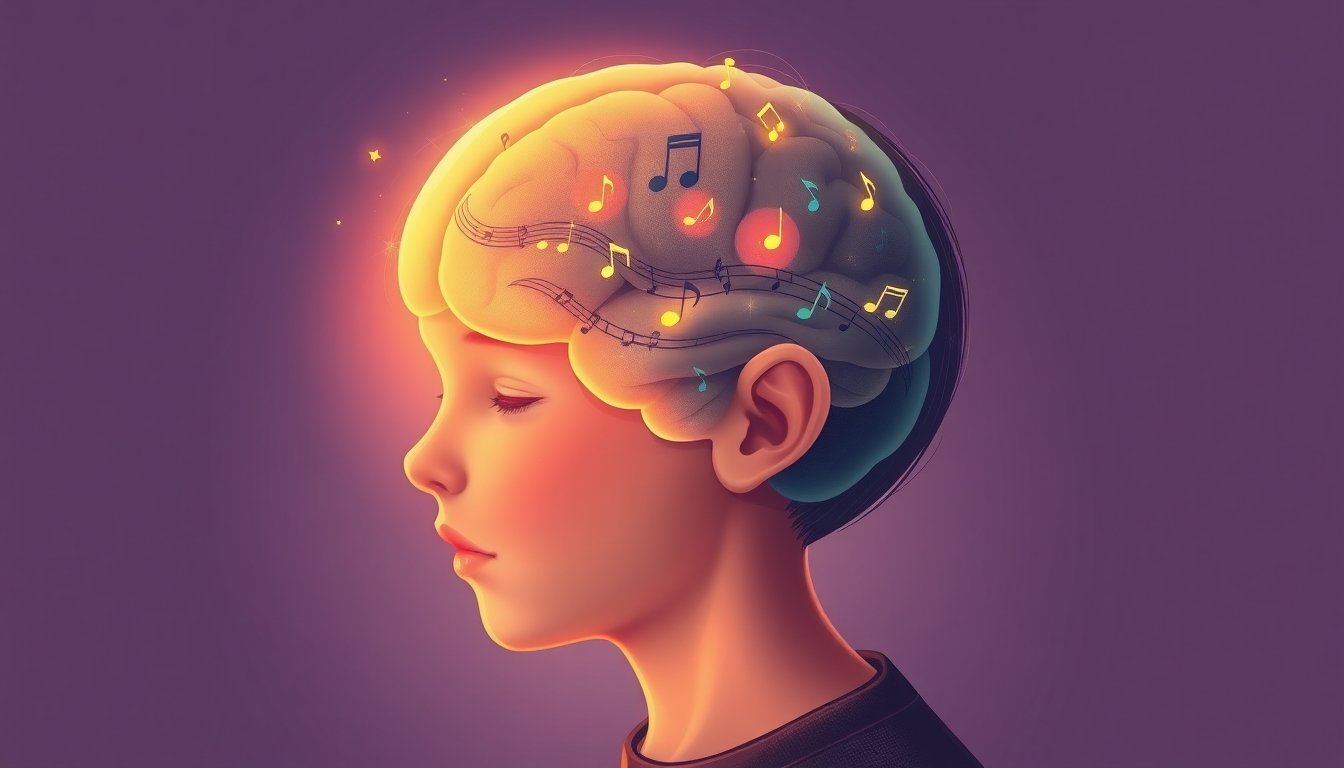
So, what makes the teenage years such a perfect storm for creating lifelong musical memories? According to Dr. Iballa Burunat, the study’s lead author, it’s all about hitting a unique neurological and biographical sweet spot. She describes the adolescent brain as a “sponge, supercharged by curiosity and a craving for reward, but without a fully developed filter.”
During our teenage years, the brain is undergoing a massive period of development. It’s highly plastic, meaning it’s exceptionally good at forming new, strong connections. This period is also when we are actively forming our sense of self, exploring our independence, and experiencing a whirlwind of intense emotions for the first time. When music enters this equation, it doesn’t just become background noise; it becomes the soundtrack to our identity formation. The powerful emotions we feel—love, heartbreak, rebellion, joy—get hardwired to the songs we’re listening to. Because the brain is still maturing, these experiences are absorbed more vividly and deeply, leaving an impression that can last a lifetime.

A Surprising Gender Divide in Musical Memory
One of the most striking findings from the study is that the reminiscence bump manifests differently for men and women. For men, the peak of musical memory formation occurs earlier, around age 16. For women, it comes a bit later, typically after age 19.
While the study didn’t collect qualitative data to explain this definitively, Dr. Burunat speculates based on previous psychological research. For many young men, adolescence is a time to establish independence and bond with peers, often through shared tastes in intense or rebellious music. This helps them cement their musical identity early on. Women’s musical identity, on the other hand, tends to develop over a longer period. It’s often more intricately woven with emotional connections and relationship milestones that extend into young adulthood. Society may also reinforce these patterns, encouraging women to use music as a tool for social and emotional expression over a longer span of their lives.
This difference is also reflected in genre preferences. The study notes that men often gravitate toward intense genres that fuel a sense of teenage rebellion, a phase that peaks early. Women tend to engage with a wider spectrum of music—from pop and soul to classical—using it to strengthen social bonds and mark specific life moments, purposes that naturally extend beyond the teenage years.
How Our Connection to Music Evolves
The study also highlights that our relationship with music is not static; it continues to evolve throughout our lives, and again, it does so differently for men and women. For men, the music of their adolescence often becomes a permanent anchor for their personal identity. The songs that defined their youth remain their most meaningful touchstones, even decades later.
For women, the connection is often more fluid. The research shows that starting in their mid-forties, women frequently find that more recent songs hold greater emotional weight. They use music as a flexible tool for emotional expression and social connection throughout their lives. A new song might become profoundly meaningful because it’s tied to a current relationship, a period of personal growth, or a new experience, sometimes even eclipsing the music of their youth in emotional significance.
The Echo of a Previous Generation: The Cascading Bump
Perhaps the most mind-bending twist in the research is a phenomenon the scientists call the “cascading reminiscence bump.” They found that younger listeners, both men and women, are forming deep, emotional connections to music released decades before they were born—specifically, from about 25 years earlier.
This isn’t just about appreciating “oldies.” It’s a genuine, cross-generational imprinting of musical memory. The likely cause? Our parents. The music that defined our parents’ own reminiscence bump often becomes the soundtrack of our childhood. Hearing your dad’s favorite classic rock or your mom’s beloved 80s pop tunes throughout your formative years can create a powerful secondary connection, an echo of their memories within your own.
More Than Just a Time Machine
In the end, music acts as a unique key to our past. Dr. Burunat compares it to a scent, which can bypass the brain’s language centers to trigger an immediate, non-verbal memory. But she adds a crucial distinction: “Unlike a smell, music unfolds over time. Its rhythm, melody, and structure provide a kind of sequential framework, a timeline.”
This extraordinary combination allows a song to act as both a time machine and a storyteller, helping us recall not just a single feeling but the entire context of an event. The study makes it clear that music is far more than entertainment. It’s a living archive of our most meaningful memories, a foundation for our sense of self, and a testament to the story of who we are, who we were, and how we’ve grown.
Reference
Burunat, I., Toiviainen, P., Särkimäki, V., & Brattico, E. (2024). Memory bumps across the lifespan in personally meaningful music. Memory, 1–16. https://doi.org/10.1080/09658211.2024.2337402