For parents of a premature infant, the neonatal intensive care unit (NICU) can be an overwhelming world of monitors, machines, and medical terminology. Amidst the high-tech environment, a simple, low-tech practice is proving to have a profound impact not just on a baby’s immediate health, but on the very architecture of their developing brain. New research reveals that skin-to-skin contact, often called “kangaroo care,” is associated with stronger brain development in regions crucial for emotional regulation and stress management.

A Fragile Start and a Powerful Intervention
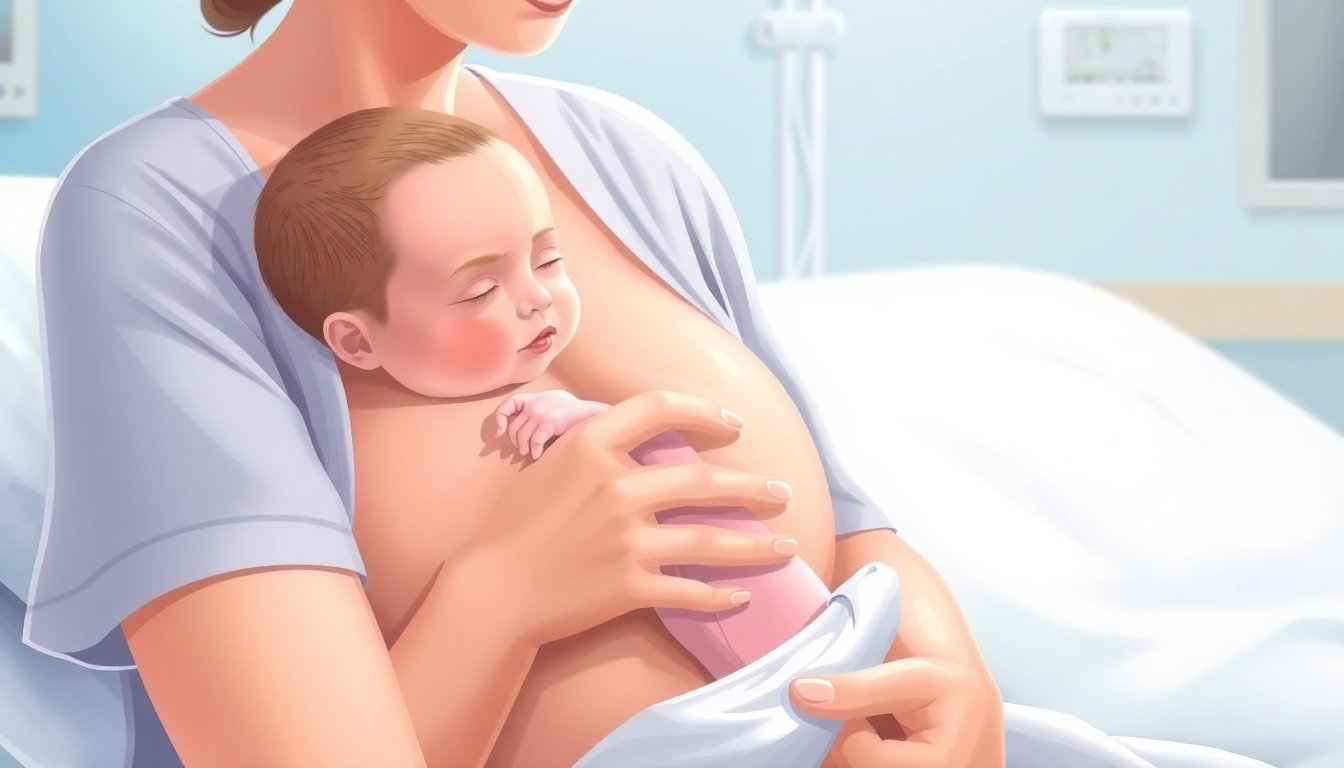
When a baby is born very preterm—before 32 weeks of gestation—their journey begins in a state of extreme vulnerability. Their organs, including the brain, are still in a critical phase of development. The controlled environment of the NICU is life-saving, but it is a far cry from the sensory world of the womb. For decades, clinicians and parents have recognized the immediate benefits of skin-to-skin contact. Placing a diaper-clad infant directly onto a parent’s bare chest has been shown to stabilize heart and lung function, improve sleep, promote growth, reduce pain, and foster a powerful parent-infant bond.
“Skin-to-skin contact in preterm infants has been shown to have many benefits,” explains Dr. Katherine E. Travis of the Burke Neurological Institute and lead author of a recent study on the topic. While previous research focused on physiological and behavioral advantages, Dr. Travis and her team wanted to look deeper—inside the brain itself.
Peeking Inside the Developing Brain
The study, published in the journal Neurology, focused on a group of 88 infants born at an average of 29 weeks gestation and weighing just 2.65 pounds. During their hospital stay, which averaged two months, researchers meticulously tracked every instance of skin-to-skin care provided by family members. They recorded the duration of each session and the total minutes per day. On average, families provided about one session per day, lasting around 70 minutes, with mothers being the primary providers.
Just before these tiny patients were discharged, around the time they would have reached full-term, each infant underwent a specialized brain scan known as diffusion MRI. This non-invasive technique measures the movement of water molecules within the brain’s white matter. White matter acts as the brain’s communication network, a complex system of nerve fibers (axons) that transmits signals between different brain regions. The way water moves along these pathways can tell scientists a great deal about the maturity and integrity of these crucial connections.
The researchers were particularly interested in two key metrics:
- Mean Diffusivity (MD): This measures how freely water can move in any direction. In certain developmental contexts, changes in MD can reflect changes in the cellular environment of the brain tissue.
- Fractional Anisotropy (FA): This measures how directional the water movement is. High FA suggests that water is moving along well-organized nerve fibers, indicating a more mature and structured pathway.
By comparing these MRI metrics with the skin-to-skin care logs, the researchers aimed to see if a connection existed between the caregiving experience and the physical structure of the brain.
A Clear and Striking Association
The results were compelling. The team found a significant link between the amount of skin-to-skin contact and the microstructure of specific white matter tracts involved in emotion and cognition.
Specifically, longer individual sessions of skin-to-skin care were associated with higher mean diffusivity in two critical brain regions: the cingulum bundle, which is vital for attention and emotional regulation, and the anterior thalamic radiations (ATRs), a network connecting areas involved in emotional processing and memory. Longer sessions were also linked to lower fractional anisotropy in the ATRs.
Similarly, a higher total number of minutes of skin-to-skin care per day was linked to higher mean diffusivity and lower fractional anisotropy in the anterior thalamic radiations. These findings suggest that the caregiving experience was related to the maturation of these specific neural pathways.
Crucially, these associations held firm even after the researchers controlled for other factors that could influence brain development, such as the baby’s gestational age at birth, medical complications, socioeconomic status, and even how often the family visited the hospital. This strengthens the argument that the skin-to-skin experience itself was a key factor.
The Lasting Impact of Early Experiences
While the study demonstrates a strong association, it’s important to note that it does not prove direct causation. However, the findings provide powerful evidence for a long-held belief in neuroscience: early life experiences physically shape the developing brain.
“Our findings add to growing evidence that white matter development is sensitive to a preterm infant’s experience while in the hospital,” Dr. Travis states. “Skin-to-skin care not only provides preterm infants with family connections through bonding, it may also be encouraging new connections within the brain itself, improving a baby’s brain health overall.”
The research underscores that care in the NICU is about more than just medical stability. The sensory input a baby receives—the warmth of a parent’s skin, the sound of their heartbeat, the gentle rhythm of their breathing—may be an active ingredient in building a healthy, resilient brain. It suggests that empowering parents to be hands-on caregivers is not just a bonus, but a potentially critical component of neuroprotective care.
As with any study, the authors note some limitations, such as its retrospective design and being conducted at a single hospital. They call for future research to explore how these early brain changes might translate to long-term behavioral outcomes as these children grow. Nonetheless, this study sends a clear and hopeful message. In the complex and often intimidating environment of the NICU, one of the most powerful tools for supporting a vulnerable infant’s brain may be the simple, loving, and profound power of a parent’s touch.
Reference
Travis, K. E., et al. (2025). Skin-to-Skin Holding in Relation to White Matter Microstructure in Infants Born Preterm. Neurology.