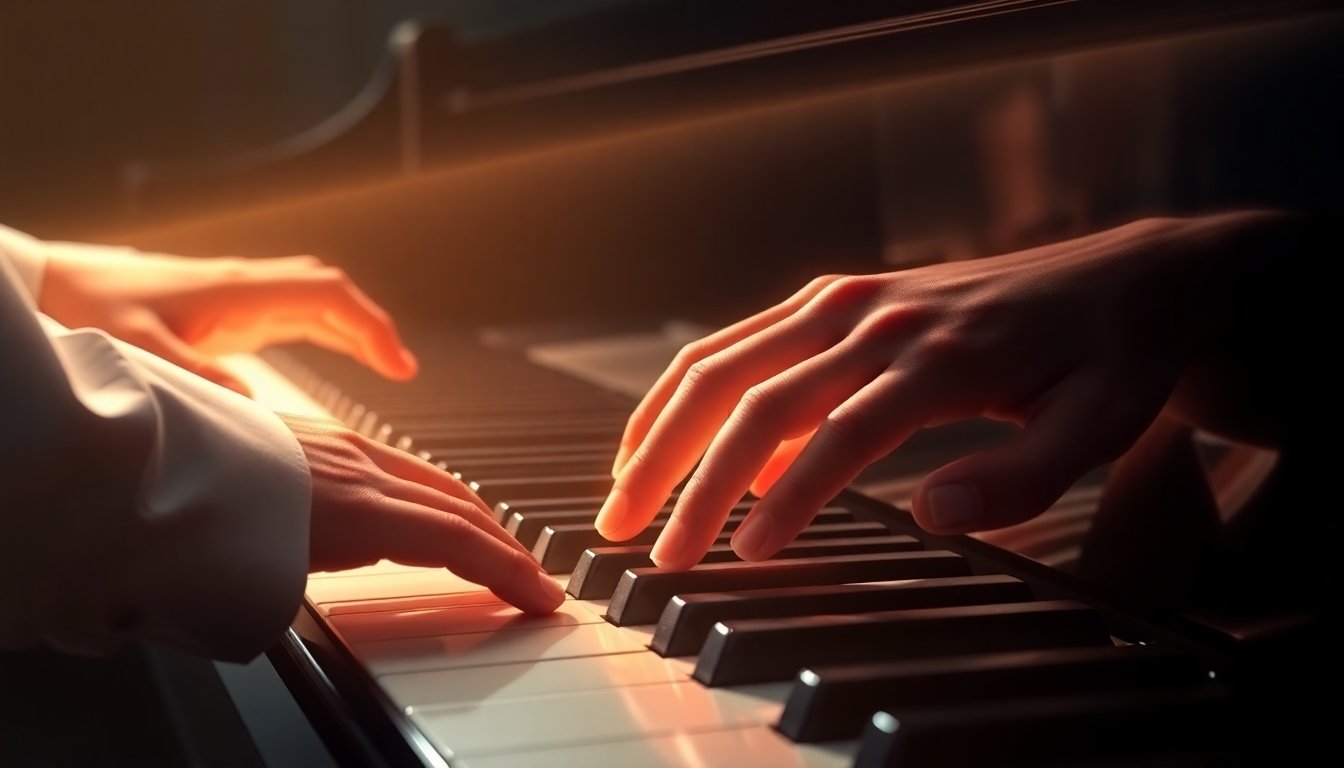
For over a century, it was an artistic mystery. Now, new research reveals the precise, measurable skills that allow a pianist to change a note’s very character, turning intuition into scientific fact.
Anyone who has listened to a masterful pianist knows the feeling. Two artists can play the same note on the same piano, yet one sounds bright and sharp, while the other sounds warm and mellow. For generations, this phenomenon has been attributed to the "touch" of the pianist—an almost mystical quality that separates the good from the great. But is this "magic" real, or is it simply a poetic metaphor for subtle differences in volume and timing? This very question was debated in the pages of the prestigious journal Nature over a century ago, but without the tools to investigate, it remained an unanswered artistic enigma. Until now.

A dedicated research group, led by Dr. Shinichi Furuya of the NeuroPiano Institute in collaboration with Sony Computer Science Laboratories, Inc., decided to tackle this age-old question head-on. They weren’t content with metaphors; they wanted data. Their goal was to scientifically clarify how a pianist’s physical manipulation of the keys could alter the piano’s timbre—the unique "color" or quality of its sound, distinct from its pitch or volume. The central mystery was whether performers could truly produce different timbres from an instrument that, mechanically, should produce a consistent sound, and what specific motor skills were required to achieve this.
To peer into the secret world of a pianist’s touch, the team developed a remarkable piece of technology: the "Hackkey" system. This proprietary, non-contact sensor system is an engineering marvel, capable of measuring the movement of all 88 piano keys with incredible precision—tracking them at a rate of 1,000 frames per second and with a spatial resolution of just 0.01 millimeters. This is like having a super-powered microscope that can see every infinitesimal nuance of how a key is pressed.
With this tool, the researchers recorded 20 internationally acclaimed pianists. They weren’t just asked to play a piece; they were instructed to perform specific notes with the intention of producing diverse timbral qualities, such as "bright" versus "dark," or "light" versus "heavy."
The second phase of the experiment moved from the performer to the audience. The team played these recordings for a group of 40 participants. This listening group was a mix of experienced pianists and individuals with no musical training at all. Would they be able to hear the difference?
The answer was a resounding yes. The study’s results were remarkable: listeners, regardless of their musical background, could consistently distinguish the timbres that the pianists intended to express. As one might expect, the listeners who were also pianists showed a greater sensitivity to these subtle differences, but even the untrained ears in the room could perceive the change in the sound’s character.
Crucially, the researchers controlled for the obvious factors. They ensured that this timbral discernment was possible even when the volume and tempo of the notes were identical. This was the smoking gun. It proved that the difference listeners were hearing wasn’t just a matter of playing louder or faster; it was something else entirely, something rooted in the very quality of the sound itself. The pianists’ touch was not a sensory illusion but a verifiable reality.
Having proven that timbre could be controlled, the team dove into their high-resolution data to understand how. Using advanced data analysis, they sifted through the millions of data points to identify the exact key movement features that produced these audible differences.
They discovered that the "magic" wasn’t in one single action but in a combination of highly controlled, subtle movements happening in milliseconds. For example, they found that a key contributor to timbre was the key’s acceleration at the very last moment before the hammer is "let go" to strike the string—a phase known as the escapement. Another critical factor was the microscopic deviation in timing when multiple fingers strike keys for a chord. These are not movements a casual observer would ever notice, but they are precise motor skills honed over years of dedicated practice.
To confirm their findings, the researchers conducted a final experiment. They synthesized piano notes where they varied only one of these specific movement features at a time. When played for listeners, these synthetically altered notes were perceived as having different timbres. This provided the first-ever empirical evidence of a direct, causal relationship between a pianist’s physical touch and the resulting sound quality.
This discovery is a watershed moment for musicians and educators. It effectively quantifies the "tacit knowledge" that has been passed down through generations of piano teachers using abstract language. Vague instructions like "play with more warmth" can now be replaced with concrete, evidence-based guidance on specific physical techniques. This could revolutionize music education, making practice more efficient, helping students overcome technical hurdles, and even preventing the risk of injury from improper technique.
But the implications extend far beyond the world of music. This research illuminates a fundamental aspect of the human experience: the profound connection between our advanced motor control and our higher-order perception. It helps explain how dexterous physical skill can produce deep aesthetic experiences. This opens exciting new avenues for interdisciplinary research in neuroscience, psychology, and art studies.
The potential applications are vast. The principles of skill acquisition and transfer uncovered here could be applied to fields as diverse as surgery, where a surgeon’s "touch" is critical; sports, where minute adjustments in form define performance; and even the design of next-generation human-computer interfaces that respond more intuitively to our movements.
For too long, the worlds of science and music education have remained separate. While fields like sports and medicine have long embraced technology and data to enhance performance, the arts have often relied on tradition and intuition alone. This research signals a change, heralding a new era of "dynaformics"—the science of music performance.
By demystifying one of the most cherished aspects of musical artistry, science has not diminished its magic but has instead revealed its incredible biological and physical foundations. The knowledge gained from this study promises a future where artists are liberated from physical constraints, empowered by a deeper understanding of their craft, and free to express their creativity to its fullest potential. The ghost in the piano, it turns out, was the beautiful, complex, and now measurable skill of the human hand.
Reference
Furuya, S., et al. (2025). [Title of the study, e.g., The biomechanical origins of timbre control in piano performance]. Proceedings of the National Academy of Sciences.
Note: The full citation details such as article title, volume, and page numbers were not available in the source material.