A new study suggests the very genetic changes that gave us complex cognition and language might also explain the high prevalence of neurodiversity in our species.
From an evolutionary standpoint, the human brain is a marvel of rapid adaptation. But this accelerated development may have come with a significant trade-off. A groundbreaking study suggests that the same evolutionary pressures that sculpted our unique cognitive abilities could also be responsible for the relatively high rates of Autism Spectrum Disorder (ASD) in humans. This reframes our understanding of autism, not as a defect, but as a potential byproduct of what makes us human.
Autism is more common than many realize. The World Health Organization estimates that about one in 100 children globally has autism, with some national studies, like those in the United States, reporting rates as high as one in 31 children. For years, scientists have noted that autism and other conditions like schizophrenia appear to be uniquely human, or at least far more pronounced in our species. The behaviors associated with these conditions often involve cognitive functions—such as complex speech and social understanding—that are hallmarks of human evolution. This has led to a compelling question: Is there a deeper connection between the evolution of the human brain and the existence of neurodiversity?

Peering into Our Evolutionary Past with Modern Tools
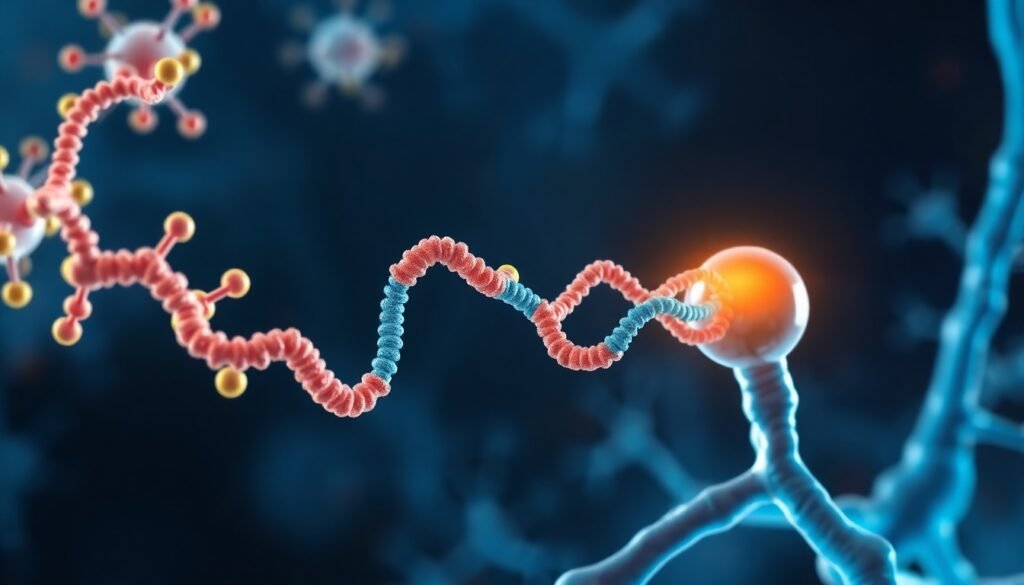
Until recently, comparing the intricate cellular architecture of the human brain to that of our closest primate relatives was incredibly difficult. However, the advent of single-cell RNA sequencing has revolutionized neuroscience. This technology allows researchers to identify and analyze individual brain cells, creating a detailed map of the staggering array of neuronal types that exist. By applying this technique across different species, scientists can now pinpoint how specific cell types have changed over evolutionary time.
Researchers investigating this very question analyzed large-scale datasets from the brains of humans, chimpanzees, and other mammals. They focused on three distinct regions of the neocortex, the outer layer of the brain responsible for higher-order functions like thought, language, and consciousness. Previous work had already shown that while some brain cell types have remained remarkably consistent across millions of years of mammalian evolution, others have changed dramatically. The driving force behind these different rates of evolution, however, remained a mystery.
A Human-Accelerated Neuron
The new study, published in Molecular Biology and Evolution, uncovered a striking pattern. The researchers found a consistent principle: the more abundant a neuronal subtype is, the more its gene expression is conserved between species. This makes intuitive sense, as major changes to a common cell type could have widespread, potentially negative effects. But they also found a glaring exception to this rule.
Layer 2/3 intratelencephalic (IT) neurons, the most abundant type of excitatory neuron in the brain’s outer cortex, showed an exceptional rate of evolution specifically in the human lineage. Compared to other apes, these crucial neurons underwent rapid and significant changes after our ancestors diverged. This discovery was a major clue. Something about these specific neurons was so advantageous for early humans that it drove them to evolve at an unprecedented speed.
The Link to Autism and a Cognitive Trade-Off
The plot thickened when the scientists examined which genes were changing. They were surprised to find that this accelerated evolution was accompanied by dramatic shifts in genes strongly associated with Autism Spectrum Disorder. These weren’t random mutations; the evidence suggested these genetic changes were driven by positive natural selection. In other words, these autism-linked gene variants likely conferred a fitness advantage to our ancestors.
But what advantage could that be? The researchers speculate that it relates to one of humanity’s most defining features: our extended childhood and slow brain development. Many of the evolving, autism-associated genes are also linked to developmental timing. The evolution of these genes may have contributed to the much slower postnatal brain development seen in humans compared to chimpanzees. While a chimp’s brain reaches near-adult size within a couple of years, the human brain continues to grow and wire itself for more than two decades.
This prolonged period of development is a critical advantage, allowing for extensive learning, social imprinting, and the development of complex thinking and culture. It’s the foundation upon which our sophisticated cognitive abilities are built. Furthermore, the capacity for language, a skill often affected in individuals with autism, is a direct result of this unique developmental timeline. It’s plausible that the rapid evolution of these autism-linked genes was favored because it helped orchestrate this slower, more complex brain construction, ultimately enabling higher cognition and speech.
Neurodiversity: An Inevitable Part of Being Human
This research paints a new picture of autism as part of an evolutionary trade-off. The genetic shifts that gave our species unparalleled cognitive flexibility and linguistic prowess may have also increased the potential for a wider range of neurological outcomes, including autism.
As the paper’s lead author, Alexander L. Starr, explained, “Our results suggest that some of the same genetic changes that make the human brain unique also made humans more neurodiverse.”
This perspective suggests that the high prevalence of autism isn’t an anomaly but rather an inherent feature of our evolutionary journey. The very process that made our brains so powerful also made them more sensitive to certain perturbations, leading to the rich tapestry of human neurodiversity we see today. It’s a profound reminder that in evolution, there are no simple paths, only complex trade-offs that continue to shape who we are as a species.
Reference
Starr, A. L., et al. (2024). A general principle of neuronal evolution reveals a human accelerated neuron type potentially underlying the high prevalence of autism in humans. Molecular Biology and Evolution. https://doi.org/10.1093/molbev/msae089