A deep dive into the neural circuitry that governs our escape instinct, and the surprising role of the body’s own cannabinoid system in managing learned threats.
Fear is one of our most primal and essential emotions. It’s the internal alarm system that has kept our species alive for millennia, screaming “Danger!” and priming our bodies for action. When faced with a threat, we undergo the classic fight-or-flight response. But what about learned threats? How does the brain remember a specific danger and fine-tune its response to ensure a swift escape the next time? The answer lies deep within the brain’s intricate wiring, in a complex dance of neurons, pathways, and chemical messengers.
A recent study sheds new light on this process, identifying a specific neural circuit and the surprising role of the endocannabinoid system—our body’s own version of the compounds found in cannabis—in enhancing our ability to escape from a known danger. This research untangles the precise mechanics of how we learn to flee, offering a fascinating glimpse into the brain’s adaptive survival mechanisms.

The Brain’s Built-In Escape Route
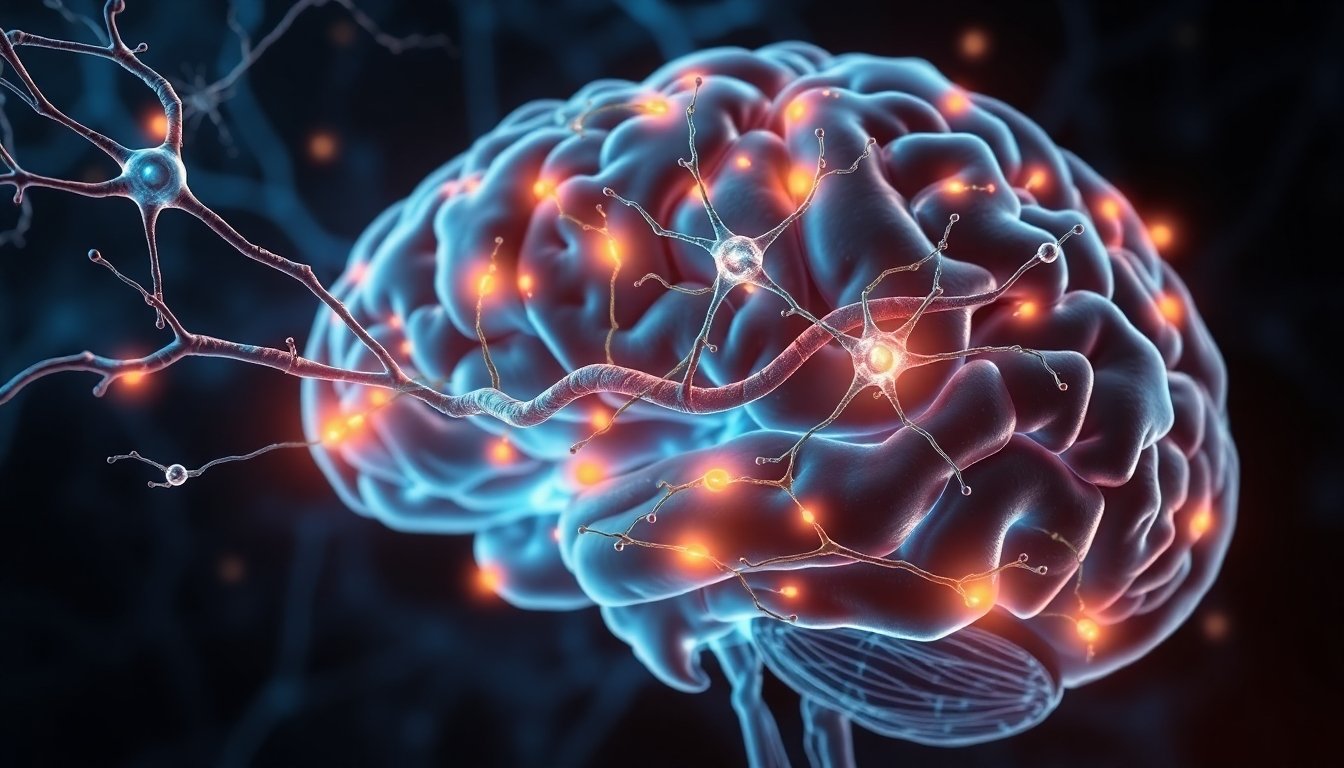
At the heart of this discovery is a pathway connecting two key brain regions: the ventral tegmental nucleus of Gudden (VTg) and the dorsal premammillary nucleus (PMd). Think of this pathway as a critical control switch for escape behavior. The PMd is a hub known to be involved in initiating defensive and escape actions. When it’s active, it helps trigger the physical response of fleeing. The VTg, on the other hand, acts as a gatekeeper, sending inhibitory (or "calm down") signals to the PMd.
Under normal circumstances, the VTg keeps the PMd in check, preventing us from randomly bolting in the absence of a real threat. This inhibitory control is crucial for maintaining composure. However, when we learn that a particular situation or stimulus is dangerous, the brain needs a way to override this safety brake and prioritize a quick getaway. This is where the endocannabinoid system comes into play.
Endocannabinoids: Releasing the Brakes on Fear
Most people associate cannabinoids with the cannabis plant, but our brains produce their own versions called endocannabinoids (eCBs). These molecules are vital neuromodulators, meaning they fine-tune the communication between neurons. They are involved in regulating everything from appetite and mood to memory and pain.
The study reveals that after a learned threat experience, there is an increase in eCB signaling within this specific VTg-to-PMd circuit. The endocannabinoids act on the VTg neurons, essentially telling them to quiet down. By suppressing the inhibitory signals coming from the VTg, the eCBs perform a crucial function known as "disinhibition." They aren’t directly exciting the escape-driving PMd; instead, they are removing the brake that was holding it back.
This release of the brake allows the PMd to become more active in response to the learned threat, thereby enhancing the speed and efficiency of the escape behavior. It’s a sophisticated mechanism: the brain doesn’t just learn to be afraid; it learns to chemically re-wire its escape route to be more effective, using its own internal cannabinoid system to flip the switch from caution to flight.
The Scientific Process: A Commitment to Precision
Unraveling such a complex neural mechanism requires incredible precision, and the scientific process is built on a foundation of rigor, verification, and, when necessary, correction. In the course of this research, scientists investigated exactly how the VTg neurons were being suppressed. Was the threat experience fundamentally changing the neurons themselves, making them less excitable?
This is where the meticulous nature of science shines. The researchers used a technique called patch-clamp recording to measure the electrical properties of individual neurons. As detailed in a subsequent correction to the original paper, a re-examination of the raw data clarified a subtle but important point. The investigation revealed that the intrinsic excitability of the VTg neurons—their fundamental ability to fire an action potential when stimulated—did not actually change after the threat learning experience.
So, if the neurons themselves weren’t less excitable, how were they being silenced? The updated analysis pointed to the synapses—the tiny, specialized junctions where one neuron communicates with the next. The evidence now suggests that the endocannabinoids were likely acting at these synaptic terminals, weakening the connection and reducing the amount of inhibitory signal the VTg could send to the PMd. This is a perfect example of how science is a self-correcting process. The overall conclusion that endocannabinoids disinhibit this pathway to enhance escape remains robust, but this refinement provides a more accurate picture of the underlying cellular mechanics. It highlights that the change wasn’t in the neuron’s core identity, but in its communication with others.
Implications for Anxiety and Trauma
Understanding the brain’s natural mechanisms for managing fear and escape has profound implications. Disorders like PTSD, panic disorder, and specific phobias are characterized by a dysregulation of the fear response system. In these conditions, the brain’s alarm system can become overactive, triggering intense fear and escape urges in situations that are not actually dangerous.
By mapping out the specific circuits and chemical modulators like endocannabinoids, researchers can identify potential targets for new therapies. If this VTg-to-PMd pathway is over-suppressed or too easily disinhibited in anxiety disorders, future treatments could aim to restore balance to this circuit. This research moves us one step closer to understanding not only how a healthy brain responds to danger but also what goes wrong when this system is thrown off-kilter.
The brain remains the most complex object in the known universe, and its secrets are only revealed through persistent and painstaking investigation. This work beautifully illustrates that journey, showing how a broad question about survival can lead to a detailed understanding of molecules, neurons, and the elegant, life-saving logic of our own biology.
Reference
Chai, R., Wang, N., Nie, J., Xu, Z., Zhang, S., Deng, S., Wang, R., Li, M., Gao, X., Geng, R., Li, H., Li, L., Wu, H., Li, Z., Cheng, T.-L., Xu, X.-H., Shu, Y., Hong, H., Huang, X., & Wang, W. (2025). Author Correction: Endocannabinoids disinhibit the ventral tegmental nucleus of Gudden to dorsal premammillary nucleus pathway to enhance escape behavior following learned threat experience. Nature Communications, 16(1), 8314. https://doi.org/10.1038/s41467-025-64121-7