A groundbreaking study from Cedars-Sinai reveals a potential new path toward regenerative therapies for age-related cognitive decline and Alzheimer’s disease, using a patient’s own cells to create a font of youth.
What if we could not just slow down the aging process in our brains, but actually reverse it? For decades, this question has been the stuff of science fiction. Yet, as we watch loved ones grapple with the fog of cognitive decline or the devastating progression of Alzheimer’s disease, the search for a real-life fountain of youth for the mind has never been more urgent. Now, a remarkable breakthrough from scientists at Cedars-Sinai offers a tangible glimmer of hope, suggesting that the key to rejuvenating our brains might lie within our own cells.
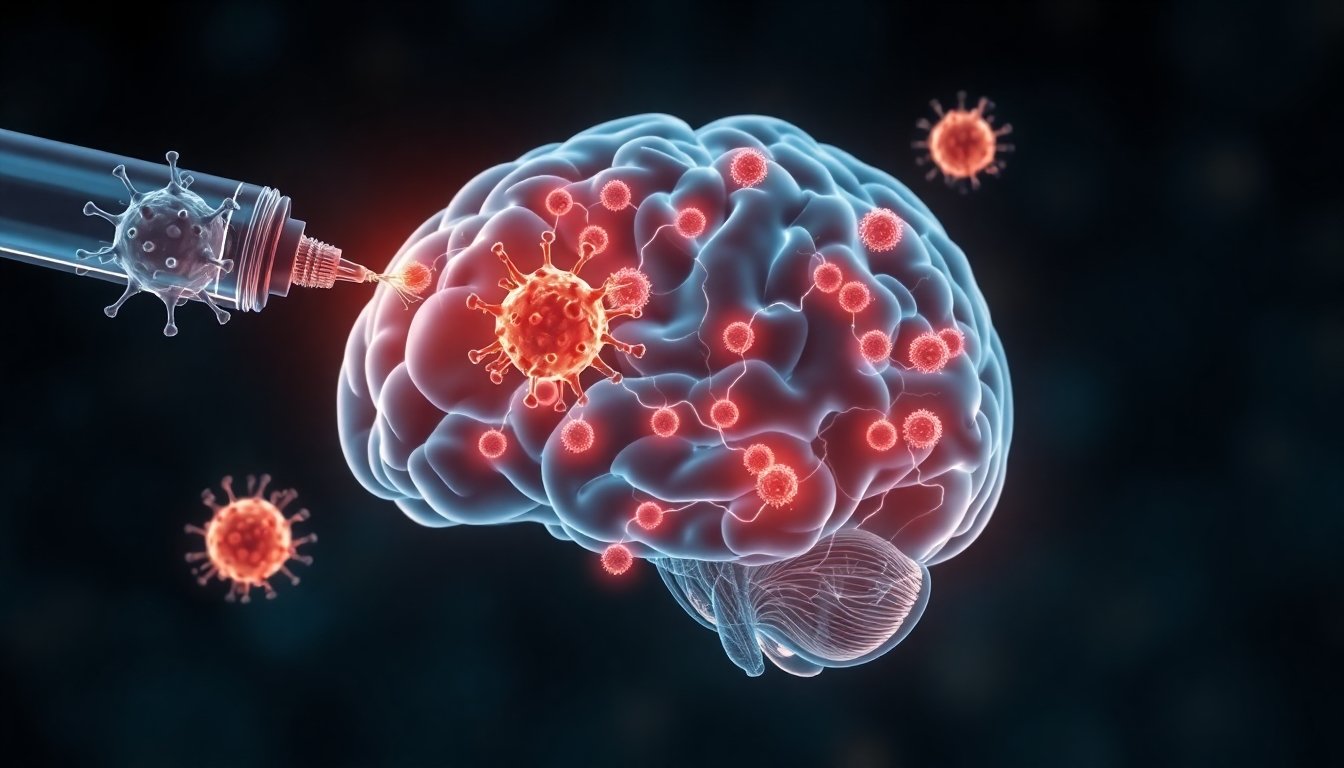
In a study that could reshape our approach to anti-aging medicine, researchers have successfully reversed signs of brain aging and memory loss in laboratory mice. They didn’t use a magic potion or a risky, unproven drug. Instead, they harnessed the power of stem cells to create an army of “young” immune cells, which, when infused into aging mice, revitalized their brains and restored lost cognitive function. This discovery, published in the journal Advanced Science, paves the way for a future where personalized, regenerative therapies could combat the neurological toll of aging.
The Problem with an Aging Immune System
To understand the significance of this breakthrough, we first need to appreciate the problem. As we age, so does our immune system. The vigilant cells that once patrolled our bodies, clearing out debris and fighting off invaders, become less effective. Among these are a class of cells known as mononuclear phagocytes, the body’s microscopic cleanup crew. They circulate through our blood, gobbling up harmful substances and damaged cells. With age, their function wanes, contributing to a state of chronic, low-grade inflammation that is a hallmark of many age-related diseases, including those affecting the brain.
Scientists have long suspected that factors in the blood play a crucial role in brain aging. Previous studies famously showed that transfusing blood from young mice into older mice could improve their cognitive abilities. While fascinating, this “vampire therapy” approach has significant hurdles for human application. “Previous studies have shown that transfusions of blood or plasma from young mice improved cognitive decline in older mice, but that is difficult to translate into a therapy,” explained Clive Svendsen, PhD, the executive director of the Board of Governors Regenerative Medicine Institute at Cedars-Sinai and senior author of the study. The Cedars-Sinai team sought a more practical and powerful solution: what if, instead of borrowing youth from another source, we could manufacture it ourselves?
Engineering Youth in a Dish
The team’s innovative approach centered on a revolutionary technology: human induced pluripotent stem cells (iPSCs). In simple terms, iPSCs are adult cells—often taken from skin or blood—that have been reprogrammed in the lab, essentially resetting them to an embryonic-like state. From this blank slate, scientists can guide them to become almost any type of cell in the body.
In this case, the researchers coaxed the human iPSCs to develop into brand-new, youthful mononuclear phagocytes. This process provides a potentially limitless supply of young immune cells that can be generated from any individual, opening the door for personalized medicine. With this powerful tool in hand, the scientists set out to test a bold hypothesis: could an infusion of these lab-grown young immune cells rejuvenate an aging brain?

Remarkable Results in Memory and Brain Health
The researchers administered the young human immune cells to two groups of mice: one group of naturally aging mice and another group that served as a model for Alzheimer’s disease. The results were nothing short of astounding.
On memory tests, the treated mice significantly outperformed their untreated counterparts. They demonstrated a clear improvement in their ability to learn and remember, suggesting a genuine restoration of cognitive function. To understand why, the scientists looked deeper into the brain, focusing on the hippocampus—a region critical for learning and memory.
They discovered that the brains of the treated mice had a greater number of “mossy cells,” a specific type of neuron in the hippocampus. “The numbers of mossy cells decline with aging and Alzheimer’s disease,” noted Alexendra Moser, PhD, a project scientist in the Svendsen Lab and the study’s lead author. “We did not see that decline in mice receiving young mononuclear phagocytes, and we believe this may be responsible for some of the memory improvements that we observed.”
Furthermore, the treatment had a profound effect on the brain’s own resident immune cells, the microglia. Healthy microglia act as the brain’s dedicated caretakers, extending long, thin branches to survey their environment and clear away damaged tissue. In aging and diseased brains, these branches retract, and the cells become less effective. In the mice that received the young immune cell infusion, however, their microglia remained healthy and branched, indicating a well-maintained and functional brain immune system.
An Intriguing Mystery: Action at a Distance
Perhaps the most fascinating part of the discovery is how the treatment worked. The researchers found that the infused young mononuclear phagocytes did not appear to cross the blood-brain barrier and enter the brain itself. So how did they exert such a powerful rejuvenating effect?
The team believes the cells are acting indirectly, influencing the brain from the bloodstream. They propose a few compelling possibilities. The young immune cells might be releasing a cocktail of anti-aging proteins or other beneficial signals that can travel into the brain. Alternatively, they might be acting as a filter, actively removing pro-aging, harmful factors from the blood, thereby protecting the brain from their toxic effects. Pinpointing this exact mechanism is the next major goal for the research team.
The Future of Personalized Anti-Aging Therapy
This study represents a major leap forward in the field of regenerative medicine. By using iPSCs, the therapy can be personalized—a patient’s own cells could be used to generate their treatment, eliminating the risk of rejection and providing an inexhaustible source.
“Because these young immune cells are created from stem cells, they could be used as personalized therapy with unlimited availability,” said Jeffrey A. Golden, MD, executive vice dean for Education and Research at Cedars-Sinai. “These findings show that short-term treatment improved cognition and brain health, making them a promising candidate to address age- and Alzheimer’s disease-related cognitive decline.”
While the road from successful mouse studies to human clinical trials is long and complex, this research provides a powerful and promising new direction. It shifts the focus from merely slowing decline to actively rejuvenating the brain, offering a future where we might not just live longer, but live better, with minds that remain sharp, clear, and vibrant for years to come.
Reference
Moser, A., Svendsen, C., et al. (2024). Rejuvenation of the Aged and Alzheimer’s Disease Mouse Brain by Systemic Administration of Human iPSC-Derived Mononuclear Phagocytes. Advanced Science.