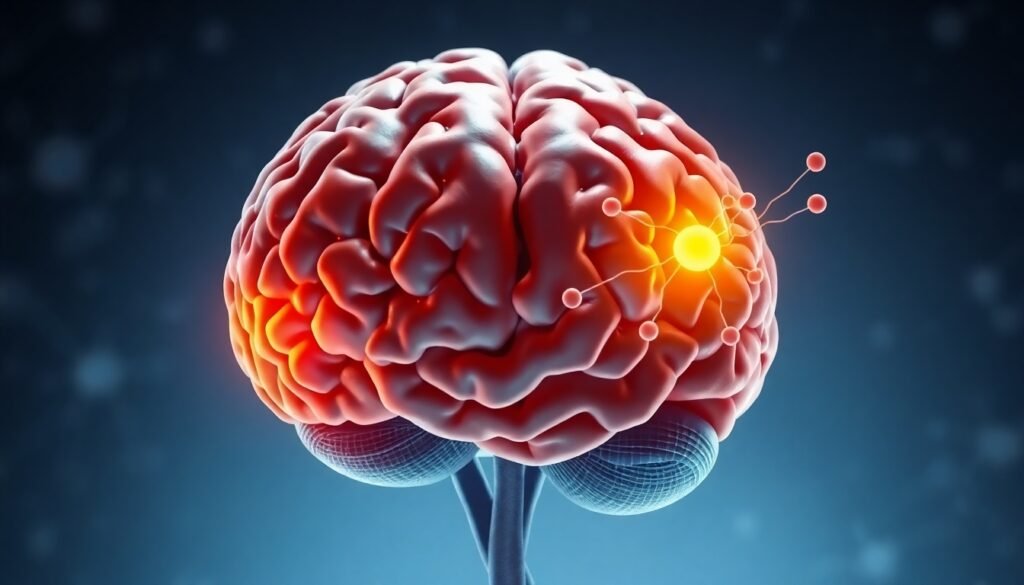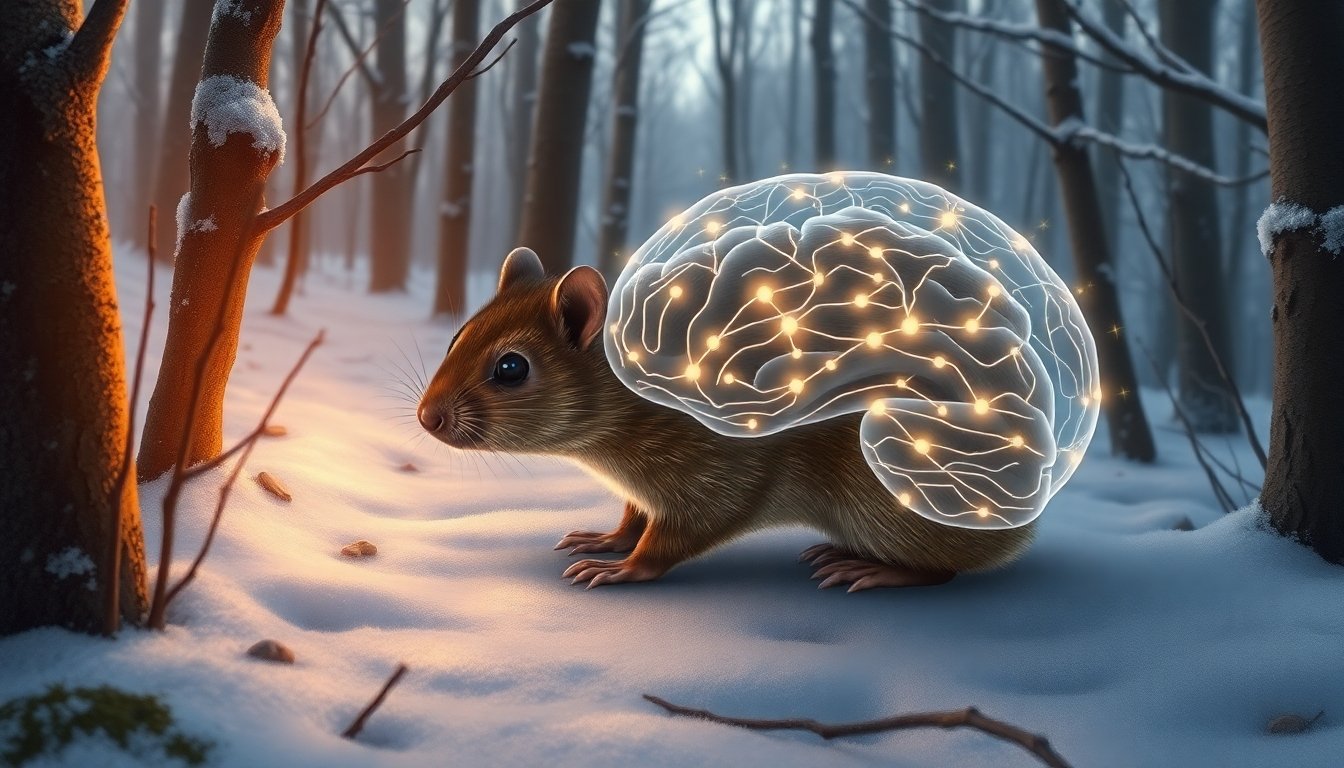
Scientists have discovered that shrews shrink their brains by losing water, not cells—a remarkable feat of nature that could revolutionize how we approach neurodegenerative disorders.
Imagine a mammal, no bigger than your thumb, that performs an astonishing biological magic trick every year. As summer fades into the resource-scarce winter, it shrinks its own brain, only to regrow it to its former size in the spring. This isn’t science fiction; it’s a natural phenomenon known as Dehnel’s phenomenon, and the common shrew is one of its most masterful practitioners. For decades, scientists have been captivated by this puzzle: How can a brain lose significant volume without suffering permanent, catastrophic damage?

A recent study has finally cracked the case, and the answer is as surprising as it is profound. Using advanced, non-invasive imaging, a team of researchers has peered inside the brains of these tiny creatures and discovered the secret to their incredible resilience. The findings not only solve a long-standing ecological mystery but also open a thrilling new frontier in the fight against human brain diseases like Alzheimer’s and Parkinson’s.
The Mystery of the Reversible Brain
Dehnel’s phenomenon is a rare survival strategy observed in only a handful of mammals, including European moles, weasels, stoats, and certain shrew species. For an animal like the common shrew, which has a supercharged metabolism and needs to eat every few hours, winter is a brutal challenge. Food is scarce, and every bit of energy counts. Shrinking the brain—a highly energy-intensive organ—is thought to be a clever way to conserve precious resources.
“These tiny mammals… have to eat every few hours, whether it’s in summer when there’s lots to eat or in winter when there’s very little,” explains Dina Dechmann, a group leader at the Max Planck Institute of Animal Behavior who has studied the phenomenon for over a decade. But this strategy presents a major paradox. How do these animals continue to find food, evade predators, and navigate their world with a significantly smaller brain?
To solve this, scientists needed to see what was happening inside the brain of a living shrew as it underwent this transformation. A collaborative team from the Max Planck Institute, the University of Freiburg, and Aalborg University devised an ingenious plan. They captured wild shrews in Germany during the summer and used high-resolution MRI to scan their brains. Then, they released the shrews and recaptured the same individuals in the winter for a second scan. This allowed them to track the changes within a single animal’s brain over the seasons, providing an unprecedented view of Dehnel’s phenomenon in action.
The Big Reveal: It’s All About Water
The results were stunning. The MRI scans confirmed that the shrews’ brains lost about nine percent of their total volume during the winter. But when the researchers examined the brain tissue at a microscopic level, they found something completely unexpected. The brain cells weren’t dying off, which is what happens when brain volume is lost in humans.
“Our shrews lost nine percent of their brains during shrinkage, but the cells did not die,” says Dr. Cecilia Baldoni, the study’s first author. “The cells lost water.”
This is the crucial discovery. The brain shrinkage was not due to a loss of precious neurons but rather a controlled, reversible reduction in cell size caused by water moving out of the cells. The study also identified a key player in this process: a protein called aquaporin-4. This protein acts as a channel, regulating the flow of water in and out of brain cells. In the shrews, it appears to facilitate the safe removal of water, allowing the cells to shrink without being damaged.
A Startling Link to Human Disease
This is where the story takes a turn from a fascinating piece of natural history to a potentially groundbreaking development for human medicine. The mechanism of water loss and the involvement of aquaporin-4 bear a striking resemblance to processes seen in the brains of patients with neurodegenerative diseases.
“We see that brain shrinkage in shrews matches closely what happens in patients suffering from Alzheimer’s, Parkinson’s, and other brain diseases,” notes Associate Prof. John Nieland, an expert in human brain disease at Aalborg University. He points out that the same aquaporin-4 protein is found in higher quantities in diseased human brains. The critical difference, however, is that in humans, this process leads to irreversible cell death and a devastating loss of function.
By human standards, the shrew’s ability is nothing short of miraculous. “It’s astonishing what these shrews accomplish with brain loss of almost ten percent,” says Nieland. “We commonly see Alzheimer’s patients suffering from the same percentage brain reduction, and the loss of function in these patients is tremendous.”
A Brain with Priorities
The study also revealed another layer of sophistication. The shrinkage wasn’t uniform across the entire brain. While most regions shrank, the neocortex and cerebellum—areas responsible for higher cognitive skills like memory and for motor control—were relatively spared. These regions maintained a more stable water balance, suggesting the shrew’s brain strategically protects its most essential functions.
“The shrews seem to be adjusting their brains for winter like we might adjust heating in a house, keeping the essential rooms heated while dropping power in areas where we can afford to reduce operations,” Baldoni explains. This selective preservation ensures the shrews can still perform the complex tasks necessary for survival, even with a downsized brain.
The Next Frontier: Unlocking Regrowth
For neurologists, the discovery that shrews can safely shrink their brains is only half the story. The truly exciting part is what happens next: they regrow them. The next step for the research team is to study the second phase of Dehnel’s phenomenon—the brain’s regrowth from winter to spring. By understanding how a shrew’s brain can reverse the process, rebuild its volume, and restore full function, scientists hope to find clues for teaching human brains to do the same.
“So far, there is no treatment for any brain disease that can prevent or reverse this loss of brain volume,” says Nieland. “We have now discovered, in shrews, an animal that is getting human-like symptoms of brain disease, but has biological tools not only to stop this process, but to reverse it too.”
The humble shrew, once a mere curiosity of the animal kingdom, has now become a beacon of hope. It offers a living model of neural resilience, a biological blueprint for how a brain can withstand and recover from changes that are currently incurable in humans. The secrets held within its incredible shrinking—and regrowing—brain may one day unlock a future where we can not just halt, but reverse the course of devastating neurodegenerative diseases.
Reference
Baldoni, C., Giraldo-Chica, M., Dechmann, D. K. N., Elverfeldt, D. von, & Nieland, J. D. F. (2024). Programmed seasonal brain shrinkage in the common shrew via water loss without cell death. Current Biology, 34(11), 2456-2464.e4. https://doi.org/10.1016/j.cub.2024.04.049