New research uncovers a molecular switch that transforms the brain’s protective astrocytes into agents of cognitive decline, offering a promising new target for intervention.
As the global prevalence of diabetes continues to climb, a troubling secondary crisis is emerging in its wake: diabetes-associated cognitive impairment (DACI). Affecting a significant portion of individuals with diabetes, particularly those over 75, DACI presents a spectrum of cognitive decline, from mild impairment to severe dementia. For years, scientists have understood that metabolic disturbances like high blood sugar and abnormal cholesterol levels are key risk factors, but the precise molecular chain of events that leads from a metabolic disorder to a memory disorder has remained a complex puzzle. Now, a groundbreaking study sheds new light on this connection, identifying a specific protein in a surprising cell type as the central culprit.
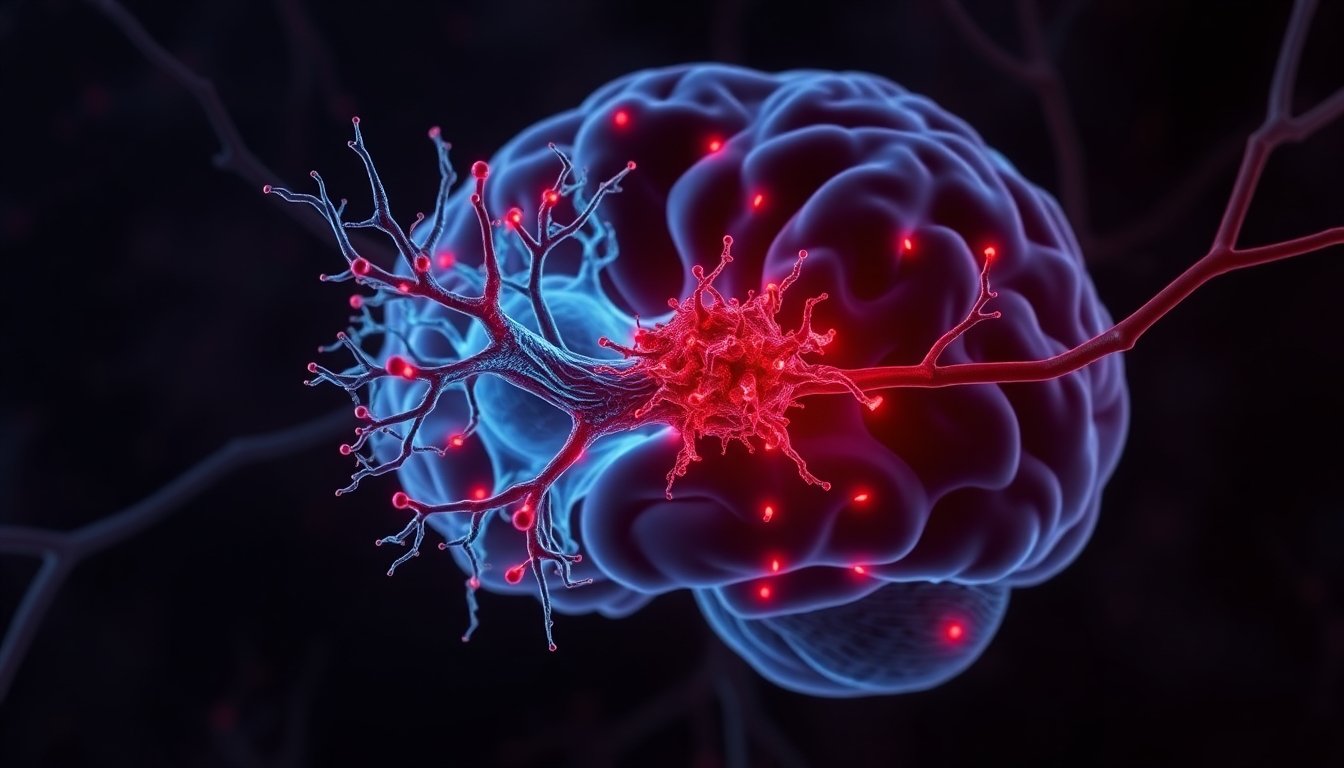
The research points not to the neurons themselves, but to their most intimate partners: the astrocytes. These star-shaped cells, once thought to be mere structural “glue” for the brain, are now recognized as critical managers of the neural environment. They nourish neurons, regulate communication at the synapse, and defend against injury. However, this new study reveals how the combined stress of diabetes and high cholesterol can hijack these cellular guardians, turning them into agents of neurodegeneration.

A Toxic Partnership in the Brain
To untangle the mechanisms of DACI, researchers developed a mouse model that mimics the conditions of type 2 diabetes, using a high-fat diet combined with injections of streptozotocin to induce high blood glucose. As expected, these diabetic mice developed significant cognitive problems. They struggled with spatial learning and memory tasks, such as the Morris water maze, and showed clear signs of impaired memory recognition.
When the scientists looked inside the brains of these mice, they found two critical changes in the hippocampus, the brain’s primary memory center. First, there was a notable buildup of free cholesterol. Second, the neurons showed signs of physical damage: their intricate, branching dendrites were less complex, and they had lost a significant number of dendritic spines—the tiny protrusions that form synaptic connections. This loss of synaptic plasticity is a direct cellular correlate of memory impairment.
But the most profound discovery came when they examined the astrocytes. In the diabetic mice, these vital support cells had undergone a disturbing transformation. They became atrophic, with smaller, less complex branches, reducing their ability to physically support surrounding synapses. More alarmingly, they had switched to a neurotoxic phenotype, characterized by the production and release of an inflammatory protein called complement C3. In essence, the brain’s caretakers had started to actively harm the very neurons they were supposed to protect.
SCAP: The Master Regulator Gone Rogue
The central question was: what caused this dangerous transformation in the astrocytes? The investigation led to a protein called SCAP (SREBP cleavage-activating protein). SCAP acts as a cellular cholesterol sensor. Its job is to monitor cholesterol levels and regulate its production to maintain a healthy balance. The study revealed that under the dual assault of high glucose and high cholesterol, SCAP begins to accumulate abnormally within astrocytes.
This accumulation proved to be the tipping point. The researchers found a direct correlation: the more SCAP accumulated in astrocytes, the more atrophic and toxic the cells became, and the worse the mouse’s cognitive performance. SCAP appeared to be the molecular switch that, when flipped by metabolic stress, initiated the entire pathological cascade.
To prove this causal link, the team performed a brilliant experiment. They engineered a new line of mice in which the gene for SCAP could be selectively deleted only in astrocytes. They then subjected these mice to the same high-fat diet and diabetes-inducing protocol. The results were stunning. Despite having the same metabolic issues as the other diabetic mice—high blood sugar, insulin resistance, and high cholesterol—these mice were almost completely protected from cognitive decline. Their performance in memory tests was nearly normal. A look at their brains revealed why: their astrocytes had not turned toxic. Without SCAP, the cells did not become atrophic, did not produce the damaging C3 protein, and continued to support healthy neuronal structures. This was the smoking gun, proving that astrocytic SCAP is the essential mediator linking metabolic disease to cognitive impairment.
A New Pathway and a New Hope
Digging deeper, the study elucidated the signaling pathway responsible. The accumulation of SCAP in astrocytes activates a well-known inflammatory transcription factor called NF-κB. Once activated, NF-κB moves into the cell’s nucleus and directly switches on the gene for complement C3, leading to its production and release. This C3 protein then acts on receptors on nearby neurons, triggering the synaptic damage and dendritic shrinkage that ultimately erodes memory.
By identifying this specific SCAP–NF-κB–C3 axis, this research moves beyond a general association between diabetes and cognitive decline to pinpoint a concrete, targetable mechanism. It suggests that simply controlling blood sugar and cholesterol, while crucial, may not be enough to protect the brain once this pathological process in astrocytes has begun.
The findings open up an exciting new therapeutic avenue. Instead of trying to treat the myriad downstream effects of neuronal damage, it may be possible to intervene at the source. Developing drugs that can prevent the accumulation of SCAP in astrocytes, or block the NF-κB–C3 signaling it triggers, could offer a powerful new strategy to preserve brain health and prevent DACI in the millions of people living with diabetes.
Reference
Zhang, Y., Wang, Y., Xu, Y., et al. (2025). Cholesterol-driven pathological astrocytic responses in diabetes-associated cognitive impairment through astrocytic SCAP accumulation and NF-κB–C3 signaling modulation. Experimental & Molecular Medicine. https://doi.org/10.1038/s12276-025-01534-w