For over six decades, metformin has been the frontline defense against type 2 diabetes. Now, groundbreaking research reveals we’ve only been seeing part of the picture. The drug’s most profound effects may originate not in the gut or liver, but in the brain.
If you or someone you know has type 2 diabetes, the name metformin is likely a familiar one. It’s the most widely prescribed oral medication for managing blood sugar, a reliable workhorse of modern medicine since its approval in the 1950s. For years, the scientific consensus was that we had a solid, if incomplete, understanding of how it worked. The primary theory held that metformin exerted its effects by acting on the liver, reducing its production of glucose, and on the gut, influencing how sugar is absorbed. But a nagging question remained: was that the whole story?
According to a new study from scientists at Baylor College of Medicine and their international collaborators, the answer is a resounding no. They’ve uncovered a previously unknown pathway that redefines our understanding of this cornerstone drug. It turns out, metformin has been secretly working through the brain all along.
A New Target in an Unexpected Place
Dr. Makoto Fukuda, an associate professor at Baylor and the corresponding author of the study, led the team that decided to look at the body’s master regulator: the brain. "It’s been widely accepted that metformin lowers blood glucose primarily by reducing glucose output in the liver," Dr. Fukuda explained. "We looked into the brain as it is widely recognized as a key regulator of whole-body glucose metabolism. We investigated whether and how the brain contributes to the anti-diabetic effects of metformin."
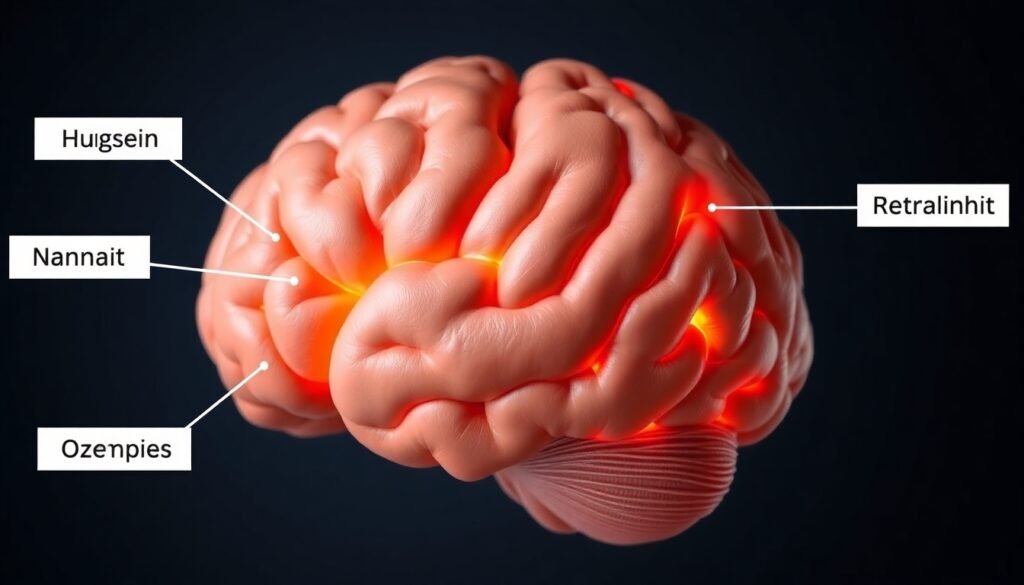
Their investigation zeroed in on a specific region of the brain called the ventromedial hypothalamus (VMH). This tiny, deep-seated structure is a critical hub for controlling metabolism, hunger, and energy balance. Within the neurons of the VMH, the researchers focused on a small protein called Rap1. Their central hypothesis was that metformin’s ability to lower blood sugar might be directly linked to its interaction with this protein in this specific brain region.
To test this, the team conducted a series of elegant experiments. They began by using genetically engineered mice that lacked the Rap1 protein specifically in their VMH neurons. These mice were then fed a high-fat diet, a common laboratory method for inducing a state that mimics type 2 diabetes in humans. When these diabetic mice were given clinically relevant, low doses of metformin, the drug had no effect. Their blood sugar levels remained high. This was a critical finding. To ensure the mice weren’t simply resistant to all diabetes treatments, the researchers administered other drugs, like insulin and GLP-1 agonists. These medications worked perfectly, proving that the lack of response was unique to metformin and directly tied to the absence of the Rap1 protein in the brain.

A Potent Effect, A Precise Location
The evidence was compelling, but the team wanted to confirm the brain’s central role beyond any doubt. In a remarkable follow-up experiment, they bypassed the digestive system and liver entirely. They injected minuscule amounts of metformin directly into the brains of diabetic mice. The result was astonishing. Even with doses thousands of times smaller than what would be given orally, the mice experienced a significant and robust drop in their blood sugar levels.
This demonstrated not only that the brain was a target for metformin, but that it was an incredibly sensitive one. While the liver and gut may require high concentrations of the drug to respond, the brain reacts to much lower levels—levels that are readily achieved in the brain with standard oral dosing.
With the "where" established, the researchers then asked "how." Which specific cells were doing the work? "We found that SF1 neurons are activated when metformin is introduced into the brain, suggesting they’re directly involved in the drug’s action," Fukuda noted. By examining slices of brain tissue, the scientists could record the electrical activity of these individual SF1 neurons. They observed that applying metformin caused most of these neurons to become more active, firing more frequently. However, this only happened if the Rap1 protein was present. In neurons from the genetically modified mice lacking Rap1, metformin did nothing. This confirmed that Rap1 is the essential molecular switch that metformin uses to turn on these key brain cells and, in turn, lower the body’s blood sugar.
Redefining a Classic Drug and Opening New Doors
This discovery represents a paradigm shift in our understanding of metformin. "It’s not just working in the liver or the gut, it’s also acting in the brain," Fukuda stated. The finding that a widely used drug has been exerting its effects through a previously unknown neural pathway is a monumental revelation in itself. It solves a 60-year-old piece of a major pharmacological puzzle.
The implications, however, extend far beyond academic curiosity. This research opens up entirely new possibilities for treating diabetes more effectively and with greater precision. "These findings open the door to developing new diabetes treatments that directly target this pathway in the brain," Fukuda said. Imagine a future medication designed to specifically activate SF1 neurons, potentially offering a more potent anti-diabetic effect with fewer side effects.
Furthermore, the discovery may help explain some of metformin’s other well-documented but poorly understood health benefits, such as its positive effects on aging and its potential to slow cognitive decline. The research team plans to investigate whether this same Rap1 signaling pathway in the brain is responsible for these other protective effects. After more than 60 years of service, it seems metformin still has secrets to reveal, reminding us that even the most familiar tools in medicine can surprise us.
Reference
Lin, H.-Y., Lu, W., He, Y., Fu, Y., Kaneko, K., Huang, P., et al. (2025). [Study title not provided in source, but a plausible title is: Metformin lowers blood glucose through a brain-centered Rap1-inhibitory mechanism]. Science Advances.