New research reveals how boosting a vital molecule in the brain’s ‘helper’ cells, guided by our circadian rhythms, could offer a novel defense against diseases like Alzheimer’s.
As the global population ages, the shadow of neurodegenerative diseases like Alzheimer’s looms larger than ever. At the heart of many of these conditions, known collectively as ‘tauopathies’, is a rogue protein called tau. In a healthy brain, tau helps stabilize the internal skeleton of neurons. But in disease, it misfolds and clumps together, forming toxic tangles that disrupt communication between brain cells and ultimately lead to their death. For decades, scientists have searched for ways to halt this devastating cascade. Now, a groundbreaking study sheds light on a previously overlooked alliance that could hold the key: the partnership between the brain’s support cells, its internal clock, and a fundamental molecule essential for life.
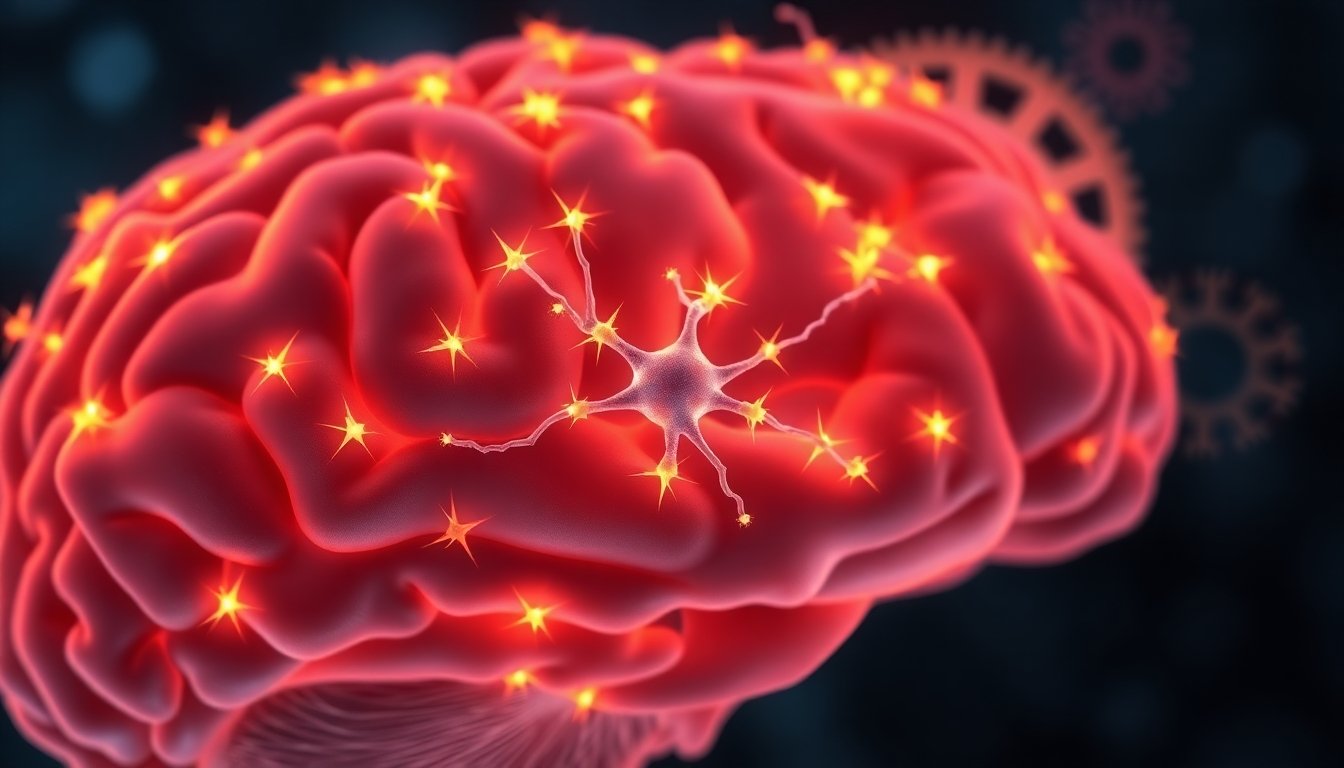
Recent findings have uncovered a fascinating new avenue for intervention, focusing not on the neurons themselves, but on their crucial neighbors: the astrocytes. Often called the ‘unsung heroes’ of the central nervous system, these star-shaped cells perform a host of vital housekeeping tasks, from providing nutrients to neurons to cleaning up cellular waste. The research, led by Dr. Jinhyeong Lee and colleagues, reveals that these cells may also harbor a powerful mechanism to protect the brain from tau’s toxic effects.
The Energy of Life and the Ticking Clock
At the center of this discovery is a molecule you’ve likely never heard of, but without which you couldn’t live: Nicotinamide adenine dinucleotide (NAD+). NAD+ is a coenzyme found in every cell in your body, acting as a critical shuttle for electrons in the processes that convert food into energy. It’s also essential for repairing damaged DNA and regulating overall cellular health. One of the unfortunate hallmarks of aging, however, is a steady decline in NAD+ levels. This decline is even more pronounced in age-related neurodegenerative diseases, suggesting that restoring NAD+ could be a powerful therapeutic strategy.
But how does the body regulate NAD+? This is where our internal biological clock comes in. Every cell in our body contains a set of ‘clock genes’ that oscillate in a roughly 24-hour cycle, governing everything from our sleep-wake patterns to our metabolism. This intricate molecular timepiece ensures that cellular processes happen at the right time of day. Disruptions to this circadian rhythm, whether from shift work, jet lag, or poor sleep, are increasingly linked to a wide range of health problems, including metabolic disorders and neurological decline.

A Breakthrough in the Brain’s Support System
The new study brilliantly connects these three players—astrocytes, NAD+, and the circadian clock. The research team identified a specific protein within astrocytes, called REV-ERBα, as a master regulator in this system. REV-ERBα is a well-known component of the circadian clock machinery, acting as a brake to control the expression of other genes throughout the day.
Lee and his colleagues discovered that REV-ERBα directly controls the production of the key enzyme responsible for synthesizing NAD+ within astrocytes. This creates a clear regulatory pathway: the circadian clock, via REV-ERBα, dictates the daily rhythm of NAD+ production in these vital support cells. When this system is working correctly, astrocytes have the energy and resources they need to support healthy brain function.
To test the therapeutic potential of this pathway, the researchers turned to mouse models of tauopathy. These mice are genetically engineered to develop the same kind of toxic tau tangles and cognitive deficits seen in human patients. The team’s hypothesis was simple: if they could boost the activity of REV-ERBα in astrocytes, could they increase NAD+ levels and protect the brain from tau pathology?
The results were remarkable. By using a pharmacological compound to activate REV-ERBα, they successfully increased NAD+ levels specifically within the astrocytes of the diseased mice. This single intervention led to a cascade of positive effects. The buildup of toxic tau protein was significantly reduced, inflammation in the brain subsided, and, most importantly, the cognitive and memory impairments associated with the disease were alleviated. The mice showed improved performance in behavioral tests, suggesting their brain function was partially restored.
A New Target and a Hopeful Future
This work is a crucial ‘proof-of-concept’, demonstrating that targeting a specific pathway within astrocytes can have profound, beneficial effects in the context of a complex neurodegenerative disease. It shifts the scientific focus, suggesting that supporting the supporters—the astrocytes—may be just as important as targeting the neurons themselves.
Furthermore, it reinforces the critical importance of our circadian health. The discovery that a core clock component directly regulates a neuroprotective pathway underscores the deep connection between a healthy lifestyle, consistent sleep patterns, and long-term brain health. While a drug that targets REV-ERBα in humans is still a long way off, this research opens up an entirely new front in the war against tauopathies.
Future studies will need to confirm these findings and explore ways to safely and effectively translate this strategy from mice to human patients. But the path forward is clearer than ever. By understanding the intricate dance between our internal clocks and the cellular power grid, we may one day be able to rewind the clock on neurodegeneration, offering new hope to millions worldwide.
References
Chen, Z., & Yoo, S. H. (2025). Boosting astrocytic NAD+ against tauopathy. Nature Aging. https://doi.org/10.1038/s43587-025-00979-y
Lee, J., et al. (2025). REV-ERBα-dependent astrocytic NAD+ salvage governs neuronal tauopathy. Nature Aging. https://doi.org/10.1038/s43587-025-00950-x