Subtitle: New research uncovers how abnormal sugar modifications on brain proteins may drive depression, suggesting novel therapeutic paths beyond neurotransmitters.
Depression is more than just a fleeting sense of sadness—it’s a deeply complex disorder affecting over 280 million people globally and imposing significant burdens on individuals and society. For decades, treatments have largely targeted neurotransmitter imbalances, especially serotonin. Yet, these interventions only effectively help about half of those who seek them, leaving millions searching for answers and relief.
Now, an innovative study by a team at the Institute for Basic Science (IBS), led by C. Justin Lee and Lee Boyoung, has uncovered a previously overlooked pathway in the brain that could dramatically shift the landscape of depression research and therapy. Their findings, published in Science Advances, shine a spotlight on glycosylation—a molecular process in which specialized sugar chains attach to proteins, altering how brain circuits function.
The Sugar Code: Glycosylation and Brain Health
Glycosylation is an essential biological mechanism present in all human tissues. It modifies proteins with tiny chains of sugars, thereby influencing how cells signal and interact. While its role is established in cancer, infectious diseases, and neurodegenerative conditions, the link between glycosylation and brain disorders like depression has only recently begun to gain attention.
A specific subtype, O-glycosylation, extends sugar chains onto certain proteins, particularly those involved in regulating brain circuits. The new research focused on the prefrontal cortex—an area intimately associated with emotion regulation, complex thought, and decision-making. Scientists used advanced mass spectrometry to map glycosylation patterns across nine different brain regions in healthy mice, then compared these with mice exposed to chronic stress.
Chronic Stress and the Breakdown of Brain Circuitry
Their analysis revealed dramatic alterations in the stressed animals’ prefrontal cortex, most notably a significant loss of a process called sialylation. Sialylation involves the addition of molecules called sialic acids to the ends of sugar chains and is critical for stabilizing proteins in the brain.
Central to this process is the enzyme St3gal1. In the study, stressed mice showed sharply reduced expression of St3gal1. To test its significance, scientists manipulated this enzyme directly. When St3gal1 was reduced in healthy mice, they began displaying depressive-like symptoms such as reduced motivation and increased anxiety—even without other stressors. Conversely, restoring St3gal1 in the brains of chronically stressed mice helped alleviate these depressive behaviors.
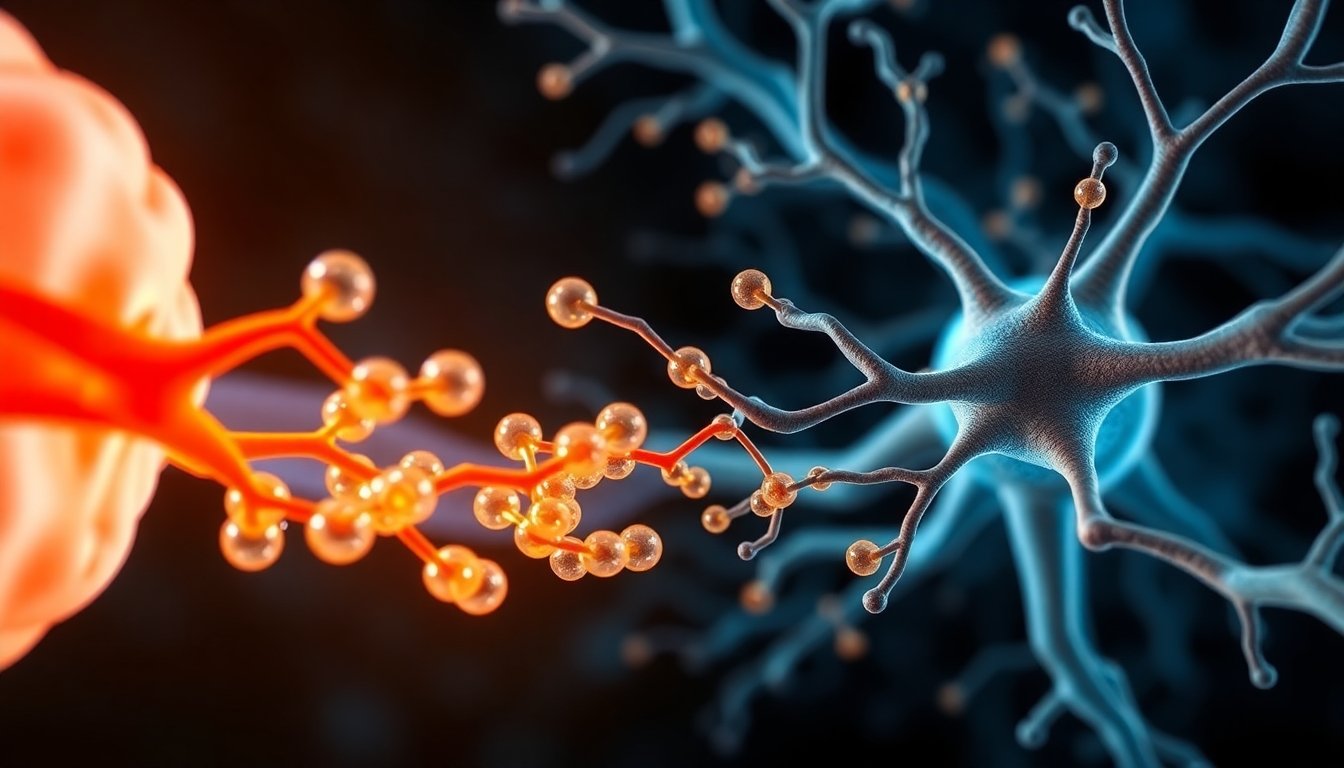
Further molecular and electrophysiological examinations traced the effects of St3gal1: when this single enzyme was disrupted, it destabilized the sugar structures on crucial synaptic proteins like neurexin 2 (NRXN2). These changes impaired the function of inhibitory neurons, which normally act as moderators to keep brain circuits in emotional balance. In essence, tiny molecular shifts in sugar chains can destabilize neural networks, triggering symptoms associated with depression.

Moving Beyond Neurotransmitters
Current antidepressant medications mainly target serotonin and similar neurotransmitters. However, these drugs not only fail to help many patients but can also cause problematic side effects like gastrointestinal distress and heightened anxiety. The discovery that glycosylation processes—and specifically St3gal1 and sialylation—are directly involved in depression opens a completely new frontier.
This pathway could eventually serve as both a diagnostic marker and a target for next-generation antidepressant therapies, offering hope to those whose symptoms are resistant to conventional approaches. The significance extends beyond depression: because glycosylation affects fundamental aspects of neural circuitry, this research might also pave the way for innovative treatments for other mental health conditions, including PTSD and schizophrenia.
Implications for Diagnosis and Treatment
According to Research Fellow Boyoung Lee, "This study demonstrates that abnormal glycosylation in the brain is directly connected to the onset of depression. It provides an important foothold for identifying new diagnostic markers and therapeutic targets beyond neurotransmitters."
C. Justin Lee, director at IBS, elaborates, "Depression imposes a major social burden, yet current treatments remain limited. This achievement could extend not only to depression therapy but also to other mental illnesses… paving the way for broader therapeutic strategies."
In practical terms, manipulating enzymes like St3gal1 or stabilizing O-glycosylation in key brain regions could form the core of future therapies. Early diagnostic measures could also include screening for disruptions in these sugar modifications, providing warning signs before symptoms become debilitating.
The Path Forward
While these discoveries are promising, it’s important to remember that most results so far are based on animal models, and translating them to human therapies will require further research. Nevertheless, the clear and direct biological links established in this study mark a major leap forward, bringing nuance and depth to our understanding of depression’s roots.
As science continues to decode the brain’s hidden molecular languages, this exciting new research on sugar chains, glycosylation, and the enzyme St3gal1 offers much-needed hope for the millions living with depression—and for a future in which mental illness is understood and treated at its molecular source.
Reference:
Lee, C. J., Lee, B., & Team. (2024). Abnormal O-Glycan Sialylation in the mPFC Contributes to Depressive-like Behaviors in Male Mice. Science Advances. Institute for Basic Science. https://neurosciencenews.com/sugar-chain-depression-29767/