New research reveals that targeting a long-overlooked region of the brain could dramatically reduce the debilitating symptoms of alcohol withdrawal, offering a beacon of hope for more effective and targeted addiction therapies.
Alcohol Use Disorder (AUD) is a staggering public health crisis, affecting an estimated 29 million Americans and standing as the nation’s third-leading preventable cause of death. For those who struggle with it, the path to sobriety is fraught with challenges, the most formidable of which is often the withdrawal phase. The intense physical and emotional distress of withdrawal creates a powerful negative feedback loop, driving many people back to drinking simply to find relief. This cycle is a primary reason why fewer than one in five individuals with AUD achieve long-term sobriety, despite the availability of various treatments.
For decades, neuroscience research into addiction has largely concentrated on the brain’s reward pathways—the complex circuitry involved in pleasure and motivation. But what if a crucial piece of the puzzle has been hiding in plain sight? A groundbreaking new study from Washington State University suggests just that, turning the scientific community’s attention to an area of the brain traditionally associated with something else entirely: the cerebellum.

The Brain’s Unsung Hero
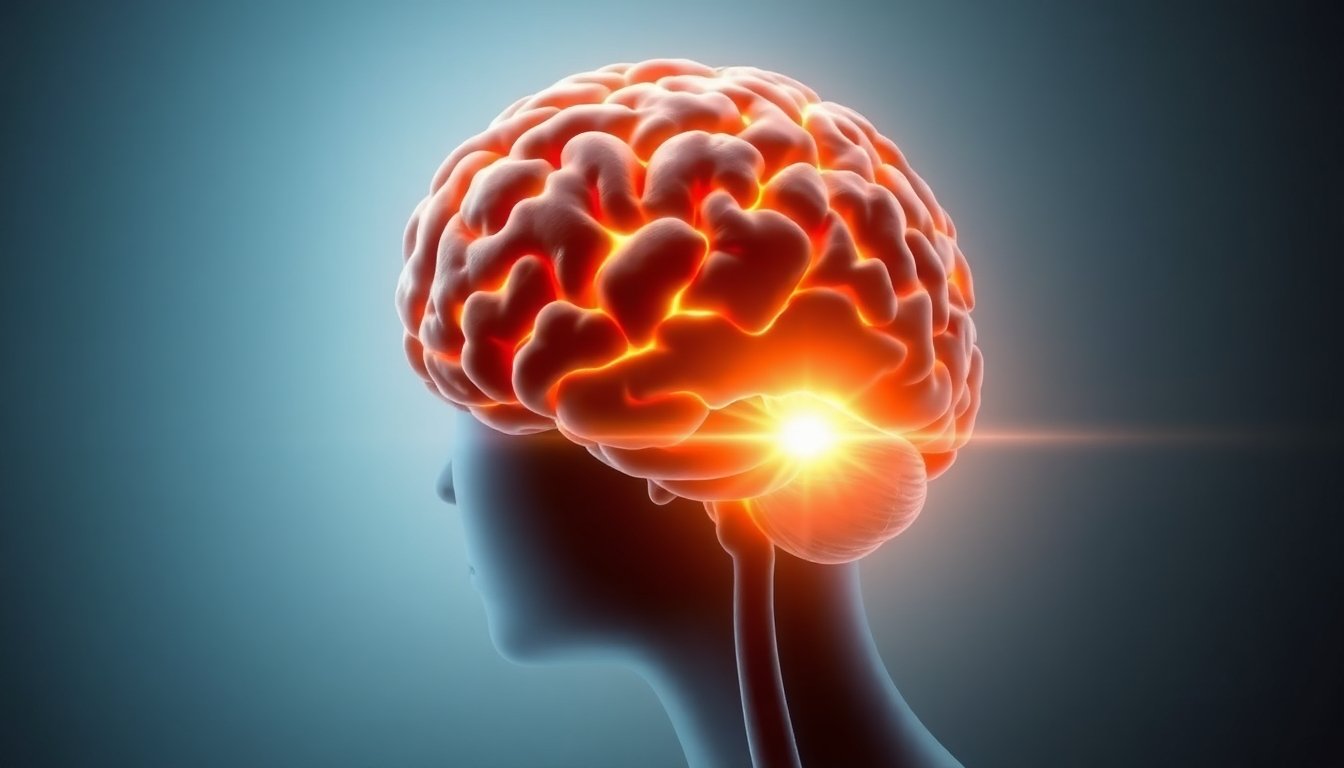
Often called the “little brain” due to its distinct, densely folded structure at the back of the skull, the cerebellum has long been typecast as the brain’s coordinator of movement and balance. While it certainly excels at that job, this view is proving to be remarkably incomplete. “Half the neurons in the brain are in the cerebellum,” notes David Rossi, the study’s senior author and an associate professor in the Department of Integrative Physiology and Neuroscience (IPN). “It’s increasingly clear this region is involved in far more than just motor control—it plays a role in addiction, emotional regulation and even social engagement.”
This new understanding prompted Rossi, lead author Nadia McLean, and their colleagues to investigate the cerebellum’s role in the punishing experience of alcohol withdrawal. They hypothesized that this powerful brain region might be a key player in the symptoms that make recovery so difficult. Their findings, published in the journal Neuropharmacology, not only confirm this suspicion but also point toward a revolutionary new therapeutic strategy.
Rewired and Hyperactive: The Cerebellum on Withdrawal
Using a mouse model to simulate chronic binge drinking, the researchers discovered that prolonged alcohol exposure fundamentally alters the cerebellum’s function. The brain, in its remarkable adaptability, essentially rewires this region to operate under the constant presence of alcohol. The signaling between neurons is recalibrated to a new, alcohol-infused normal.
The problem arises when the alcohol is suddenly removed. The carefully rebalanced system is thrown into chaos. Without the substance it has adapted to, the cerebellum enters a state of hyperactivity, firing off signals uncontrollably. According to the study, this neurological storm is a direct cause of the well-known withdrawal symptoms, from the physical (motor discoordination, tremors) to the emotional (anxiety, distress).
“Our research suggests the cerebellum could be a promising therapeutic target to help people get through the most difficult stage of alcohol use disorder,” explains McLean, a doctoral researcher in IPN. “By targeting the cerebellum, we were able to ease both the physical motor discoordination and the emotional distress of withdrawal — the symptoms that so often drive people back to drinking.”
Two Paths to Calming the Storm
The research team tested two distinct methods to quiet the overactive cerebellum in mice experiencing withdrawal.
The first was a genetic approach that served as a proof of concept. Scientists inserted specialized receptors into the cerebellar neurons of the mice. These receptors acted as a built-in “off switch.” When activated during withdrawal, they successfully calmed the hyperactivity, leading to a measurable improvement in the mice’s motor coordination. While this elegant experiment proved that restoring normal function to the cerebellum could alleviate symptoms, it relied on genetic modification, a technique not currently feasible for treating people.
This led to the second, more clinically promising strategy. The team tested a synthetic drug, known as Compound 6, developed by chemists in Austria. This compound is unique because it is designed to target a type of receptor found exclusively in the cerebellum. This specificity is its superpower. When administered to mice during withdrawal, Compound 6 effectively eased their anxiety and emotional distress without affecting other brain regions. Furthermore, it showed a low potential for abuse; in fact, mice that were not in withdrawal found the compound aversive, suggesting it wouldn’t simply replace one addiction with another.
“Compound 6 gave us a way to target the cerebellum without genetic modification,” McLean states. “That makes it a much more realistic option for therapy, and it suggests this part of the brain could be a powerful target for treating alcohol withdrawal.”
A Targeted Treatment for a Brighter Future
While human clinical trials are still on the horizon, this research lays a critical foundation for a new generation of AUD treatments. The potential to target a specific brain region responsible for withdrawal symptoms is a significant leap forward from many current medications, which often have broad effects across the entire brain and come with a host of unwanted side effects.
By developing therapies that can selectively calm the cerebellum, it may be possible to create a temporary bridge for individuals navigating the acute phase of withdrawal. This could make the process far more manageable, reducing the intense craving and suffering that leads to relapse.
As Rossi puts it, “If we can take away the worst part of withdrawal, even temporarily, people may be better able to succeed with counseling or other long-term treatments for AUD.” This approach isn’t about finding a single magic bullet, but about creating a powerful tool that helps people stay in the fight for sobriety, giving them a better chance to engage with the psychological and behavioral therapies that are essential for lasting recovery.
Reference
McLean, N. A., Zanetti, L., Schulden, J., Stephens, D. N., & Rossi, D. J. (2024). Selectively counteracting cerebellar adaptations to chronic alcohol exposure reduces acute alcohol withdrawal severity in C57BL6/N mice. Neuropharmacology, 242, 109751. https://doi.org/10.1016/j.neuropharm.2023.109751