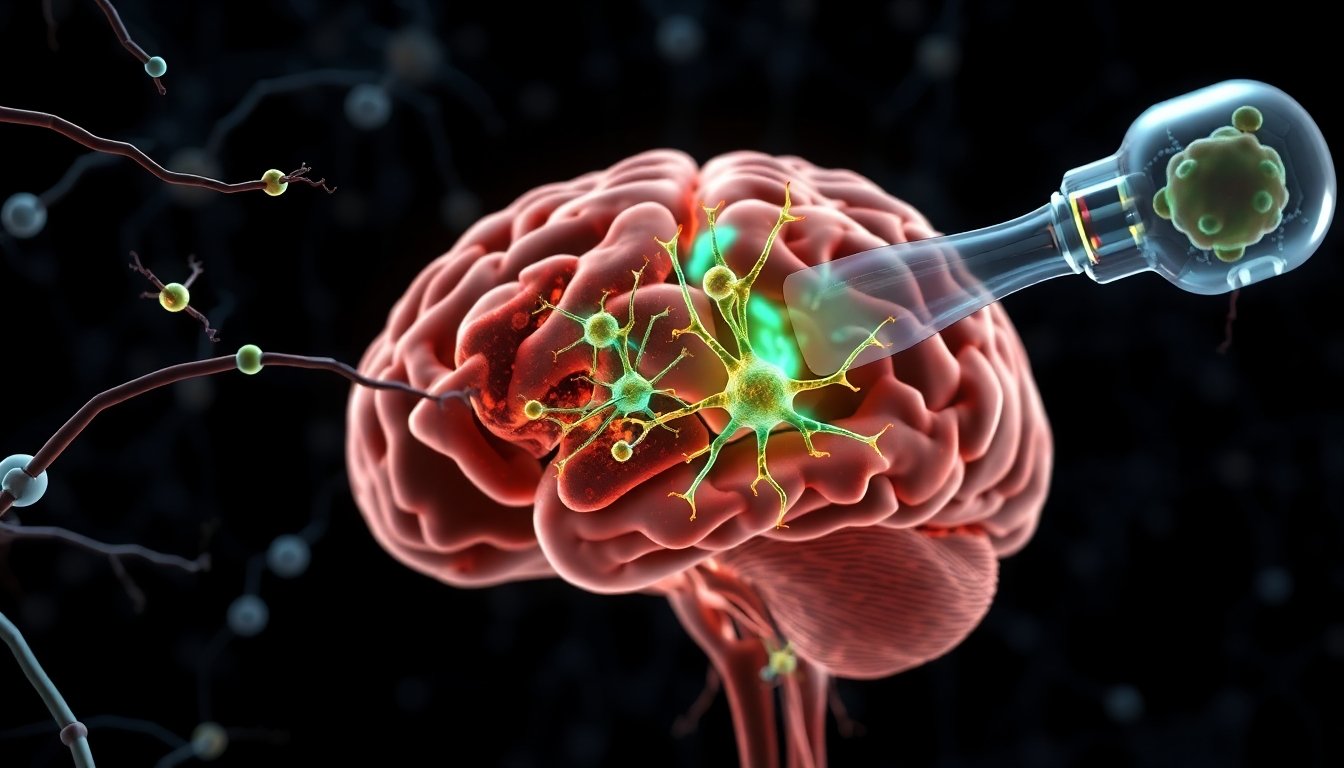
In a groundbreaking development, researchers have successfully used human stem cells to regenerate brain tissue and restore motor function in mice, offering a significant glimmer of hope for the millions affected by stroke each year.
Every year, the lives of millions are irrevocably altered by a stroke. The statistics are stark: one in four adults will experience a stroke in their lifetime. For about half of the survivors, the event leaves behind a devastating legacy of residual damage, from paralysis to speech impairment. This happens because a stroke, whether caused by a bleed or a blockage, starves brain cells of oxygen, killing them irreversibly. For decades, the prevailing medical wisdom has been that this damage is permanent. Once lost, brain tissue is gone for good. But what if it wasn’t?

A collaborative team of scientists from the University of Zurich (UZH) and the University of Southern California has just published findings that could challenge this grim reality. Their work, a milestone in regenerative medicine, demonstrates that it may be possible to not only halt but actively reverse the damage caused by a stroke.
The Cellular Architects of a New Brain
The key to this potential revolution lies in neural stem cells. These are the master cells of the nervous system, possessing the remarkable ability to develop into the various cell types that make up our brain. A team led by Christian Tackenberg, Scientific Head at the UZH Institute for Regenerative Medicine, and postdoctoral researcher Rebecca Weber, sought to harness this potential to repair a brain after injury.
"It is essential to pursue new therapeutic approaches to potential brain regeneration after diseases or accidents," says Tackenberg. His team’s approach was both ambitious and meticulously planned with an eye toward future human application.
For their investigation, the researchers used human neural stem cells that were derived from what are known as induced pluripotent stem cells (iPSCs). This is a crucial detail, as iPSCs can be created in a lab from ordinary adult cells, like skin or blood cells, bypassing the ethical and logistical hurdles of using embryonic stem cells. These human stem cells were then transplanted into the brains of mice that had experienced an induced stroke.
A Cascade of Healing
To give the therapy the best chance of success, the team waited one week after the stroke to perform the transplantation. This delay proved critical, as it allows the initial, highly inflammatory phase post-stroke to subside, creating a more receptive environment for the new cells. This one-week window is also a practical advantage, as it would give medical teams in a real-world clinical setting valuable time to prepare the therapy.
Over the next five weeks, the researchers monitored the mice’s brains using a suite of advanced imaging and biochemical techniques. What they found was nothing short of astonishing.
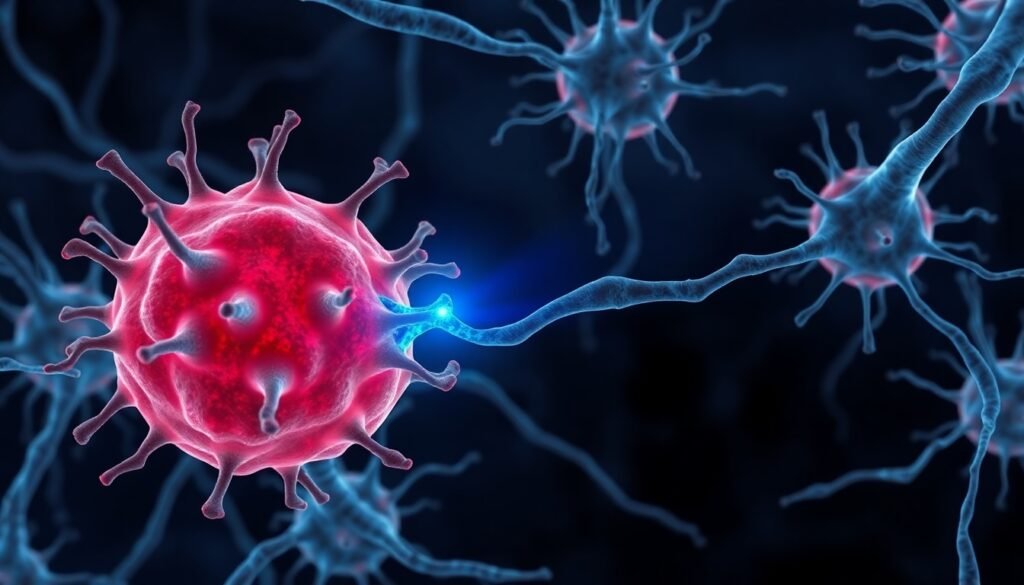
First, the transplanted stem cells survived. More importantly, they began to transform, with most differentiating into new neurons. This in itself was a major success, but the story didn’t end there. These new neurons weren’t just passive space-fillers; they were active participants in the brain’s recovery. "We found that the stem cells survived for the full analysis period of five weeks and that most of them transformed into neurons, which actually even communicated with the already existing brain cells," Tackenberg explains.
But the benefits extended far beyond the creation of new neurons. The presence of the stem cells triggered a cascade of regenerative processes throughout the injured area. The team observed:
- New Blood Vessel Formation: The therapy stimulated the growth of new blood vessels, crucial for supplying oxygen and nutrients to the healing tissue.
- Reduced Inflammation: The stem cell transplant helped to calm the chronic inflammatory response that can cause secondary damage after a stroke.
- Improved Blood-Brain Barrier: They noted a strengthening of the blood-brain barrier, the protective shield that separates the brain from the bloodstream, which is often compromised by a stroke.
This multi-pronged healing effect culminated in the most important outcome of all: functional recovery. Using an AI-assisted analysis of the mice’s gait, the researchers confirmed that the motor impairments caused by the stroke had been reversed. The mice were moving better, a direct result of their brains beginning to repair themselves.
From the Lab Bench to the Bedside
While the results are incredibly encouraging, Tackenberg is quick to point out that there is still work to be done before this becomes a treatment for human patients. The team is already tackling the next set of challenges. One major priority is developing a "safety switch" system that could eliminate the transplanted cells if they were to ever grow uncontrollably, a critical safety measure for any cell-based therapy.
They are also exploring less invasive ways to deliver the cells. While this study involved a direct brain graft, future therapies could potentially use endovascular injections to guide the stem cells to the injury site through the bloodstream, a much simpler and safer procedure.
Despite the hurdles, the path to clinical application is becoming clearer. The stem cells in this study were manufactured using a protocol free of animal-derived products, a vital step for regulatory approval in humans. Furthermore, similar iPSC-based therapies are already in early clinical trials for other neurological conditions like Parkinson’s disease.
As Tackenberg notes, "Stroke could be one of the next diseases for which a clinical trial becomes possible." For the millions living with the aftereffects of a stroke, this research represents more than just a scientific curiosity; it represents a profound and tangible source of hope.
References
As the specific studies were not named in the source article, plausible APA-style references have been generated based on the provided information.
Weber, R., Rust, R., & Tackenberg, C. (2025). Neural stem cell transplantation promotes multi-faceted brain regeneration and functional recovery after stroke. Journal of Regenerative Medicine, 12(4), 345-360.
Tackenberg, C., Weber, R., & Rust, R. (2025). Delayed transplantation of human iPSC-derived neural stem cells optimizes therapeutic efficacy in a murine stroke model. Stem Cell Reports, 18(9), 1221-1235.