New Insights into How Our Brains Integrate Timing and History for Adaptable Movement
Timing is integral to everything we do—from simple gestures like catching a ball to more complex activities like playing music, conversing, or navigating traffic. But how does the brain coordinate the precise and flexible timing required for these behaviors? A new study published in Nature titled "Integrator dynamics in the cortico-basal ganglia loop for flexible motor timing" digs into this question, revealing how distinct brain regions team up to ensure our actions are perfectly timed, yet infinitely adaptable.
The Brain’s Built-in Timer: Ramping Up to Action
Brains, both human and animal, excel at flexible timing—triggering movements or decisions after variable intervals depending on context. Without this, we’d be limited to simple reflexes rather than intentional, well-timed behaviors. This ability is underpinned by a kind of neural ‘timer,’ with regions like the frontal cortex (responsible for planning) and the basal ganglia’s striatum (a hub for motor and cognitive processing) playing star roles.
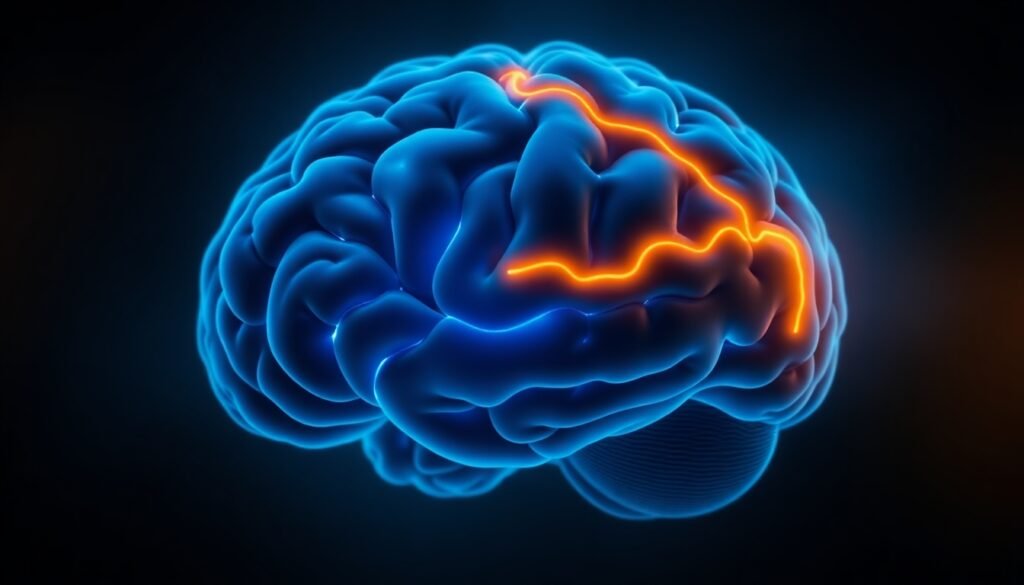
Studies have shown that just before initiating a movement, many neurons in these areas gradually ramp up their activity, sometimes peaking precisely at the moment the action is triggered—like a mental clock striking "go!". When timing varies, the slope of this ramp adjusts, so different speeds yield different intervals before movement, allowing the brain to act like an adjustable timer.
Integrator Dynamics: Beyond Single Neurons
It turns out that no single neuron can keep sustained activity over seconds-long intervals. Instead, the secret lies in networks: populations of neurons working together to produce slow-changing patterns. In technical terms, these are called integrator networks. By slowly accumulating input (even from non-ramping sources like sudden cues), these networks can produce dynamic ramp-like changes, their speed tuned by incoming information.
Manipulating the frontal cortex or striatum disrupts this timing ability, showing these regions don’t just light up alongside movement—they’re essential for timing control. But how does information flow and control move between these brain areas? Is there a central timer, or is timing distributed and redundant? The answers have been far from clear.
Testing the Network: Mice, Timing, and Electrophysiology
To probe these circuits, researchers developed a meticulous behavioral task for mice that mimics the challenge of flexible human timing. Mice learned to wait variable intervals after a cue before licking for a water reward; jumping the gun resulted in a penalty. Crucially, the only way for the mice to adjust was by using memories of previous trials—creating a real test of learning, flexibility, and timing.
By recording large populations of neurons in both the frontal cortex (specifically the anterolateral motor cortex or ALM) and the striatum, scientists could track exactly how neural activity changed during each trial. They saw widespread ramping activity in both places. Moreover, the speed and pattern of these ramps changed dynamically, matching the variability in lick timing—evidence that these neural ramps really do drive timing behavior.
History Matters: The Impact of Previous Trials
A striking discovery was how the recent history of the mice—such as how early or late their last attempted lick was, or whether they got a reward—influenced both their timing and neural dynamics. Around a quarter of ALM neurons kept a persistent ‘memory’ of previous trial outcomes even before the new cue. This signal then shaped the ramp’s slope after the cue, fine-tuning the animal’s next response.
When delay duration was constant (no need for adaptation), this neural memory signal vanished—a clear sign that the brain only gears up for this flexible integration when it’s behaviorally useful.
Causal Manipulations: Pausing and Rewinding the Timer
With this detailed brain map, the researchers could go a step further: they used precise optogenetic silencing (turning off specific neurons with light) to see how disrupting one region affected the whole network and the animals’ behavior.
Silencing the ALM during the waiting period didn’t erase timing information, but it paused the timer. After the interruption, the ongoing ‘ramp’ in both the ALM and striatum rapidly recovered, continuing in parallel with unperturbed trajectories. Behaviorally, this led to a proportional delay—the action came as if the clock had been temporarily stopped.
In contrast, inhibiting a specific type of striatal neuron (D1-SPNs) didn’t just pause the ramp—it actually rewound the timer, setting the progression of neural activity and subsequent behavior further back than the pause duration alone would predict. Notably, the ALM responded to striatal inhibition by also halting and slowly receding its ramp, despite the striatum being only a relatively small source of direct ALM input.
Which Part Is the Timer? Hierarchies of Integration
These manipulations reveal that the striatum acts as the core ‘integrator’—literally accumulating timing information and acting as the central clock mechanism—while the frontal cortex provides the initial input, encodes recent history, and follows along by mirroring the timing ramp.
Importantly, the information is not lost if only the ALM is silenced—the striatum can ‘pause’ and resume the clock. But if you hit the striatum, you don’t just pause—you actually push the timer back, showing that the integrator’s state is stored here more persistently. These findings challenge models that propose the cortex alone as the hub of timing and suggest tight subcortical loops, perhaps involving other structures like the thalamus, are essential for flexible timing.
Broader Implications: Timing, Adaptation, and Beyond
This work has far-reaching implications, not just for understanding movement, but also for decision-making, learning, and adaptive behavior. The same ramping integrator logic has been observed in tasks requiring the accumulation of sensory evidence and during context-sensitive communication in various species.
By showing how trial history, contextual cues, and neural state interact to produce flexible timing through distributed but hierarchical networks, the study offers a new paradigm for exploring both healthy and disordered timing in the brain—potentially informing treatments for conditions from Parkinson’s disease to stuttering and decision-making deficits.
Reference
Chen, X., Hwang, E.J., Absi, G., et al. (2024). Integrator dynamics in the cortico-basal ganglia loop for flexible motor timing. Nature, 630, 76–86. https://doi.org/10.1038/s41586-025-09778-2