New research unveils a system that reads your brainwaves to find the perfect songs for boosting well-being and memory, with powerful implications for healthy aging.
It’s a universal experience. A forgotten song plays on the radio, and suddenly, you’re not in your car anymore. You’re 16 again, at a summer barbecue, the scent of freshly cut grass in the air. This powerful, bittersweet rush of emotion and memory is nostalgia. While often dismissed as simple sentimentality, scientists are discovering that nostalgia is a potent psychological resource. It can boost our self-esteem, foster a sense of social connection, and even act as a buffer against anxiety and loneliness.
As the global population ages, supporting mental well-being and cognitive function in older adults has become a critical public health mission. Could nostalgia be a key? The challenge is that nostalgia is intensely personal. The song that transports you back to your high school prom might mean nothing to someone else. So, how can we reliably harness its benefits? A team of neuroscientists has proposed a futuristic solution: a personalized nostalgia machine that learns from your brain.
Building the Nostalgia Machine
In a recent study, researchers developed and tested a groundbreaking system called the Nostalgia Brain-Music Interface (N-BMI). Their goal was to create a system that could not only identify the unique signature of nostalgia in an individual’s brain but also use that information to recommend new music to evoke the same feeling. The N-BMI works in a three-step process the team calls “Rec-Dec-Back.”
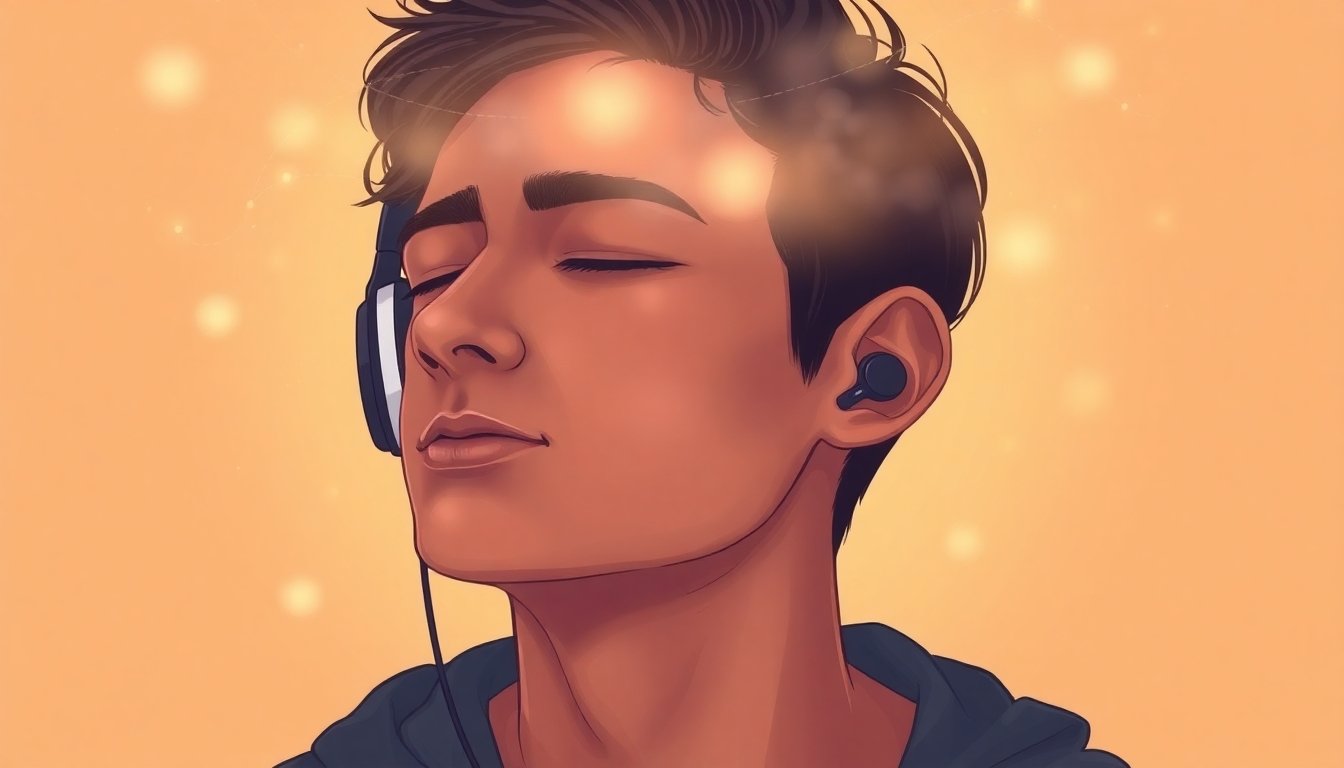
- Recording (Rec): First, the system needs to learn what nostalgia feels like to you. Participants in the study, a mix of younger and older adults, brought in three songs that made them feel deeply nostalgic. They listened to these self-selected tracks, as well as songs chosen by others, while wearing a discreet in-ear device that recorded their brain activity via electroencephalography (EEG). After each song, they rated how much nostalgia, well-being, and memory vividness they experienced.
- Decoding (Dec): This is where the artificial intelligence comes in. The collected data was used to train two different AI models. The first model analyzed the acoustic features of the songs—things like tempo, timbre, and melody—to learn what kind of music a person associates with nostalgia. The second model, the “Nostalgia Decoder,” analyzed the EEG data to learn the specific brainwave patterns that corresponded to that person’s feeling of nostalgia.
- Feedback (Back): With the models trained, the N-BMI was ready for action. It began recommending songs from a massive database of over 7,000 tracks. As a participant listened to a recommended 20-second clip, the Nostalgia Decoder monitored their brainwaves in real-time. This feedback was instantly sent back to the first model, which updated its understanding and refined its next song choice. This created a closed-loop system, constantly learning and adapting to the user’s unique neural response to enhance the feeling of nostalgia.

Putting the Interface to the Test
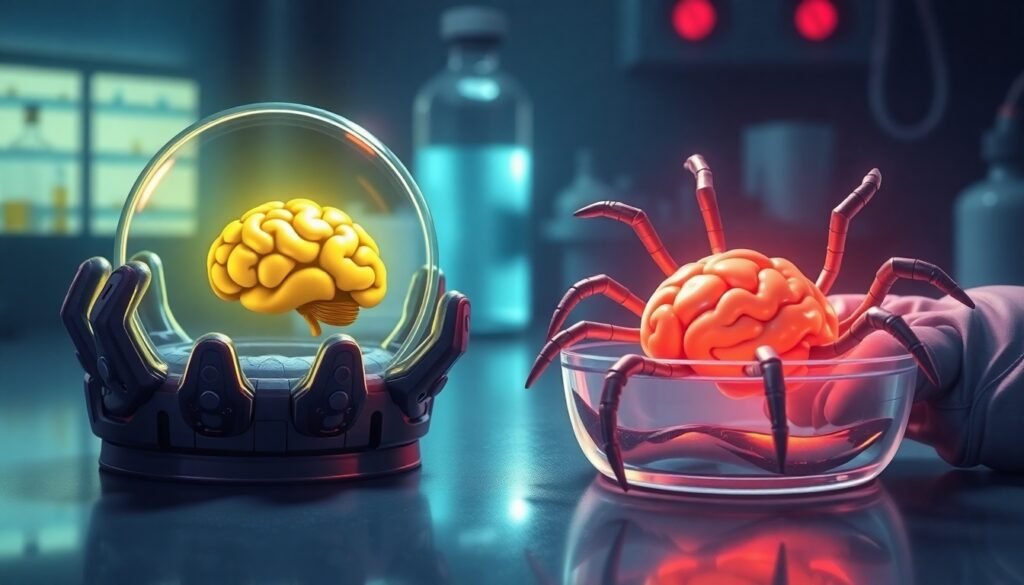
To see if their system worked, the researchers ran an experiment with two conditions. In the “nostalgic condition,” the N-BMI was programmed to recommend songs that would maximize feelings of nostalgia. In the “non-nostalgic condition,” it did the opposite, selecting songs predicted to reduce nostalgia. After listening to a sequence of six short songs in each condition, participants again rated their feelings.
The results were remarkable. In both younger and older participants, the N-BMI was highly effective. When in the nostalgic condition, participants reported significantly higher levels of nostalgia, state-level well-being, and subjective memory vividness compared to the non-nostalgic condition. The machine worked.
A Powerful Tool for Healthy Aging
Perhaps the most striking finding was the difference between the age groups. While the N-BMI was successful for everyone, its effects were significantly more pronounced in the older participants. They reported a much greater increase in nostalgia, well-being, and memory vividness. Furthermore, the EEG decoder was more accurate in the older group, showing a clearer distinction in brain activity between the nostalgic and non-nostalgic states.
This suggests the N-BMI could be an incredibly powerful tool for promoting healthy aging. By providing a personalized, engaging way to stimulate positive emotions and memory recall, it could offer a non-pharmacological intervention to improve the quality of life for older adults, including those with mild cognitive impairment.
Fascinatingly, the system was able to evoke nostalgia even with songs the participants had never heard before. The researchers theorize this works through a process of “familiarity.” Because the AI recommended songs with acoustic features similar to a person’s known nostalgic music, these new tracks may have felt familiar, triggering the same emotional and memory pathways without a specific autobiographical event attached. It’s like discovering a lost B-side from the soundtrack of your life.
This research pushes the boundaries of neurotechnology and personalized medicine. It demonstrates a future where we can use brain-computer interfaces to interact with our own minds, fine-tuning our emotional states and strengthening our connection to the past. For a rapidly aging world, a personalized nostalgia machine might be just what the doctor ordered.
Reference
A Nostalgia Brain-Music Interface for enhancing nostalgia, well-being, and memory vividness in younger and older individuals. (2025). Scientific Reports. https://www.nature.com/articles/s41598-025-14705-6