A deep dive into a recent neuroscience study reveals that progress isn’t just about breakthroughs, but also about the rigorous, transparent process of getting every detail right.
Science often appears in headlines as a series of triumphant, game-changing discoveries. We read about a new cure, a distant galaxy, or a revolutionary insight into the human brain, and it feels like a sudden leap forward. But behind these moments is a slower, more meticulous process—one of painstaking research, peer review, and, crucially, self-correction. It’s in this less glamorous, yet vital, aspect of science that true, lasting knowledge is forged. A recent author correction to a fascinating study in computational neuroscience provides a perfect window into this world, reminding us that the path to understanding is paved with precision.
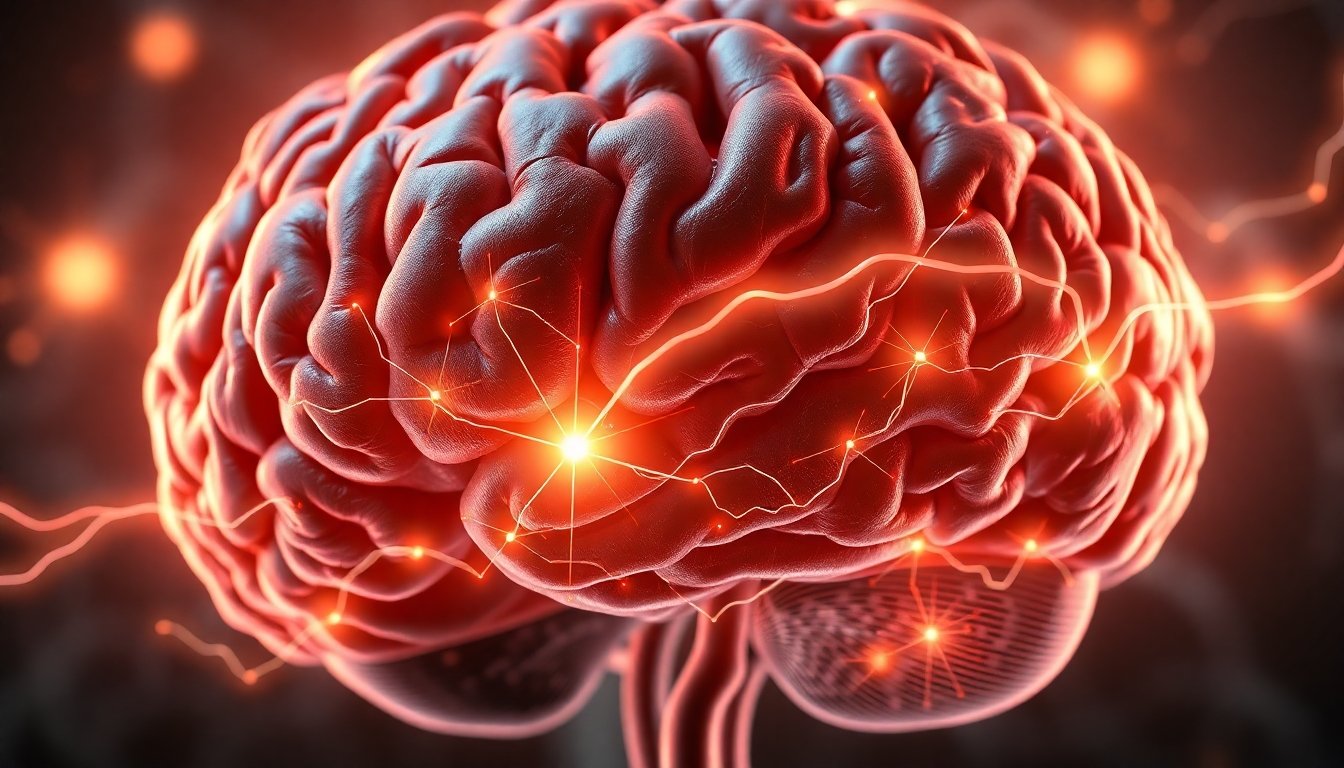
The study in question, titled "Self-supervised predictive learning accounts for cortical layer-specificity," delves into one of the most exciting theories of modern neuroscience: the predictive brain. This idea posits that our brain isn’t a passive receiver of information from the senses. Instead, it’s an active prediction machine, constantly generating models of the world and updating them based on sensory feedback. It’s the reason you can catch a ball without consciously calculating its trajectory or finish a familiar sentence for a friend. Your brain is always a step ahead, predicting what will happen next. The paper aimed to model how this incredible feat might be accomplished within the specific, layered architecture of the neocortex—the wrinkled, outer part of the brain responsible for higher-level thought.
Recently, the authors published a correction in the journal Nature Communications. This wasn’t a retraction or a disavowal of their findings. Rather, it was a refinement—a testament to their commitment to accuracy. So, what was corrected, and why does it matter so much?

The Anatomy of a Correction
The correction addressed two specific elements in the original publication: an error in a key diagram (Figure 2a) and a subtle but significant mistake in a mathematical formula (Equation 5). To a layperson, these might seem like minor typos. But in the world of computational neuroscience, they are foundational. In this field, scientists build complex mathematical models to simulate brain processes. These models are composed of equations that define the relationships between different components—in this case, different layers of neurons in the cortex.
The corrected equation, for instance, describes the interaction between cortical layers 2/3 and layer 5. These layers are known to have distinct roles. Superficial layers (like 2/3) are thought to be involved in processing sensory input and making predictions, while deep layers (like 5) are involved in generating output and updating the brain’s internal model. The equation is a mathematical representation of how a prediction generated in the upper layers is compared to the actual activity in the deeper layers. The difference between the prediction and the reality generates an "error signal," which the brain then uses to learn and refine its model of the world. Getting this mathematical relationship exactly right is paramount. An error, no matter how small, could fundamentally alter the behavior of the entire model, leading to incorrect conclusions about how the brain learns.
Similarly, the figures in a scientific paper are not mere decorations. They are visual distillations of complex data and concepts. An incorrect figure can mislead other researchers who are trying to understand, replicate, or build upon the work. By issuing a correction, the authors ensure that the scientific record is accurate, providing a solid foundation for future research in the field.
Why This Transparency is the Bedrock of Science
This act of public correction might seem counterintuitive. Doesn’t it admit a mistake? Yes, and that’s precisely its strength. Science is a human endeavor, and humans are fallible. The power of the scientific method lies not in achieving perfection on the first try, but in its robust systems for identifying and correcting errors. This transparency builds trust and strengthens the entire scientific enterprise.
When researchers like Kevin Kermani Nejad, Paul Anastasiades, Loreen Hertäg, and Rui Ponte Costa take the time to correct their work, they are participating in the most vital tradition of science. They are signaling to their peers that their findings have been re-examined and reinforced. It tells other neuroscientists that the model of predictive learning they proposed is now even more reliable, as its mathematical and visual underpinnings have been rigorously double-checked and fortified.
This commitment is especially important in a field as complex and ambitious as understanding the brain. The theory of the predictive brain, or predictive coding, is a powerful framework that helps explain perception, learning, and even certain neurological conditions. By creating a computational model that respects the known layer-by-layer structure of the cortex, the researchers are bridging the gap between abstract theory and concrete biology. Their work helps us imagine how the billions of neurons in our heads work in concert to create the seamless experience of reality we all enjoy. But for this bridge to be sound, every plank and every rivet must be perfectly placed. The correction is the act of spotting a loose rivet and tightening it for everyone who will cross that bridge in the future.
In the end, the story of this correction is not a story of error, but a story of integrity. It’s a quiet but powerful example of science working exactly as it should. It shows a field that is dynamic, self-aware, and relentlessly dedicated to inching closer to the truth. As we continue to unravel the profound mysteries of the brain, it is this dedication to getting the details right that will ultimately illuminate the path forward.
Reference
Nejad, K. K., Anastasiades, P., Hertäg, L., & Costa, R. P. (2025). Author Correction: Self-supervised predictive learning accounts for cortical layer-specificity. Nature Communications, 16(1), 9354. https://doi.org/10.1038/s41467-025-65076-5