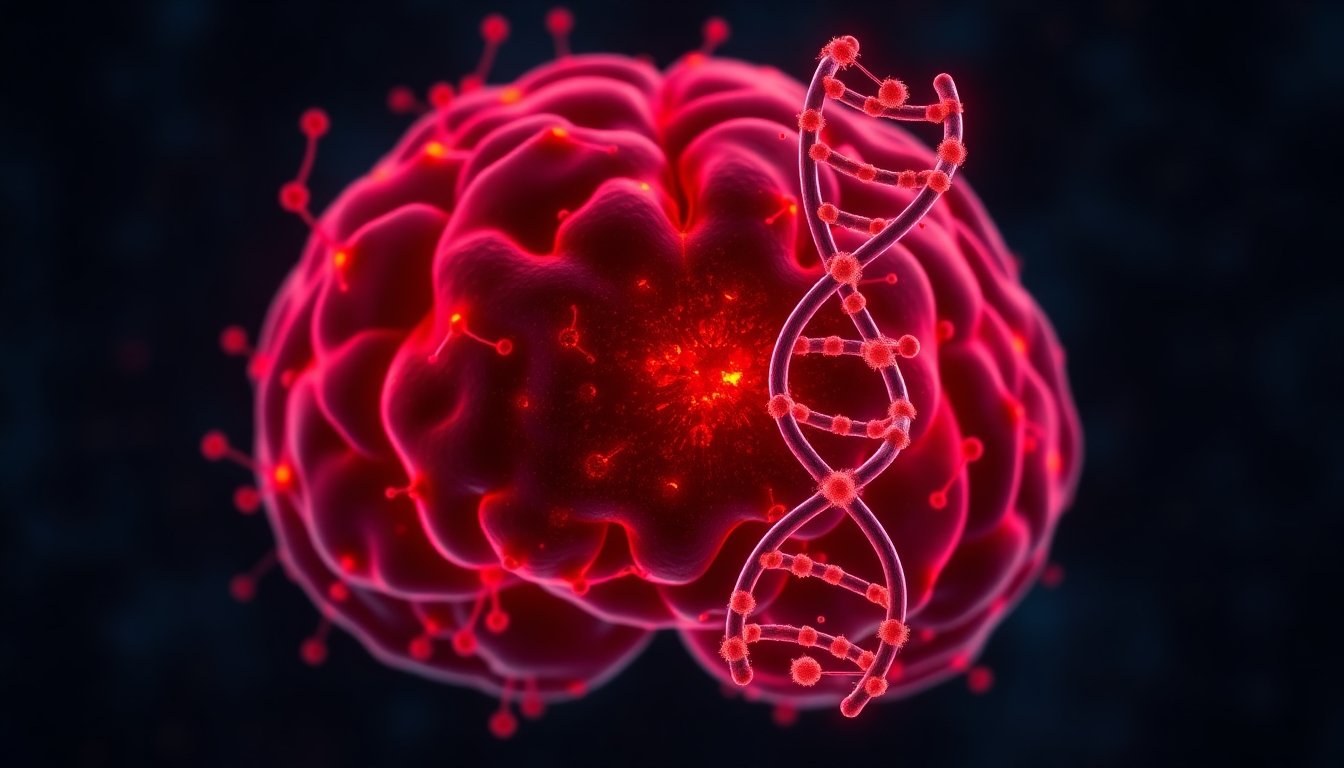
How the brain’s immune cells develop a ‘memory’ of stress, making them overreact and trigger depressive relapses.
Major Depressive Disorder (MDD) is more than just a fleeting period of sadness; for millions, it’s a chronic and recurring condition. One of the most challenging aspects of depression is its tendency to return. A person who has recovered from one depressive episode is significantly more likely to experience another, and with each recurrence, the triggers can become less severe. A major life crisis might precipitate the first episode, but subsequent ones can be set off by seemingly minor stressors. This phenomenon, sometimes called stress sensitization or the "kindling hypothesis," has long puzzled neuroscientists. What changes in the brain to make it so vulnerable to relapse?
Recent research is pointing toward an unexpected culprit: the brain’s own immune system. A groundbreaking study published in Molecular Psychiatry suggests that the brain’s primary immune cells, known as microglia, can develop a form of immunological "memory" of stress. This "trained immunity" doesn’t protect the brain but instead primes it for an exaggerated inflammatory response to future stress, paving the way for a recurrent depressive episode.

Meet the Brain’s Guardians: Microglia and Trained Immunity
Deep within our brain tissue reside microglia, the central nervous system’s dedicated immune defenders. Traditionally, they were seen as the brain’s housekeepers, cleaning up cellular debris and fighting off pathogens. However, we now know their role is far more complex. They actively monitor the brain’s environment and can release a host of inflammatory molecules in response to injury, infection, or even psychological stress.
While our adaptive immune system, with its T-cells and B-cells, creates specific, long-lasting memories of pathogens (the basis for vaccines), our innate immune system was thought to be non-specific and forgetful. The concept of "trained immunity" has turned this dogma on its head. It describes a process where innate immune cells, like microglia, can be reprogrammed by an initial stimulus. This reprogramming, or "training," leaves them in a heightened state of alert. When they encounter a second, even unrelated, stimulus later on, they launch a much faster and stronger inflammatory response than they would have otherwise.
Think of it like a home security system. The first time there’s a major break-in (a significant stressor), you might upgrade the system. Afterward, it becomes hyper-sensitive. The next time, even a cat walking across the lawn (a minor stressor) might trigger a full-blown alarm with sirens and flashing lights. In the brain, this over-the-top alarm is a flood of neuroinflammation, which is increasingly recognized as a key driver of depressive symptoms.
Unraveling the Mechanism of Recurrence
The new study sought to connect the dots between stress, trained immunity in microglia, and the recurrence of depression. Using a mouse model, the researchers simulated the human experience of depressive relapse.
First, they exposed mice to a period of chronic, unpredictable stress to induce a depressive-like state. This initial, significant stressor acted as the "training" stimulus. The researchers observed that this stress activated a specific inflammatory pathway within the microglia known as the NLRP3 inflammasome. The NLRP3 inflammasome is a multi-protein complex that acts as a potent alarm system, detecting cellular danger signals and unleashing powerful inflammatory responses.
Crucially, this activation left a lasting mark on the microglia’s DNA. The "memory" of the stress was stored through epigenetic modifications—chemical tags that attach to DNA and its associated proteins, changing how genes are read without altering the genetic code itself. Specifically, the study identified an increase in a particular epigenetic mark called H3K4 trimethylation (H3K4me3) on the gene that codes for NLRP3. This mark acts like a bookmark, keeping the NLRP3 gene more accessible and ready for rapid activation.
After the mice recovered and returned to a non-depressed state, they were exposed to a second, sub-threshold stressor—a level of stress that would not typically cause depressive behaviors in a mouse that hadn’t been previously stressed. The results were stark. The mice with the "trained" microglia quickly relapsed into a depressive-like state, exhibiting behaviors like loss of interest in pleasurable activities. Their epigenetically primed NLRP3 inflammasome went into overdrive, triggering an excessive and damaging neuroinflammatory response.
The Smoking Gun: Blocking the Inflammatory Memory
To confirm that this NLRP3-mediated trained immunity was truly the cause of the relapse, the researchers performed a critical experiment. They treated the previously stressed mice with a specific inhibitor that blocks the NLRP3 inflammasome before exposing them to the second, minor stressor.
The outcome was remarkable: the depressive relapse was prevented. By blocking the overactive alarm system, the minor stressor was no longer able to trigger a full-blown inflammatory cascade and the subsequent depressive behaviors. This provided direct evidence that the NLRP3 inflammasome’s trained state is a key biological mechanism underlying stress sensitization and the recurrence of depression.
A New Horizon for Depression Treatment
These findings have profound implications for how we understand and treat major depression. For decades, treatments have primarily focused on modulating neurotransmitters like serotonin. While helpful for many, these treatments don’t address the underlying vulnerability to relapse that plagues so many individuals.
This research opens the door to a completely new therapeutic strategy: targeting the brain’s immune memory. Instead of just managing the symptoms of a depressive episode, future therapies could aim to "reset" the trained state of microglia. By developing drugs that can erase these epigenetic stress scars or selectively inhibit the NLRP3 inflammasome in the brain, we might be able to make the brain more resilient and prevent depressive episodes from returning.
While this research is still in the preclinical phase and based on animal models, it provides a powerful and hopeful new framework. It reframes recurrent depression not just as a psychological or neurotransmitter-based issue, but as a disorder potentially rooted in immunologic memory. By understanding the biological scars that stress leaves behind, we may finally be able to develop treatments that don’t just heal the wound, but prevent it from ever reopening.
Reference
Liu, Q., Zhang, H., Li, Y., Wang, Z., Li, H., Zhang, L., … & Zhang, Z. (2024). NLRP3-mediated trained immunity of microglia is involved in the recurrence-like episode of depressive disorders. Molecular Psychiatry. https://doi.org/10.1038/s41380-024-02449-y