Subtitle: Recent neuroscience research shows that artificial intelligence models trained to generate music from text taps into the ways our brains comprehend and process music semantics.
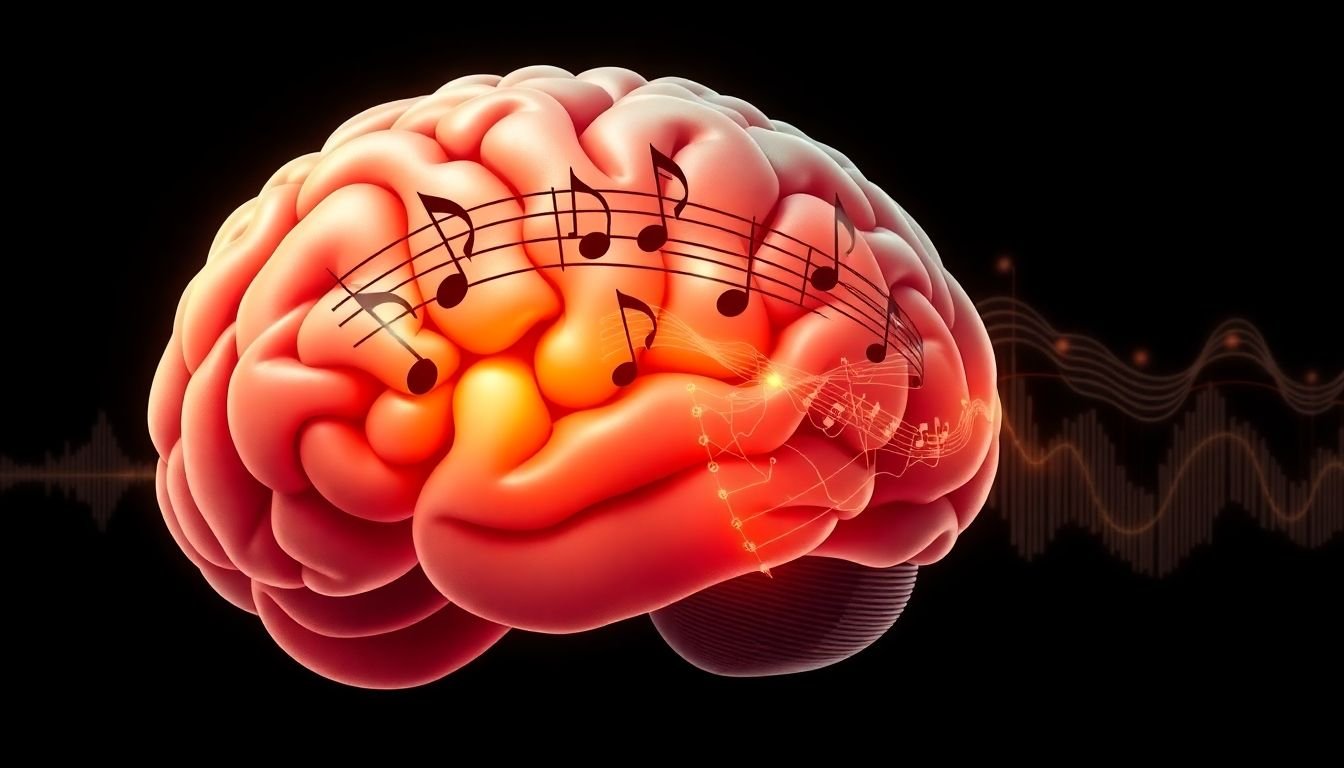
Our brains have a remarkable ability to capture the essence of music. Whether it’s classical symphonies, pop choruses, or the pulsating energy of electronic beats, the human mind not only enjoys music but is adept at interpreting complex nuances like timbre, emotion, genre, and rhythm. But how do we get to the bottom of the neural processes underlying this appreciation? The latest research takes a fresh approach: examining how advanced AI models that generate music from text prompts overlap with the neural representations of music in the human brain.
The Rise of Text-to-Music Models
In recent years, artificial intelligence models capable of translating text into music—“text-to-music” AI—have rapidly advanced. These models, which include sophisticated diffusion models and transformer-based architectures, are trained on vast datasets of musical pieces annotated with text descriptors. By learning the complex relationships between words and music, these systems can produce musical outputs from written prompts as varied as “cheerful jazz with piano solos” or “melancholic string quartet in minor key.”
These innovations are not just artistic curiosities. They provide computational frameworks that mirror, in intriguing ways, the neural codes our brains use to represent and interpret music.
Mapping the Mind When Listening to Music
Neuroscientists have used functional MRI (fMRI) to observe brain activity while participants listen to different types of music. Sophisticated analysis techniques such as encoding and decoding models allow researchers to map which features in music—such as timbre, rhythm, or harmony—activate specific brain regions.
Prior studies (e.g., Alluri et al., 2012; Toiviainen et al., 2014) showed that large-scale neural networks in the brain dynamically track features like timbre and key. There are also distinct cortical pathways for processing music and speech (Norman-Haignere et al., 2015), and brain activity can be decoded to reveal someone’s musical preferences, perceived emotion, or even identify specific songs (Casey, 2017; Hoefle et al., 2018; Koelsch et al., 2006).
The AI-Neuroscience Connection: Shared Semantics
What’s groundbreaking about the new wave of research is that AI models, when trained on enough musical variety, seem to develop high-level semantic representations that resemble those in the human brain. When scientists compare the internal representations of these models (how they encode the meaning or structure of music) with fMRI data from people listening to music, they find surprising similarities.
For example, models like MusicLM (Agostinelli et al., 2023) or Riffusion (Forsgren & Martiros, 2022) use text embeddings—mathematical summaries of written descriptions—to guide music generation. When neuroscientists analyze brain activity while subjects listen to corresponding musical pieces, the patterns appear to align with these model-derived embeddings. In other words, the AI’s internal map of musical concepts mirrors how the human brain organizes its own musical knowledge.
Why Does This Overlap Matter?
A New Window into Brain Function
Understanding that AI and the brain arrive at similar semantic representations suggests that these models can be powerful proxies for studying music cognition. Rather than hand-crafting features like tempo or timbre, scientists can use the abstract, learned features from AI models as predictors of neural activity—yielding deeper insights into the complexity and flexibility of human auditory understanding.
Practical Applications
This overlap also holds promise for:
- Music therapy and brain injury rehabilitation: Decoding a patient’s neural response to music could be enhanced by AI-derived representations, tailoring musical interventions to specific needs.
- Brain-computer interfaces: If AI models can translate between neural activity and musical semantics, they could help synthesize therapy music or support communication in individuals who cannot speak.
- Artistic collaboration: Human creativity and AI generation can be mapped more directly to individual preferences, leading to richer, more targeted music creation tools.
Emerging Frontiers: Decoding From Brain to Music
The relationship isn’t one-way. Several studies (e.g., Santoro et al., 2017; Park et al., 2025) have begun reconstructing sounds and even music from fMRI data. If the brain’s representation of music matches that of text-to-music models, future AI could reconstruct, or even generate, music that matches what a person is thinking about or remembers—an exciting, if distant, frontier.
Challenges and Future Directions
Of course, there are complexities. Human musical experience is profoundly affected by context, memory, emotion, and culture—factors that models are only beginning to approximate. Moreover, much of the brain’s processing happens at a resolution or in modalities not entirely accessible by fMRI. But as AI architectures grow more sophisticated, incorporating elements like self-supervised learning or multimodal datasets, the parallels between model and mind will only deepen.
Conclusion
AI text-to-music models do more than generate interesting musical snippets—they have become essential tools for probing the fundamental ways our brains make sense of sound. By comparing the semantic representations in AI to neural data, we gain not just smarter machines, but new understanding of the uniquely human experience of music.
References
Agostinelli, A., Tagliasacchi, M. et al. (2023). MusicLM: generating music from text. arXiv preprint arXiv:2301.11325.
Alluri, V. et al. (2012). Large-scale brain networks emerge from dynamic processing of musical timbre, key and rhythm. NeuroImage, 59, 3677–3689.
Casey, M. A. (2017). Music of the 7ts: Predicting and decoding multivoxel fMRI responses with acoustic, schematic, and categorical music features. Frontiers in Psychology, 8, 1179.
Forsgren, S., Martiros, H. (2022). Riffusion – Stable diffusion for real-time music generation. Retrieved from https://riffusion.com/about
Hoefle, S. et al. (2018). Identifying musical pieces from fMRI data using encoding and decoding models. Scientific Reports, 8, 2266.
Koelsch, S., Fritz, T., Cramon, D. Y., Müller, K. & Friederici, A. D. (2006). Investigating emotion with music: An fmri study. Human Brain Mapping, 27, 239–250.
Norman-Haignere, S., Kanwisher, N. G., & McDermott, J. H. (2015). Distinct cortical pathways for music and speech revealed by hypothesis-free voxel decomposition. Neuron, 88, 1281–1296.
Park, J.-Y., Tsukamoto, M., Tanaka, M. & Kamitani, Y. (2025). Natural sounds can be reconstructed from human neuroimaging data using deep neural network representation. PLoS Biology, 23, 3003293.
Santoro, R. et al. (2017). Reconstructing the spectrotemporal modulations of real-life sounds from fMRI response patterns. Proceedings of the National Academy of Sciences, 114, 4799–4804.
Toiviainen, P., Alluri, V., Brattico, E., Wallentin, M. & Vuust, P. (2014). Capturing the musical brain with lasso: Dynamic decoding of musical features from fMRI data. NeuroImage, 88, 170–180.
For further reading, see the original article at Nature Communications: Text-to-music generation models capture musical semantic representations in the human brain