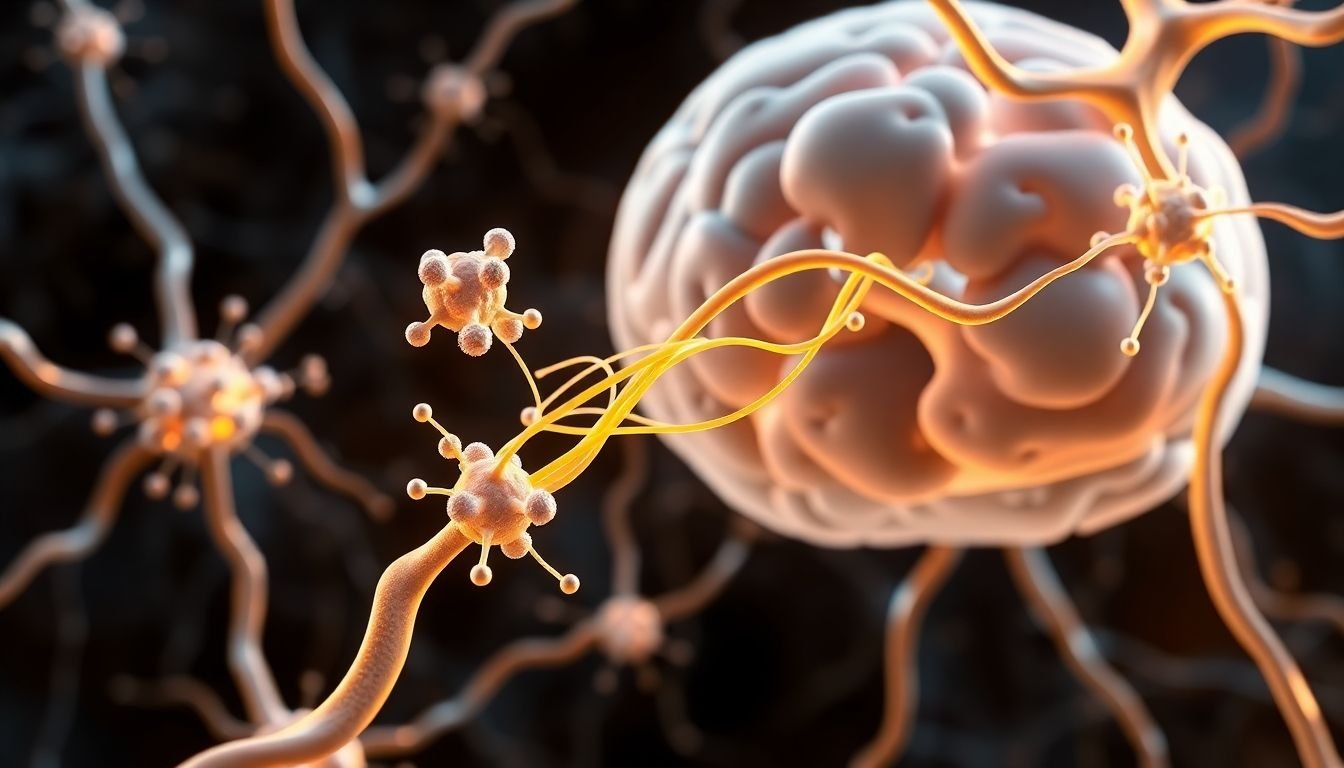
New Discoveries on Spermine—a Tiny Molecule With Major Potential to Combat Neurodegenerative Disease
Imagine if something already circulating in your body was quietly helping to protect your brain from devastating conditions like Alzheimer’s and Parkinson’s. According to groundbreaking new research from the Paul Scherrer Institute (PSI), this is more than wishful thinking. Their latest study shines a spotlight on spermine—an unassuming molecule found in all our cells—which may help fend off toxic proteins linked to neurodegenerative disorders, opening exciting avenues for future therapies.
The Growing Challenge of Neurodegenerative Disease
As advances in healthcare help people live longer, the world faces a sobering reality: age-related disorders like Alzheimer’s and Parkinson’s are on the rise. Both conditions share a key problem at the molecular level—harmful accumulations of misfolded amyloid proteins in the brain. These amyloid strands, often compared to bundles of spaghetti, disrupt normal brain function and, over time, contribute to memory loss, movement problems, and cognitive decline. Despite years of research, reliably clearing or preventing these toxic buildups remains one of medical science’s greatest challenges.
Spermine: An Ancient Molecule With a Modern Twist
Enter spermine. Though its name stems from its discovery in seminal fluid 150 years ago, spermine is hardly limited to one bodily compartment. In fact, it thrives in many active, dividing cells throughout your body. Its importance was well recognized among biologists, but until recently, its potential role in protecting the brain from toxic damage was not fully understood.
Spermine belongs to a family of molecules called polyamines, which participate in a diverse array of cellular processes. From promoting cell movement and activity to directly influencing which genes are turned on or off, spermine acts as a master regulator behind the scenes. One especially crucial function: it helps organize the cell’s interior, corralling important biomolecules together in specialized droplets where key reactions take place—a process called biomolecular condensation.
A Natural Defense: How Spermine Helps Tidy Up the Brain
Researchers at PSI, led by Dr. Jinghui Luo, set out to reveal exactly how spermine impacts amyloid protein buildup. Using cutting-edge techniques—including advanced optical microscopy and specialized scattering analysis at PSI’s Swiss Light Source—they investigated the effects of spermine in both test tubes and in living organisms.
Their chosen model organism was Caenorhabditis elegans, a type of tiny nematode worm often used in aging and neuroscience studies. The findings were striking. Spermine encouraged amyloid proteins to form loose, reversible clumps—much like shaking grated cheese onto a pile of cooked spaghetti. The analogy is more than just culinary: this clumping, held together by gentle electrical attractions, makes the protein tangled mess far more susceptible to the cell’s internal garbage disposal system.
This cellular clean-up, known as autophagy, works more efficiently when problematic proteins are already herded into bigger clumps. During autophagy, damaged or surplus proteins are wrapped in small vesicles and safely broken down—recycling their components for new cellular tasks. As Dr. Luo explains, “spermine is, so to speak, the binding agent that brings the strands together,” making it easier for cells to carry out their vital spring cleaning.
Extending Lifespan and Boosting Health—In Worms, for Now
The practical results were just as dramatic. Spermine supplementation in nematode worms led to longer lifespans, improved movement in older age, and healthier mitochondria—the cell’s power generators. In these simple animals, at least, ramping up spermine levels provided tangible resistance to the debilitating effects linked to amyloid accumulation. Just as importantly, these benefits depended on supporting the worms’ own ability to clear away toxic protein waste.
From Brain Plaques to Broader Therapeutic Potential
While Alzheimer’s and Parkinson’s were the original focus, researchers believe the significance of spermine extends wider still—including conditions like cancer. Polyamines as a group regulate so many aspects of cell biology that unraveling their mechanisms could one day lead to custom-tailored therapies for a spectrum of disorders. However, major questions remain, especially regarding ideal “doses” and combinations of these molecular ingredients to achieve protective effects without unwanted side effects.
The Future: High-Tech Tools and the Recipe for Success
Cracking the code for effective treatments hinges on tools both old and new. High-resolution, real-time imaging—enabled by facilities like PSI’s Swiss Light Source—lets scientists watch the interplay of spermine and amyloid proteins at the molecular level, even inside living tissue. At the same time, artificial intelligence is revolutionizing the research landscape. By analyzing vast troves of molecular data, AI can suggest optimal ways to “season” the cellular environment—identifying the best combinations (and quantities) of polyamines to harness for therapy.
As Dr. Luo quips, this whole process is like perfecting a recipe: “If we better understand the underlying processes, we can cook tastier and more digestible dishes, so to speak, because then we’ll know exactly which spices, in which amounts, make the sauce especially tasty.”
Why This Research Matters
For now, there’s no over-the-counter pill to boost spermine and instantly defend against Alzheimer’s. The research is at an early stage, and many hurdles remain before these insights are translated into human therapies. But the discovery offers hope that the body’s own molecules, fine-tuned by evolution, could inspire new and safer treatments for diseases that loom larger with every passing decade.
With increased understanding—and a sprinkle of advanced technology—tomorrow’s therapies for neurodegenerative disease may look far more like a precision-cooked meal than one-size-fits-all medicine.
Reference
Luo, J., et al. (2024). As reported in ScienceDaily based on research published in Nature Communications.