Subtitle: Brazilian scientists develop a copper-targeting compound that reverses Alzheimer’s symptoms in rats and could pave the way for more accessible treatments.
In a promising development from the Federal University of ABC (UFABC) in Brazil, researchers have unveiled a new chemical compound that dramatically reduces Alzheimer’s-related brain damage in rats and significantly improves their cognitive functions. This groundbreaking discovery could lead to more accessible and effective therapies for a disease that currently affects nearly 50 million people around the globe.
Tackling Alzheimer’s by Targeting Copper
Alzheimer’s disease is most commonly recognized by the gradual loss of memory and cognitive abilities, caused by the degeneration of neurons in the brain. A signature feature of the disease is the accumulation of beta-amyloid plaques—clumps of protein fragments that build up between nerve cells, sparking inflammation and disrupting communication.
For years, scientists have searched for the mechanism that triggers these plaques to form. Recent international studies highlighted an important clue: excess copper ions in the brain, sometimes stemming from genetic mutations or dysfunctional enzymes, can promote the aggregation of beta-amyloid peptides. This revelation shifted attention toward regulating copper balance in the brain as a potential route for treatment.
Engineering a Solution: The Copper Chelator
Building on these findings, the UFABC team, led by Professor Giselle Cerchiaro, designed a new copper-binding molecule, or chelator, with two crucial abilities. First, it specifically targets the copper trapped within beta-amyloid plaques. Second, it is small and adaptable enough to cross the blood-brain barrier—a notoriously difficult obstacle for many drugs.
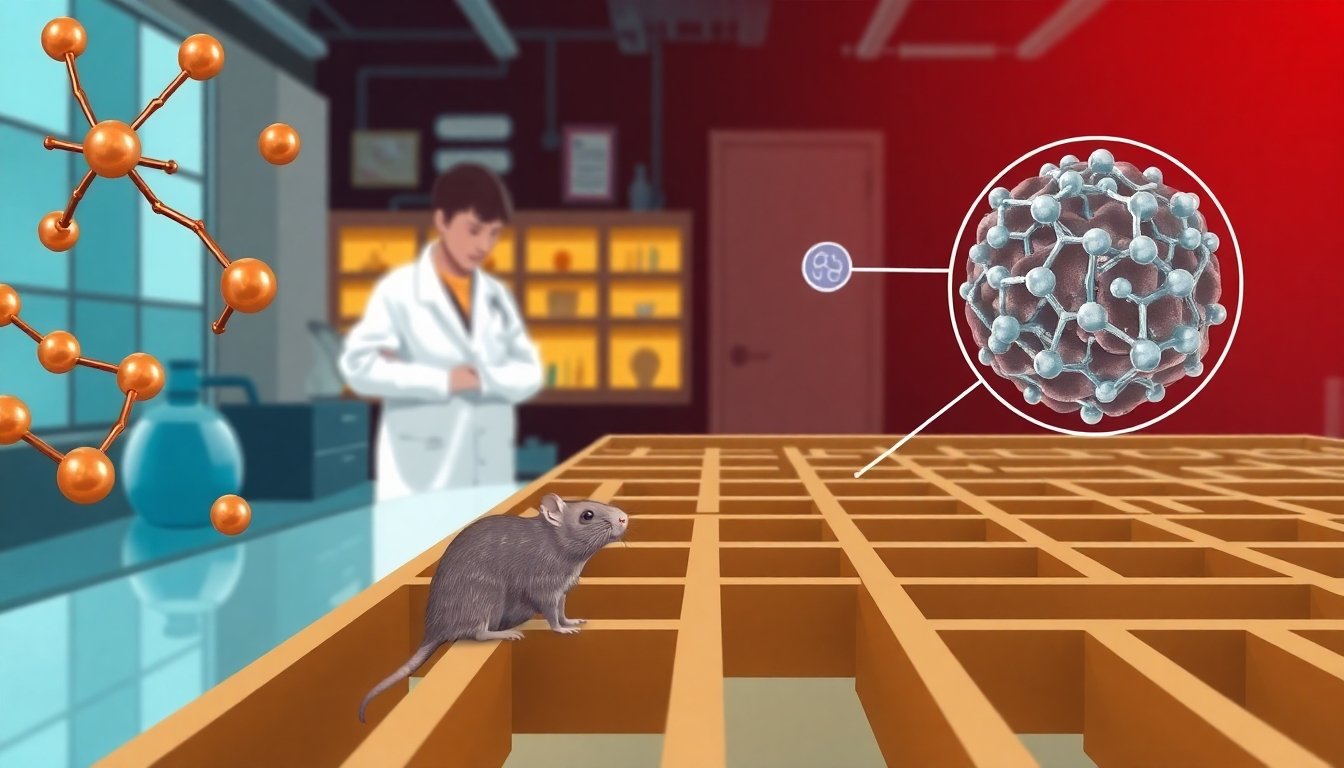
The researchers began by developing ten candidate molecules using computer modeling to predict how they would interact with copper and with biological tissues. Next, these candidates were refined through laboratory tests on cell cultures and, finally, through rigorous experiments in rats that were bred or genetically engineered to mimic Alzheimer’s disease.
Among the tested compounds, one stood out—demonstrating the ability not only to reduce the number and size of amyloid plaques in the rats’ brains but also to reverse some of the functional impairments associated with Alzheimer’s.
Real Results: Improvements in Both Brain and Behavior
Rats that received the copper-chelating compound underwent behavioral assessments common in neuroscience research, such as maze navigation tasks that measure memory, learning, and spatial awareness. The treated group outperformed their untreated counterparts, displaying notable gains in memory recall and the ability to navigate unfamiliar spaces.
These behavioral improvements were mirrored by physiological changes. Biochemical analysis revealed that the rats treated with the compound had not only reduced plaque buildup but also lower levels of inflammation and oxidative stress in their brains. Importantly, the compound also helped restore the normal copper balance in the hippocampus, a vital region for memory processing.
Safety is always a central concern in drug development. In this case, both laboratory cell cultures and the animals themselves showed no signs of toxicity. The compound did not affect rats’ vital functions, highlighting its potential for translation into human trials.
A Potentially Affordable Future Therapy
Perhaps most intriguing is the compound’s simplicity and cost-effectiveness. Current Alzheimer’s therapies are limited, often expensive, and typically provide only partial relief. Highly advanced (and costly) drugs, such as monoclonal antibodies, have offered hope but remain inaccessible for many due to price and supply limitations.
Professor Cerchiaro and her colleagues note that their copper-chelating compound can be synthesized easily and affordably. As the team has already filed a patent for the molecule, they are now seeking partnerships with pharmaceutical companies to pursue clinical trials in humans.
“Even if it only works for a subset of patients—since Alzheimer’s is a complex disease with multiple roots—this represents a significant advance,” Cerchiaro explains. “Its efficacy, safety, and low production cost could make it a practical option, shifting the way we approach Alzheimer’s care.”
Looking Ahead
It is important to note that the leap from animal studies to effective human therapy is large and requires extensive clinical testing. However, the UFABC team’s multifaceted approach—combining computer simulations, cell assays, and animal testing—lays a solid foundation for further investigation.
This study exemplifies how targeted basic research can drive innovation in diseases that have long resisted effective treatment. Should these results be replicated in humans, millions affected by Alzheimer’s disease—and their loved ones—may have renewed hope for more affordable, widely available interventions in the future.
Reference:
Camargo, M. L. M., Bertazzo, G., Farias, A., de Oliveira, K. T., & Cerchiaro, G. (2025). A new copper-chelating compound reverses Alzheimer’s-related pathology and cognitive decline in rats. ACS Chemical Neuroscience.