New research reveals a destructive alliance between amyloid-beta and a common blood protein, offering a fresh target for early diagnosis and treatment.
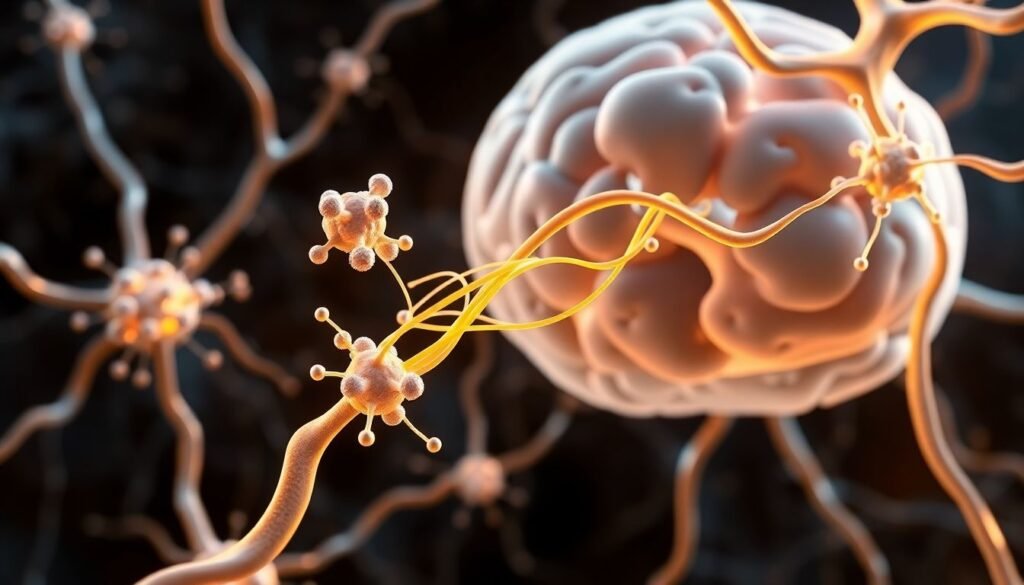
For decades, the story of Alzheimer’s disease has been dominated by two notorious culprits: sticky amyloid-beta plaques gumming up the spaces between brain cells and twisted tau proteins forming tangles within them. While this understanding has guided countless studies, effective treatments have remained frustratingly out of reach. In recent years, however, a new chapter has begun to unfold, one that looks beyond the neurons themselves and into the intricate network of blood vessels that nourishes the brain. Now, groundbreaking findings have identified a “toxic duo” that may be a key instigator in this vascular breakdown, potentially triggering the disease long before symptoms appear.
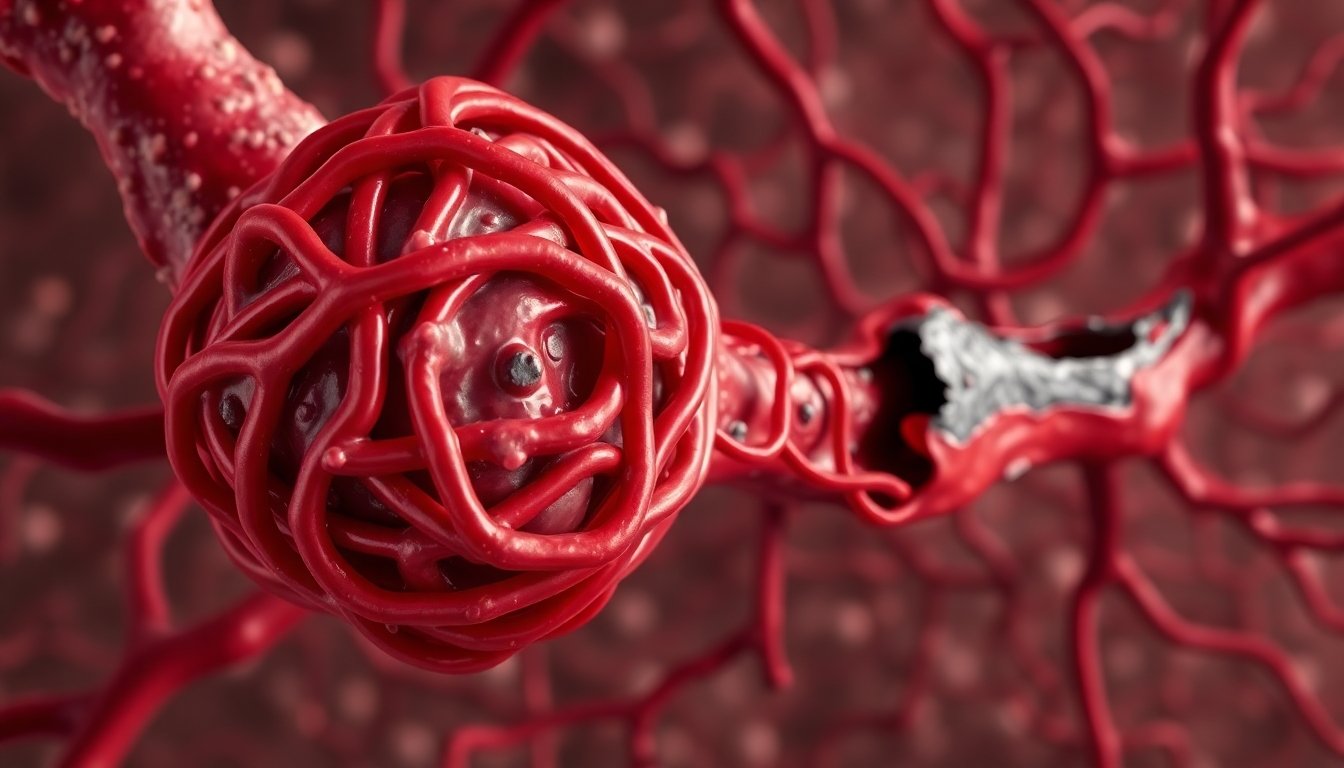
New research from Rockefeller University has pinpointed a damaging partnership between amyloid-beta (Aβ), the peptide famous for forming plaques, and fibrinogen, a crucial protein in our blood responsible for clotting. The study reveals that when these two molecules bind together, they create abnormal, stubborn clots that resist being broken down. This toxic complex acts as a catalyst for a cascade of damage, including brain inflammation, leaks in the vital blood-brain barrier, and the loss of synapses—the critical connections between neurons. These findings strengthen the growing consensus that vascular dysfunction is not just a side effect of Alzheimer’s but a direct contributor to its progression, highlighting a promising new therapeutic target.
“It takes a larger amount of Aβ or fibrinogen alone to cause serious damage in the Alzheimer’s brain,” explains Erin Norris, a research associate professor in the laboratory of Sidney Strickland at Rockefeller. “But when the two complex together, you only need very small amounts of each to cause damage. There’s a synergistic effect with Aβ and fibrinogen.”

A Decades-Long Investigation
The link between Aβ and fibrinogen is not a new idea for Strickland’s Patricia and John Rosenwald Laboratory of Neurobiology and Genetics. The team has been investigating this interaction for nearly two decades. Their earlier work first established that Aβ binds to fibrinogen and connected this interaction to the advancement of Alzheimer’s. At the time, the notion that blood vessel problems could be a primary driver of the disease was met with skepticism.
“Only recently, with a number of breakthroughs in the field, did people begin to believe that the vascular system is involved in AD pathogenesis,” Norris notes. “Since our initial findings, we’ve been focused on studying the mechanisms that explain how a dysfunctional vascular system impacts AD.”
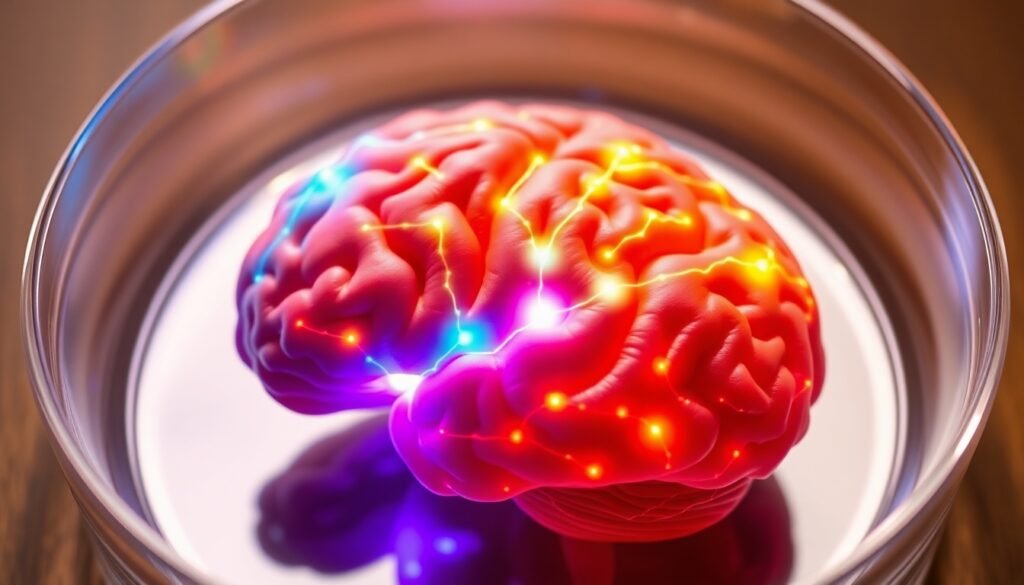
Identifying the complex was just the first step. The researchers needed to understand the precise nature and extent of the damage it could cause on its own. To do this, they designed a series of meticulous experiments. They created low concentrations of the Aβ/fibrinogen complex in the lab and applied it directly to thin slices of mouse brain tissue and also administered it to living mice. This dual approach allowed them to observe its effects under highly controlled conditions, both in vitro and in vivo.
“We wanted to really show the damage—to zoom in on exactly how pre- and post-synaptic terminals were being harmed,” says Research Associate Elisa Nicoloso Simões-Pires.
Pinpointing the Damage
The results were stark. While Aβ and fibrinogen on their own caused minimal harm at these low concentrations, the combined complex unleashed significant destruction. It degraded synapses, triggered a strong inflammatory response, and compromised the blood-brain barrier—all hallmark features of Alzheimer’s pathology. Critically, when the scientists introduced an antibody designed to prevent Aβ from binding to fibrinogen, these harmful effects were dramatically reduced.
“We showed that the complex actually induces blood-brain barrier leakage, when the proteins alone did not,” Simões-Pires highlights. “Disruption of the blood-brain barrier allows for blood proteins to cross into the brain, which lead to additional harm.”
The strength of the study lies in its consistent results across different models. “It was an in vitro and in vivo project, both providing the same outcome,” says Norris. “We are much more confident in our results when we can show the same thing in culture and in a living organism.” The team’s next goal is to delve deeper into the underlying mechanism—to understand exactly why this complex is so profoundly toxic.
New Hope for Early Intervention
Beyond clarifying the disease process, these discoveries have significant clinical implications. The study suggests that even minute amounts of the Aβ/fibrinogen complex can initiate the early stages of Alzheimer’s pathology, well before any cognitive decline becomes apparent. In a compelling piece of evidence, mice exposed to the complex showed elevated levels of phospho-tau181, a biomarker currently used in humans to detect Alzheimer’s risk years before symptoms manifest. This suggests the experiments may be successfully mimicking the very earliest phases of the disease.
This opens up the exciting possibility of early intervention. A therapy designed to specifically target and disrupt the formation of this complex could potentially delay or even prevent the onset of Alzheimer’s.
The researchers are careful to note that Alzheimer’s is a multifaceted disease with many contributing factors. “It’s not a simple disease,” Simões-Pires concludes. “A lot of other factors can induce neurotoxicity, and we certainly do not propose that inhibiting this complex formation would cure AD. But perhaps targeting this complex would alleviate some of the pathologies and be even more effective in combination with other therapies.”
By unmasking this toxic partnership, these scientists have brought us one step closer to understanding the intricate web of events that leads to neurodegeneration. In the long and arduous fight against Alzheimer’s, stopping this single destructive interaction could make a world of difference.
Reference
Rockefeller University. (2025, October 22). A “toxic duo” may be the hidden trigger behind Alzheimer’s disease. ScienceDaily. Retrieved from https://www.sciencedaily.com/releases/2025/10/251022023113.htm